
When Donald Trump became the 47th President of the United States, he wasn’t taking the reins of a country on the up, but one that had entered into a period of relative decline. His slogan of ‘America First’ and promise to end ‘forever wars’ was a deeply popular message, but also an acknowledgement that the US cannot dominate the world in the way it once did.
US military power has long been a key pillar of its dominance, but being the global policeman isn’t cheap. US military spending of $1 trillion represents 40 percent of the world’s total, with China coming second at 12 percent, and Russia third with 4.5 percent.
The US has to maintain and equip 75-85 percent of the world’s foreign military bases, situated in 80 different countries. In total that’s 750 military bases, whereas Russia has around 15-20 bases concentrated in their near abroad (Eastern Europe and Central Asia), whilst China officially has one base in Djibouti.
Meanwhile, by ramping up protectionism and tariffs, Trump has shone a spotlight on a developing weakness for US imperialism. As the Atlantic Council recently put it: “The hollowing out of the broader US manufacturing base over the last several decades has made US defence companies dependent on supply chains originating in, of all places, China.”
Security Concerns
The problem is not just a lack of money to buy weapons systems. The problem is a lack of armament production capacity to keep pace.
Last year, The Heritage Foundation, a right-wing American think-tank, released a study into the American defence industry which said the following:
“The U.S. military cannot be everywhere all the time. America has finite resources and therefore must do a better job of husbanding its resources. One minute, the military is being told to pivot to Asia and focus on China, the next minute the President is telling the Pentagon to empty its warehouses of munitions and send them to Ukraine for a conflict deemed secondary in the NDS [National Defence Strategy], all while China continues its military build-up. If the United States is serious about deterring China in the Indo–Pacific, it will have to avoid strategic distractions elsewhere.”
There is a growing fear in the US about the limitations of its military, as the Atlantic Council noted recently, in an article titled ‘Overstretched and undersupplied: Can the US afford its global security blanket?’:
“While maintaining regional stability across the globe is critical to US defence and national security objectives, simultaneously supplying major arms packages to Israel and Ukraine, at a time when the United States needs to prepare for the possibility of armed conflict with China, will stretch production lines and resources beyond sustainable limits, potentially jeopardising all US-supported efforts.”
Overstretched and undersupplied, the US is increasingly incapable of supporting Ukraine against Russia (a war that’s already lost), hence the pressure being put on Europe to increase its military spending.
This was tacitly admitted earlier in the year when the Pentagon announced it “has halted shipments of some air defence missiles and other precision munitions to Ukraine due to worries that U.S. weapons stockpiles have fallen too low”.
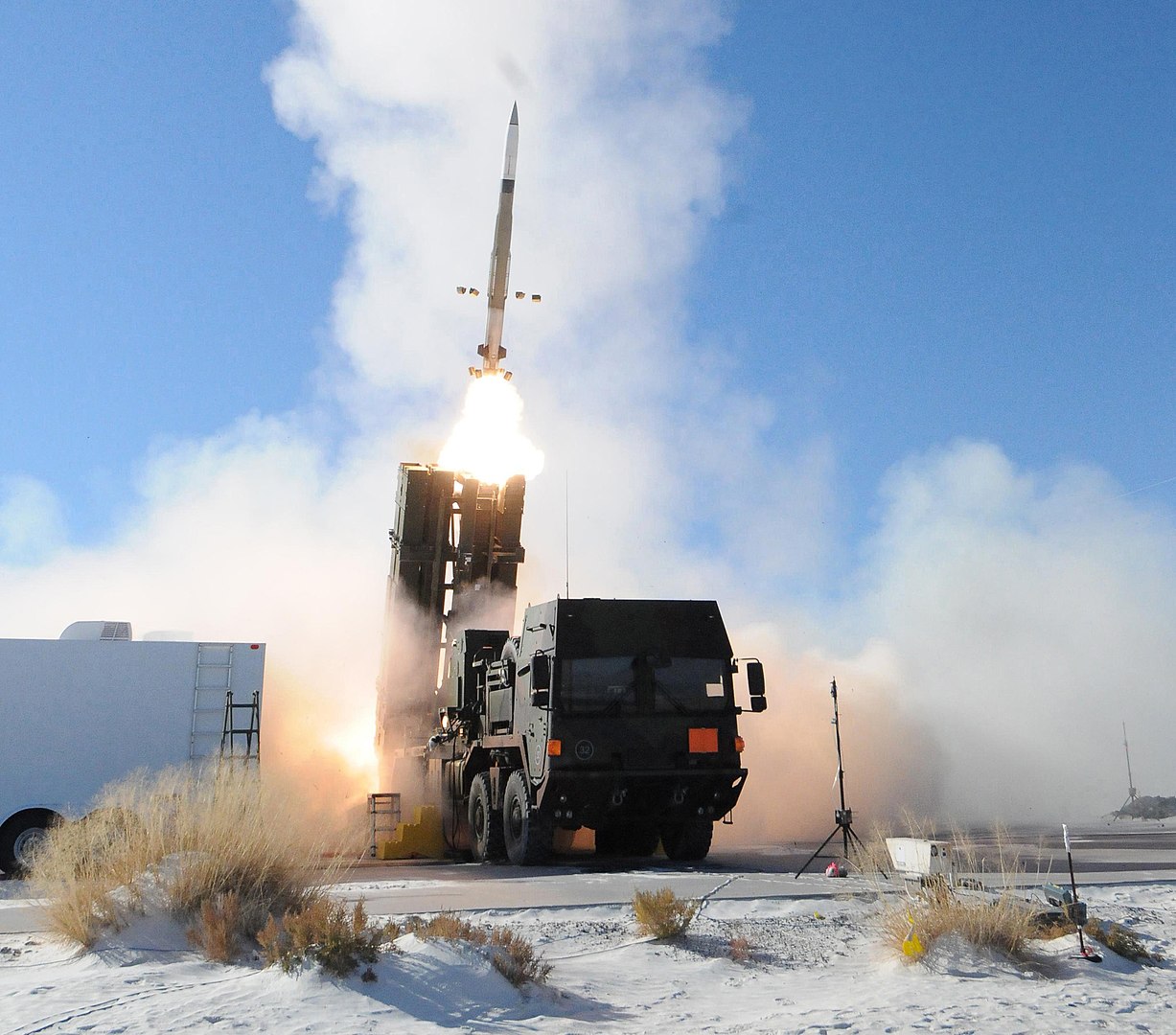
The article goes on to mention that funding for Patriot MSE interceptor missiles, a crucial element of Ukrainian air defences, has quadrupled, “but even with increased funding, ramping up production will take time”. In other words, the problem is not just a lack of money to buy weapons systems. The problem is a lack of armament production capacity to keep pace.
After the fall of the Soviet Union, US defence spending was massively reduced. A recent article by Foreign Affairs, titled ‘The Empty Arsenal of Democracy’, put it like this: “From 1989 to 1999, the United States cut its defense budget by nearly a third. The Cold War was over, so U.S. officials no longer saw the need for an enormous military”. In particular, budgets were cut for munitions and smaller weapons, as military planners assumed future wars would be based on “quick victories secured by technological superiority”.
US military production, in other words, has been geared to fighting small wars on the assumption that it would no longer have to fight a near-peer level rival capable of sustaining a long war against it. This was a false assumption based on realities that have gradually ceased to be.
This meant that at the beginning of the war in Ukraine, “most analysts in the defense community believed that it would last only days or weeks”, therefore there was zero preparation in place for a long term war of attrition.
This is exemplified by the Iowa Ammunition Plant, “the only place in America for high-volume production of 155-millimeter artillery shells”, which remains largely unchanged in its methods since it was built in the 1940s. At the start of the war it produced 14,000 shells a month, by 2023 Ukraine was firing 8,000 a day. Even after two years and billions of dollars of investment, the plant produces just 40,000 a month, enough to last five days in the month.
Scalability Crisis
Today, Russia is out-producing all of NATO, including the US, in terms of ammunition, rockets, and tanks. According to NATO intelligence estimates, Russia produced three million artillery shells in 2024. It is estimated that this has increased to around 4.2 million in 2025.
The whole of NATO, including the US, produced only around 1.2 million in 2024, less than half the Russian figure. It is estimated that this will increase to roughly 3.2 million by the end of 2026, which is lower than what Russia produces currently.
A major reason for this is the relative decline of the US industrial sector. In the 1960s, the industrial sector contributed 25 percent of GDP, today this has fallen to 18.9 percent. In addition to this, US manufacturing has fallen from 21-25 percent of GDP in the 1950s to about 10 percent today.
This has led to a situation where Russian armament manufacturers can produce hundreds of air defence missiles every month, whereas US firm Lockheed Martin expects to be able to produce 650 a year by 2027 (up from 600 a year in 2025) at $4 million a piece.
Describing the consolidation of the defence industry, a 2022 Department of Defence report on the ‘State of Competition within the Defence Industrial Base’ stated:
“Since the 1990s, the defense sector has consolidated substantially, transitioning from 51 to 5 aerospace and defense prime contractors. As a result, DoD [Department of Defence] is increasingly reliant on a small number of contractors for critical defense capabilities. Consolidations that reduce required capability and capacity and the depth of competition would have serious consequences for national security. Over approximately the last three decades, the number of suppliers in major weapons system categories has declined substantially: tactical missile suppliers have declined from 13 to 3, fixed-wing aircraft suppliers declined from 8 to 3, and satellite suppliers have halved from 8 to 4. Today, 90% of missiles come from 3 sources”.
Essentially, the monopolisation of the military industrial complex has led to an overreliance on a handful of companies who overcharge, underdeliver and are unable to scale up without huge investment. The ‘Big Five’ US defence contractors, Lockheed Martin, RTX (Raytheon), Boeing, Northrop Grumman, and General Dynamics, receive close to $140 billion in contracts, 17 percent of the total military budget.
The Russian and Chinese aerospace industries are predominantly state-led and can ramp up production to order. But the giants of the American aerospace industry are responsible above all to their shareholders. Whilst the US government makes enormous orders, private weapons manufacturers creating new factories and capacity can only make them profitable if they can guarantee large orders over a long period of time. Even then, establishing such new capacity takes time.

Facing no rivals for the past few decades, US imperialism has focused its domestic arms industry on high-tech weapons that it believed would give it an advantage.
Such guarantees aren’t forthcoming though. Political instability, the longest government shutdown in US history, and uncertainty around how long the war and therefore demand will last, disincentivises private weapons manufacturers from carrying out investment in new factories and modernisation of existing ones.
The Department of Defence report goes on to identify critical sectors where national security could be at risk due to fragile supply chains or overdependence on too few suppliers.
Take castings and forgings as an example. This sector produces foundational metal parts used in vehicles, ships, and weapons (e.g., tank turrets, ship propellers). The US casting industry has seen a 67 percent decline in foundries since 2000, leaving fewer than 2,000 foundries left. Over the past two decades, 241 forging plants have closed, leaving about 152 operational.
By comparison, China has an estimated 25,000–30,000 foundries in total and more than 10,000 forging companies. This means China currently produces five times more castings annually and has a vastly superior manufacturing capacity. For the US, a single-point failure in the supply chains of castings and forgings would delay critical weapons systems.
China’s annual shipbuilding is also 370 times that of the US. The average US navy vessel is 19 years old, whereas 70 percent of Chinese ships have been launched since 2010.
Demand for missiles and munitions is currently extremely high due to support for Ukraine and Israel, but the industrial base isn’t flexible or broad enough to rapidly scale production. When American ships began striking Houthi targets in Yemen in January 2024, they fired more Tomahawks on the first day than were purchased in all of 2023.
Facing no rivals for the past few decades, US imperialism has focused its domestic arms industry on high-tech weapons that it believed would give it an advantage. But wars like those in Ukraine are using up huge amounts of conventional weaponry and ammunition.
Meanwhile, high-tech weapons are easily depleted but not easily replenished. Just 12 days of war between Israel and Iran led to a depletion of 15-20 percent of the world’s stockpiles of THAAD missiles, costing an estimated $800 million. These will take a long time to replace, unlike the Iranian missiles they were designed to shoot down, which are relatively inexpensive.
As The Atlantic puts it:
“If there is one major lesson to be drawn from the war in Ukraine, apart from the need for an ability to produce drones, munitions, and missiles fast, it’s that small and cheap beats big and expensive—which is the opposite of the assumptions that underlie much of America’s military spending.”
In nearly two dozen Centre for Strategic and International Studies war‑game simulations of a Taiwan Strait conflict, the US exhausted its inventory of long-range precision-guided munitions in less than one week. One scenario detailed that the US used 4,000+ long-range anti-ship missiles within the first week and the production lead time to refill the stockpile was nearly two years.
The US is heavily dependent on China for high-capacity batteries and rare earth elements, both of which are critical in the production of advanced weaponry. 70 percent of finished battery cells and packs in the US were imported from China.
Furthermore, China mines 70 percent of rare earth elements and has 91 percent of global refining capacity. In contrast, the US is totally dependent on imports for 12 of 50 critical minerals and over 50 percent reliant for another 29. China is the world’s top producer for 29 of these.
Not long after Trump’s ‘Liberation Day’, China announced that the US will now require special export licenses for six heavy rare earth metals, which are refined entirely in China, as well as rare earth magnets, 90 percent of which are produced in China. This was a warning shot to Washington to remind them that a wide swathe of American weaponry is dependent on China.
Declining power
Decades of deindustrialisation, offshoring, and the accumulation of unsustainable debts, have opened up glaring chinks in the once near-invincible armour of US imperialism.
With debt reaching over 100 percent of GDP, investing billions to rebuild the US military industrial base would face a torrent of counter-forces. Not only would it be a financial disaster, it would be a social one. There is huge anger and frustration in the US right now, as a result of austerity, inflation and the opposition to war. Trump has failed to live up to any of his electoral promises and the people wouldn’t accept the cuts that would be necessary.
Despite attempts to ramp up domestic mining of rare earth elements, this doesn’t even come close to overcoming the dependence the US has on China to supply them. This was made abundantly clear when China increased restrictions on exports of rare earths, as part of the continued trade war with the US.
As the global market continues to stagnate, the future therefore is one of US imperialism continuing to lose ground relative to its rivals, and of having to increasingly grapple with a new balance of forces that’s emerging. The growth of imperialist rivals in China and Russia, as well as smaller powers playing these powerful camps off one another, is only going to increase the number of small wars and conflicts through proxies, as US imperialism desperately tries to cling onto or expand its spheres of influence.
All of this will come at the expense of the working class, both economically and at the cost of lives. The decline of US imperialism will therefore pave the way for the rise of the US working class, as anger and frustrations continues to grow, so will their need to overthrow this crumbling colossus once and for all.

