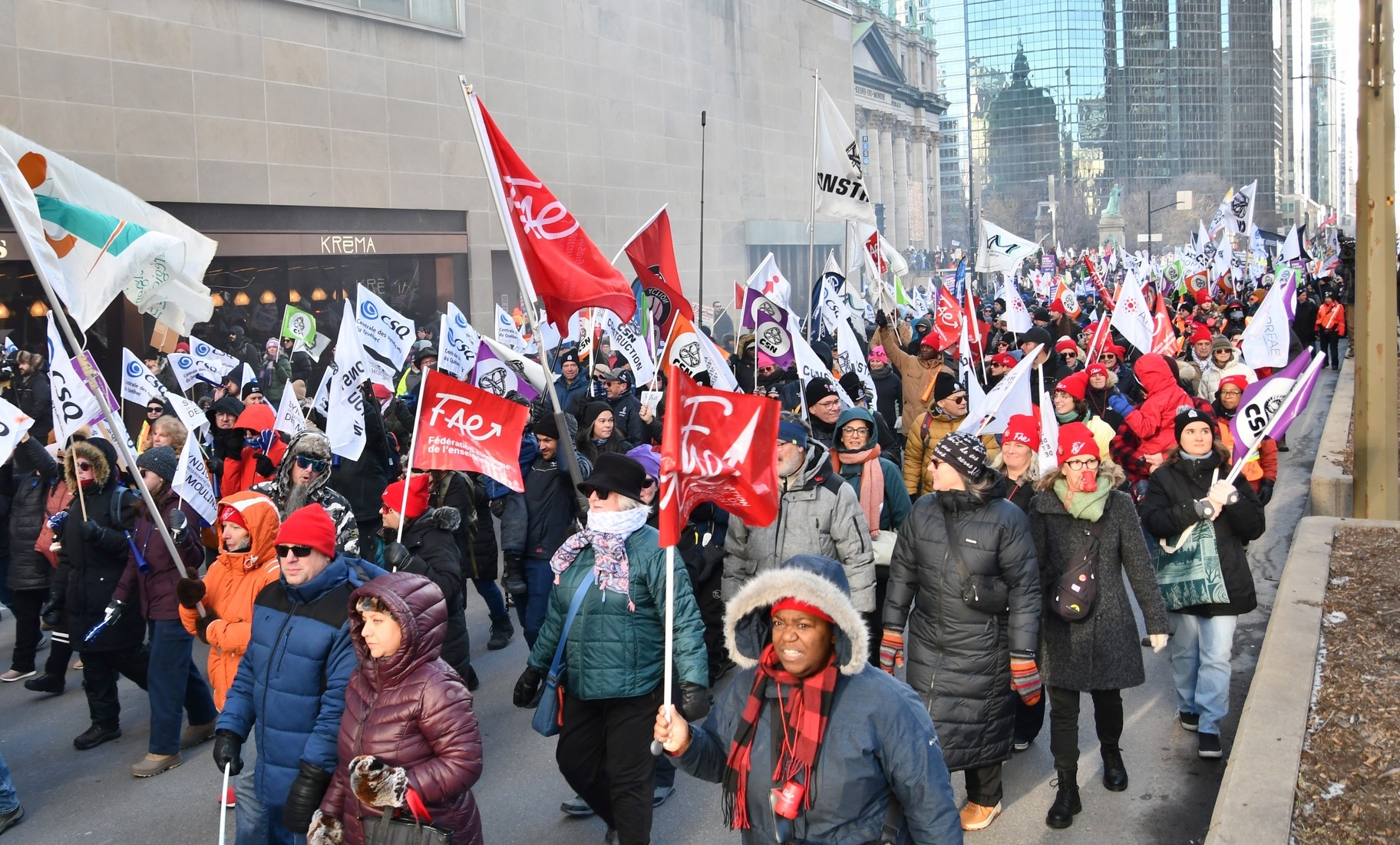
On Nov. 29, more than 50,000 people took to the streets of Montreal to show their opposition to the CAQ government. The immediate background was the coming into effect of two anti-union laws: Bill 14—which allows the government to break strikes by decree—as well as Bill 3—which makes a portion of union dues optional. But it is clear that this demo expressed was a rejection of the CAQ as a whole.
This is the largest union demonstration since the Common Front of 2023, and shows the great potential for a general struggle against the CAQ and austerity.
And now?
In the weeks before the demonstration, the unions mobilized in ways we don’t often see. They handed out flyers in the subway and hospital cafeterias, sent out mass emails, and mentioned the demonstration every time they appeared on television. This shows that, when they want to, unions have great power to mobilize politically.
This combative mood is also evident in the statements made by Magali Picard, who spoke of organizing a “social strike” (“grève sociale”) on May 1 and waging war on this government.
However, there is no concrete plan to achieve this. The Nov. 29 demonstration would have been an ideal opportunity to launch a campaign of local demonstrations and assemblies in preparation for a strike. The unions have not announced anything like this.
Instead, the bulk of the FTQ’s efforts seem to be focused on a political lobbying campaign targeting opposition MNAs and candidates ahead of the next election in October 2026—as was affirmed by Magali Picard at the Steelworkers’ convention in mid-November. We cannot trust the bosses’ parties—including the Parti Québécois (PQ) to repeal the CAQ’s reactionary laws. The PQ always makes lots of promises to workers and then governs from the right. The PQ leader even went so far as to boycott the FTQ convention because he doesn’t like Magali Picard’s “tone”! Neither the Liberals nor the PQ are friends of workers.
Similarly, union leaders, in response to Bill 14 (formerly PL89), seem to be content with challenging it in court. Of course, there is little to lose by challenging a law in court. But what matters and really works is to mobilize the power of workers as a class, using methods specific to workers—demonstrations, strikes, and making Bill 14 unenforceable by defying it if it is used. That is possible was demonstrated by Air Canada flight attendants this summer, when they defied the federal Liberals’ back-to-work order.
Fight the bosses’ system
The Nov. 29 demonstration created a wave of enthusiasm among workers. This mood cannot be put on hold for a series of discussions with lawyers or election candidates.
A 24-hour strike is the logical next step for the movement. The leaders of the major unions—starting with the FTQ, CSN, and CSQ—must establish a plan for such a mobilization against the CAQ and its anti-union laws.
And to broaden the mobilization, we also need an argument that links the fight against anti-union laws to a broader struggle against austerity, declining living conditions, inflation, and the hated CAQ government.
This message would also help win the support of the most exploited layers of the working class, especially young people. These people are generally not unionized—their anger is directed toward the system in general. Early this year, a Leger poll concluded that 18–34 year olds “are looking for an economic system that does not seem as rigged as it currently is.”
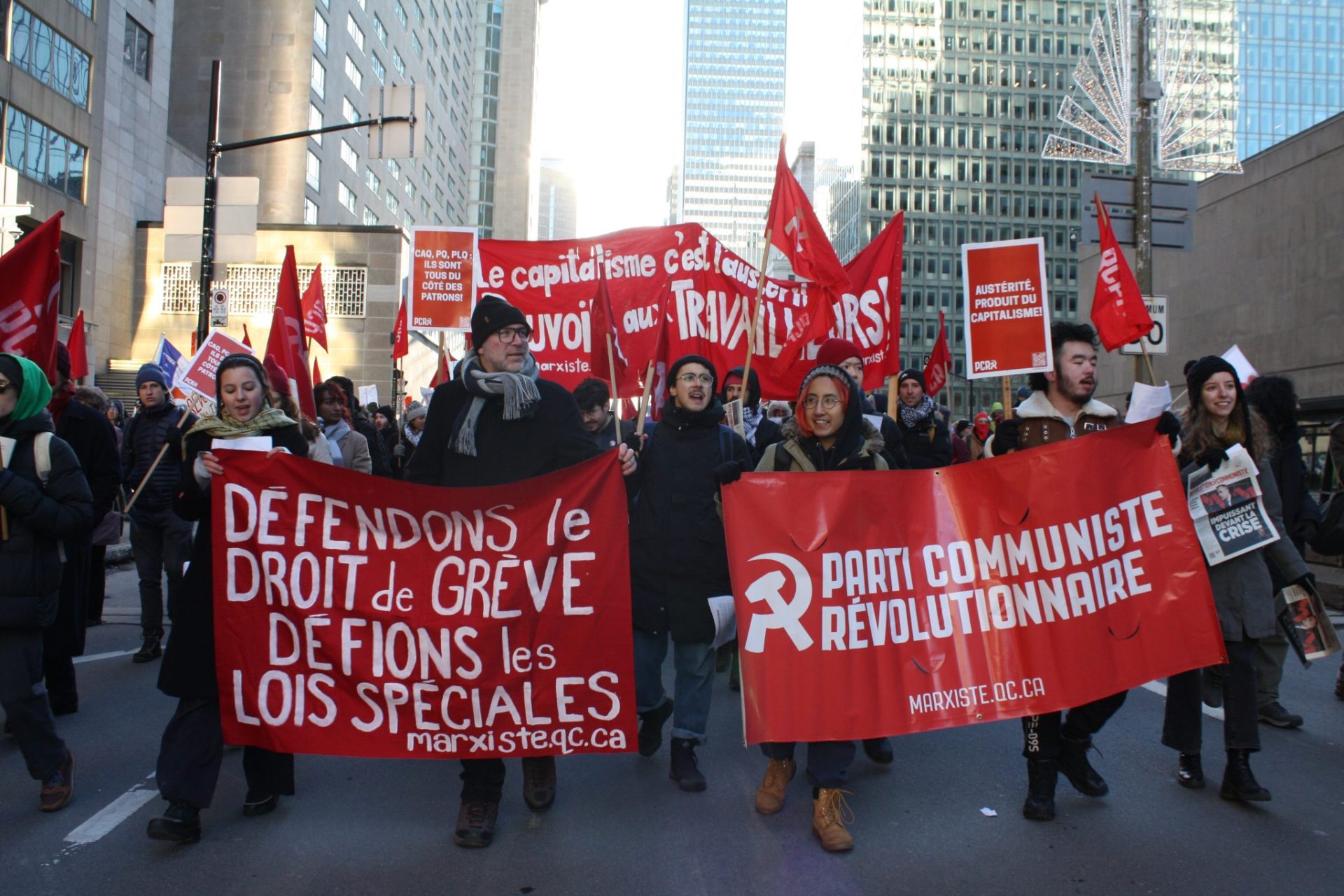
In other words, we must broaden this struggle and turn it into a battle against the entire hated capitalist system. Capitalism is a system where all investment is geared toward maximizing profits. All human activity becomes subordinate to the profits of a handful of shareholders. Austerity and attacks on unions are simply the logical consequences of this. Overthrowing this system is the only way to end all this once and for all.