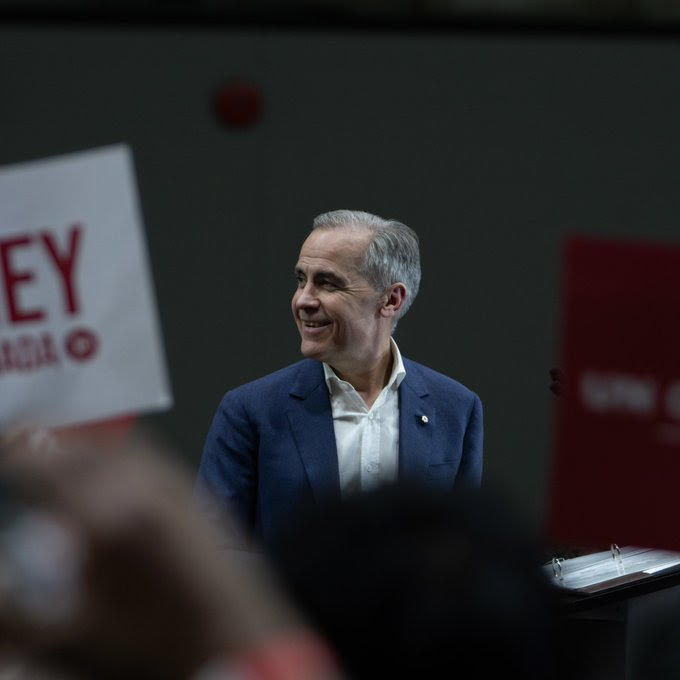
On April 13, Mark Carney got his long awaited wish of a Liberal majority government.
For most people, the reaction to the news was like that of a visit to the dentist’s office—some found it mildly irritating, others found it unavoidable, and hardly anyone found it particularly interesting.
The mood was noticeably different in Canada’s boardrooms.
In an interview with The Globe & Mail, one CEO remarked that “you would find today, among my peers, that most are happy we have a majority government.” The head of the Canadian Association of Petroleum Producers concurred, stating “I’m hoping with the majority government that we can move faster.”
In fact, Canada’s elite have been itching for a Liberal majority for some time. Carney’s minority position made it difficult to pass the kind of painful legislation—austerity and environmental deregulation among them—that could enhance their market position and boost their profits.
That obstacle has now been removed—much to corporate Canada’s delight.
In the past, the formation of governments that coddled the capitalists and throttled everyone else could always be justified by invoking the “democratic will” of the electorate.
But this argument no longer holds water. For the first time in Canadian history, a majority government has been formed, not as the outcome of a general election, but as a result of horse trading between the government and the opposition. Carney’s majority was not voted in—but engineered.
The Liberals defend their majority by arguing that floor crossing is par for the course in Canadian democracy—and that is perfectly true.
But what does that say about our democracy? Is it democratic to vote for one party in an election, only to have the MP of that party switch sides when it helps to further the interests of their political career?
Lenin once described parliamentary elections as the ability of people to vote for which capitalist party to repress and crush them. Canada’s parliament is incapable of reaching even this base level of deception.
“But Canadians vote for their MPs, and MPs are allowed to change their views”—or so the Liberal argument goes.
But have they? Mere weeks ago, former Conservative MP Marilyn Gladu accused the Liberals of “tyranny” and of wanting to throw people like her in prison for reading bible verses. Now she is a Liberal herself.
It seems tyranny is not so bad after all—as long as there is a cushy position for the MP in question at the end of it.
The Tories and the NDP have lashed their renegade MPs as traitors to those who voted for them. But this also misses the point.
If MPs were bribed, why were they so easily bought to start with? If their views now align with the Liberals, what does that say about the supposedly “anti-Liberal” policies of the Tories and the NDP? In fact, reports suggest that up to 10 more MPs are already in discussion with the Liberals to make the jump across the floor.
Left unspoken is the obvious reality—that the entire Canadian parliament is stacked with MPs whose only interest is that of themselves and their cronies, and whose views on every fundamental question are basically the same. This is capitalist democracy in a nutshell.
No wonder the ruling class got its majority.

