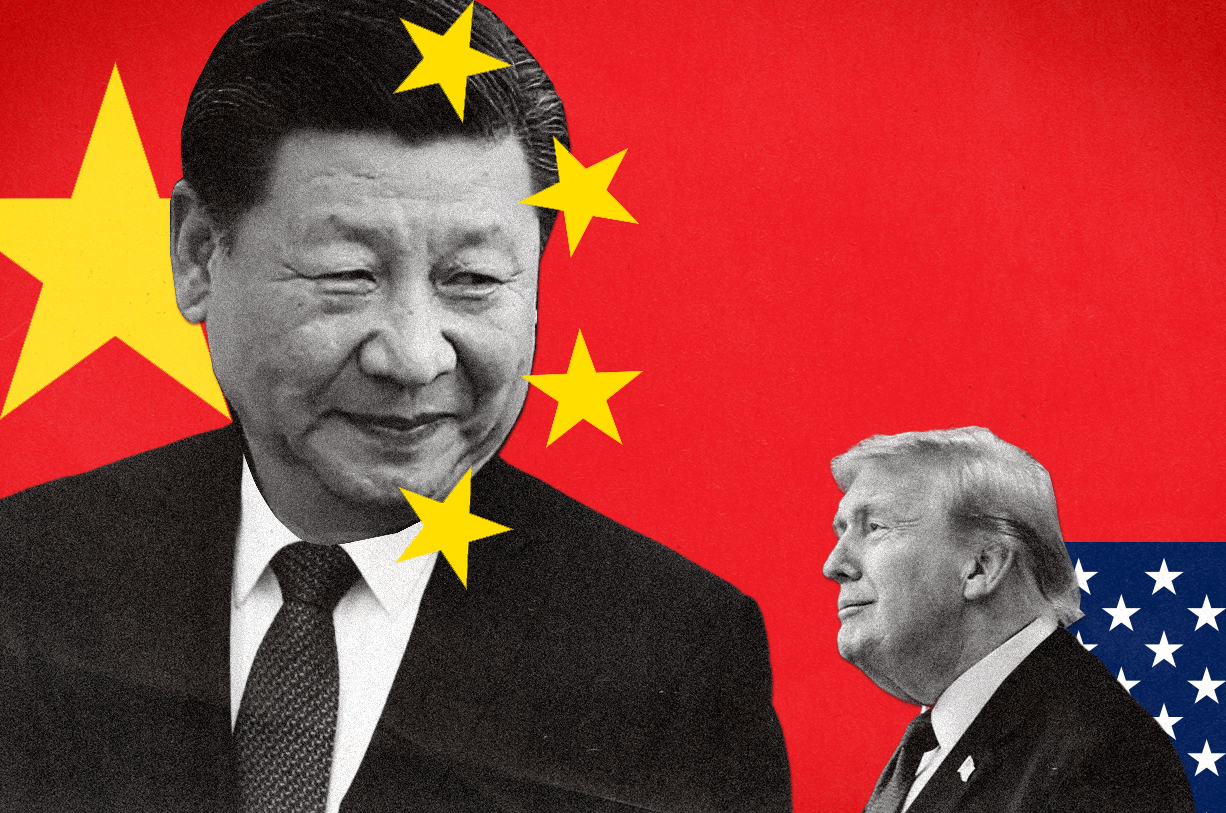
“The unipolar hegemony of a major power is becoming increasingly unsustainable. At home, its democracy is mutating, its economy decaying, and its society fracturing at an accelerated pace; abroad, its credibility is rapidly going bankrupt, its hegemony is crumbling, and its myth is collapsing.” – Chen Yixin, China’s Minister of State Security
Concretely speaking, little or nothing was achieved at the ‘G2’ summit between China and America last week. No shift from China on Iran, no shift on tariffs, no shift on rare earths, nor on Taiwan. But in the relations of imperialist powers, the intangibles of prestige and appearance can be decisive, just as between two sets of gangsters trying to call each other’s bluff.
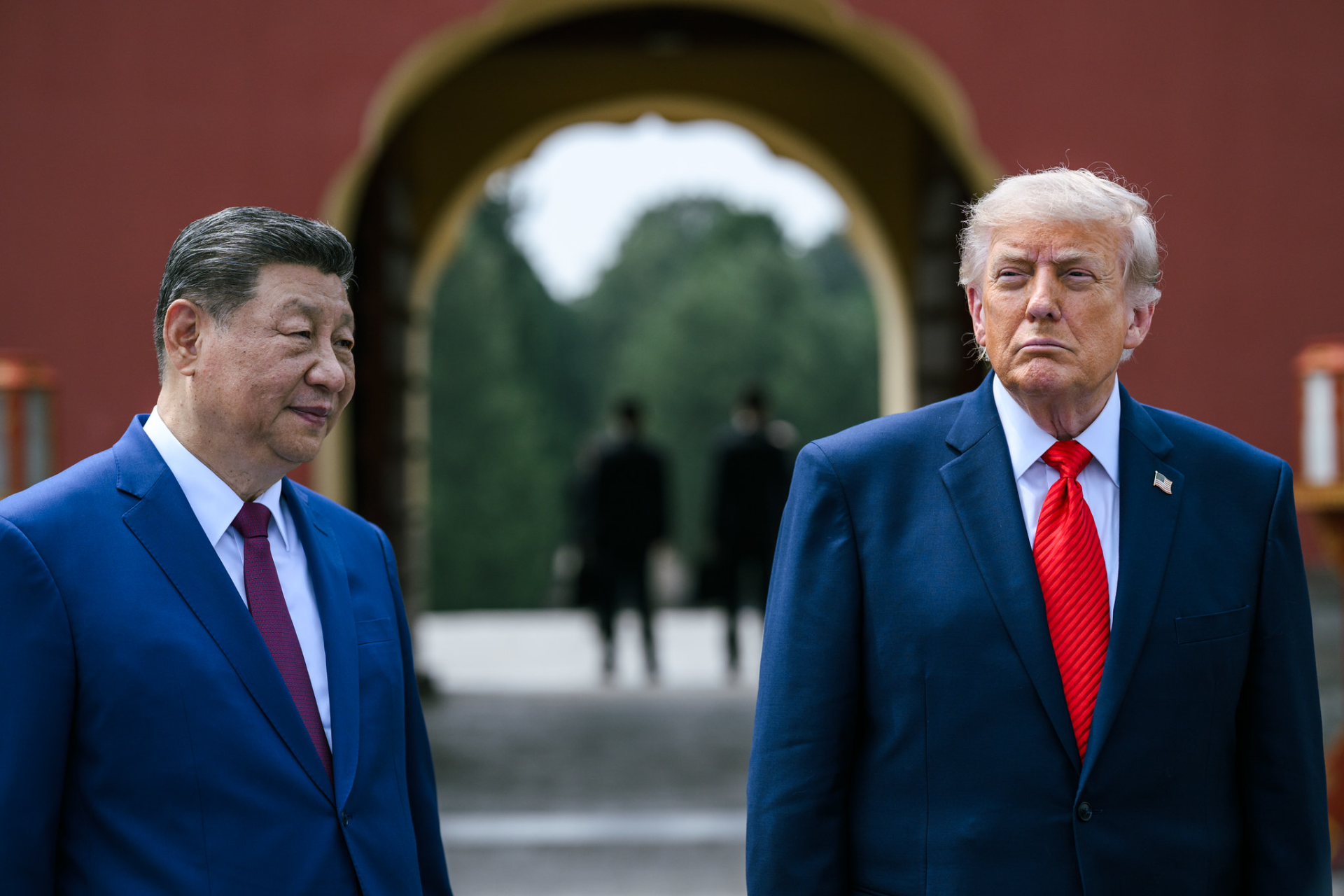
In this respect, the summit was a Chinese success. It left a general impression of an unmoved Chinese leadership receiving a petitioner desperate for help. The Chinese not only agreed to change nothing of importance, they also said nothing besides some words of warning regarding Taiwan, and did not have to. That was the point. Trump, on the other hand, said a lot, and in doing so gave off a general air of both desperation and awe at his hosts.
Nine years ago, when Trump last had a state visit to China, Beijing strove to assert and convince that it was a great power of similar standing to the US. This time, it had no need to do anything of the sort. Instead, it let Trump say it for them, as he did on multiple occasions, declaring Xi Jinping an incredibly powerful and impressive leader, and China a ‘partner’ with whom the US hoped to have a ‘beautiful’ relationship.
As if to presage the character of the summit, Marco Rubio decided to fly to China in an identical tracksuit to that worn by Maduro when he was flown in handcuffs to meet his new masters in New York. He obviously thought this underlined his own power by reliving the glory days of the US raid in Caracas five months ago. But it only served to remind everyone of how long ago that now seems in the wake of Trump’s colossal blunder in Iran. Thanks to that blunder, it was now Trump and Rubio in a weakened position who were flying to meet a powerful president; thus, the tracksuit was more apt than Rubio realised.
Domestic woes
As everyone knows, Donald Trump loves to make ‘deals’ and thinks of himself as a master dealmaker. However, when two businessmen, or gangsters, negotiate a deal, they are usually able to hide their dirty laundry from their negotiating partner. This forms a major part of their tactics: they try to present themselves as strong, and perceive what strengths their opponents really have and what is a bluff.
This is a tactic not available to Trump, in the main. China is well aware of America’s weaknesses, such as its internal divisions, the looming midterms and Trump’s terrible polling numbers, the anger of the American working class, the rate of inflation, the health of the US economy and the shrinking of its technological advantage.
They will know, for example, that the American population, especially its youth, has an increasingly positive view of China, and is increasingly uninterested in the prowess of American imperialism, something which they lack confidence in anyway. Instead, they are overwhelmingly moved by economic concerns. They will know, of course, that Trump has made an enormous blunder by attacking Iran, has essentially lost that conflict and is desperate for a way out.
Trump’s entourage contained few experts on China, but many superstar capitalists, such as Elon Musk, Jenson Huang of Nvidia and Tim Cook of Apple. What a graphic demonstration of the nature of the bourgeois state in the epoch of imperialism. As usual, Trump boasted about his posse of monopolists, but behind the bluster, it revealed a complete reversal of Trump’s position on China: the man who started a trade war with China was now travelling there backed by businessmen in an attempt to win economic concessions.
One of the most important concessions he had hoped for was on rare earths. It was China’s stranglehold on these vital minerals that gave it a decisive edge in the tariff trade war of 2025. It likes to remind the US of that fact by constantly holding up rare earth export licences for individual US firms. Trump’s team hoped to get some kind of agreement for China to stop doing that, but none was forthcoming.
In a deeply ironic turn of events, the summit raised the prospect of Chinese investment in the US, bringing with it superior Chinese technology, particularly in the fields of batteries and green energy, and electric vehicles. Trump is clearly open to this, having said in January that:
“If they want to come in and build the plant and hire you and hire your friends and your neighbors, that’s great… I love that. Let China come in, let Japan come in. They are and they’ll be building plants, but they’re using our labor.”
However, nothing concrete materialised on this front.
What did materialise, to much fanfare from Trump’s side, was an agreement by China to buy 200 Boeing planes and an unspecified amount of beef and soybeans from the US. Even this was disappointing, because it had been expected China would agree to buy 500 Boeing planes. As a result, Boeing shares fell 4 percent.
Taiwan and Asia
Knowing that Trump is in trouble because of his blunder in Iran and because of his desire to be seen as bringing peace, Xi firmly declared at the beginning of the summit that “the Taiwan question is the most important issue in China-US relations” and warned that “If mishandled, the two nations could collide or even come into conflict, pushing the entire China-US relationship into a highly perilous situation.”
In doing so, he was threatening an overstretched administration with another war, a war that Trump and the world now know – thanks to their difficulties in Iran – the US would be very unlikely to win. Hence, Xi’s pointed reference to the need to avoid the Thucydides trap, which refers to the scenario in which two powers, neither of which wants a war, end up at war because of mutual mistrust and tit-for-tat threats and reprisals. It was a very pointed reference, because in the classical Thucydides trap, the cause of the tension is that one of the powers is in decline, and the other is rising.
Trump was surprisingly disciplined in his comments regarding Taiwan during the summit, refusing to be drawn on what he would do if Taiwan were attacked by China. This is the traditional US position on Taiwan known as ‘strategic ambiguity’. The aim is to both intimidate China away from attacking Taiwan (since the US ‘might’ choose to defend it with a great deal of force) and not provoke it into doing so (by not making Taiwan overconfident of US backing and therefore leading it to declare independence).
After the summit, however, Trump revealed how much Chinese power and US difficulties in Iran had got to him, when he told Fox News that:
“You know, when you look at the odds, China is a very, very powerful, big country. That’s a very small island. Think of it, it’s 59 miles away. 59 miles. We’re 9,500 miles away. That’s a little bit of a difficult problem.”
Trump’s equivocation on Taiwan is what Xi hopes to further. The CCP, and Xi in particular, have made annexing Taiwan fundamental to the credibility of the Chinese regime. Ultimately, annexing and fully controlling Taiwan has been a core goal pursued by the CCP regime well before Xi’s term. But they would much rather achieve this without an invasion, which would be very economically and politically costly.
If the US effectively declares it will not defend Taiwan, then in reality, the Taiwanese bourgeoisie has no choice but to acquiesce to Beijing. This would not necessarily mean complete, immediate annexation by China, but at least its eventual agreement to being integrated into China, as happened to Hong Kong.
As well as this, because of Trump’s quagmire in Iran, China has a significant opportunity in Asia. Asian countries are the worst hit by the energy crisis caused by the war. Some, like the Philippines and Vietnam, are in an increasingly desperate situation. As with everything else, China is far better prepared here, having spent the past period building up an enormous stockpile of oil. It also possesses the world’s greatest capacity for oil refinement, and has immense sources of renewable energy, along with other energy sources. So, naturally, countries in this part of the world are coming begging, and many of them are staunch US allies. The Economist reports that:
“This month China allowed refiners to ship some petrol, diesel and jet-fuel cargoes abroad, easing a ban imposed earlier in the war. Reports suggest the first shipments will head to Vietnam and Laos, which have friendly relations with their northern neighbour. But even American allies have come calling. On April 29th Penny Wong, Australia’s foreign minister, secured a deal for jet fuel on a trip to Beijing.”
Meanwhile, so desperate is Washington’s position in Iran that the summit in China was partially transformed into a mission to get China’s help, presumably by twisting Tehran’s arm into reopening the Strait of Hormuz. Rubio himself admitted this by saying they hoped, “to convince [China] to play a more active role in getting Iran to walk away from what they’re doing now and trying to do now in the Persian Gulf”.
It might appear as if the US did score a victory here, since at the summit China agreed not to sell Iran any weapons. However, clearly Iran does not particularly need weapons from China. As has been reported, the CIA estimates it retains 70 percent of its missile stockpile (not to speak of drones) and 80 percent of its launchers. The US seems fearful of resuming the war as it is.
China’s basic approach to the Iran War is simply not to ‘interrupt the enemy when it is making a mistake.’ For that reason, alongside the fact that it is in a stronger position regarding energy security, China will clearly not help America in pressuring Iran, even though it wants the war to end as quickly as possible, for economic reasons.
Magnanimous China, flattered Trump
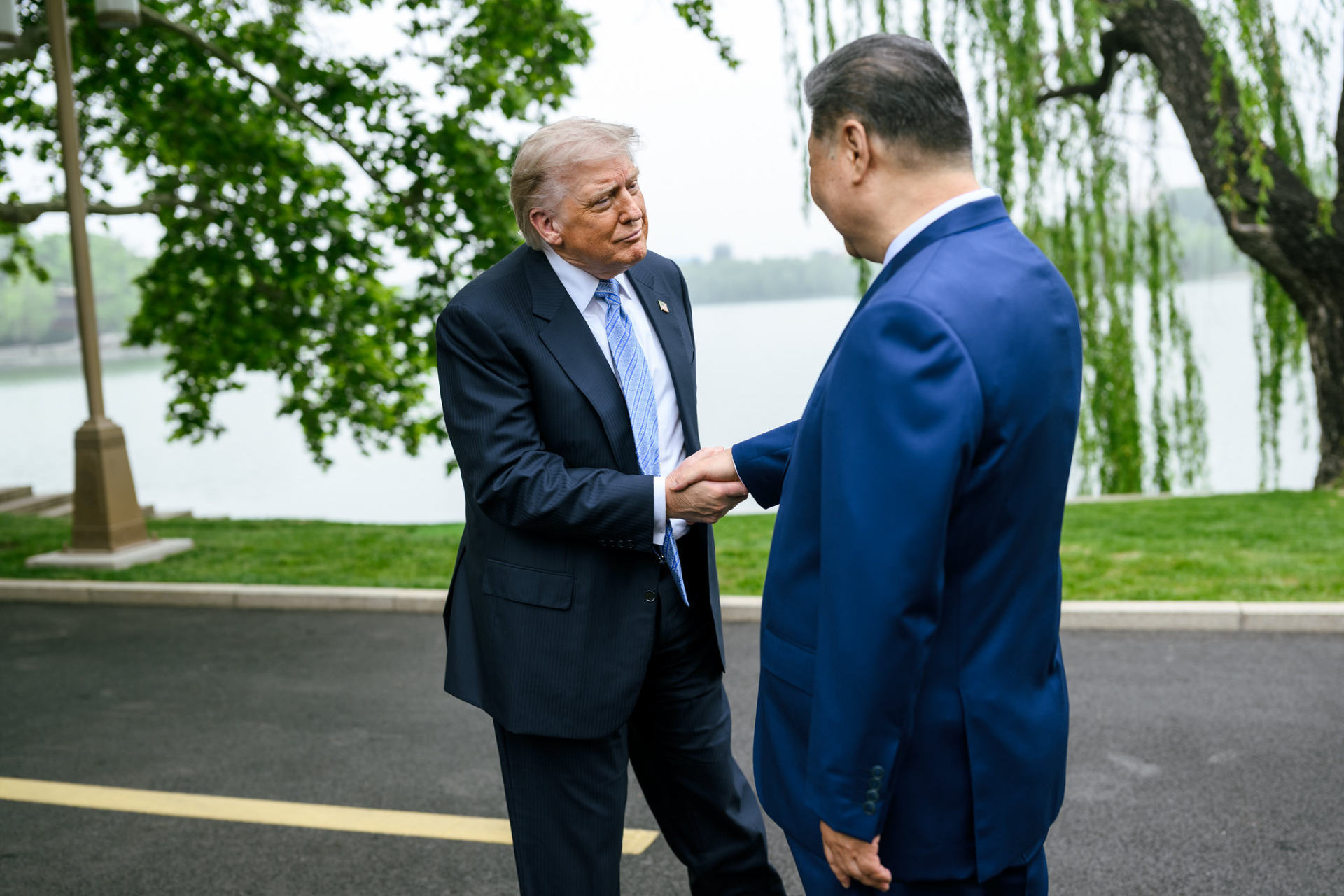
Whilst at first the Chinese regime was unsure of what to make of Trump, and even fearful of his anti-China agenda, they feel they have the measure of him now. Rather than seeking to humiliate him, they chose to flatter and impress him on the trip, with spectacular dance routines, toasts and guided walks.
The aim was to shift Trump’s perception, taking advantage of him in his current vulnerable state to make him feel flattered at being an equal to this great giant of China, to sell him a vision of a world jointly dominated by the two great countries. They seem to have largely succeeded in that goal.
The future of the world’s most important relationship, however, does not depend on how it is perceived by Trump, nor by Xi. Both giants inhabit a world capitalist system mired in crisis. Both countries are beset by economic problems. Anything could destabilise the relations between them.
Yes, China is in the ascendancy, but its growth is slowing, youth unemployment is close to twenty percent, and it faces a colossal crisis of overproduction. America faces explosions of class struggle as it braces for military defeat, inflation and a looming debt crisis.
Both of their attempts to offset the crisis at home by conquering – or reconquering – markets abroad will invariably come at the expense of the interests of the other. Already, they are at odds in Latin America. In this respect, Trump and Xi’s newfound truce can be overturned in an instant.
Under capitalism, there is no lasting global stability or rationality.

