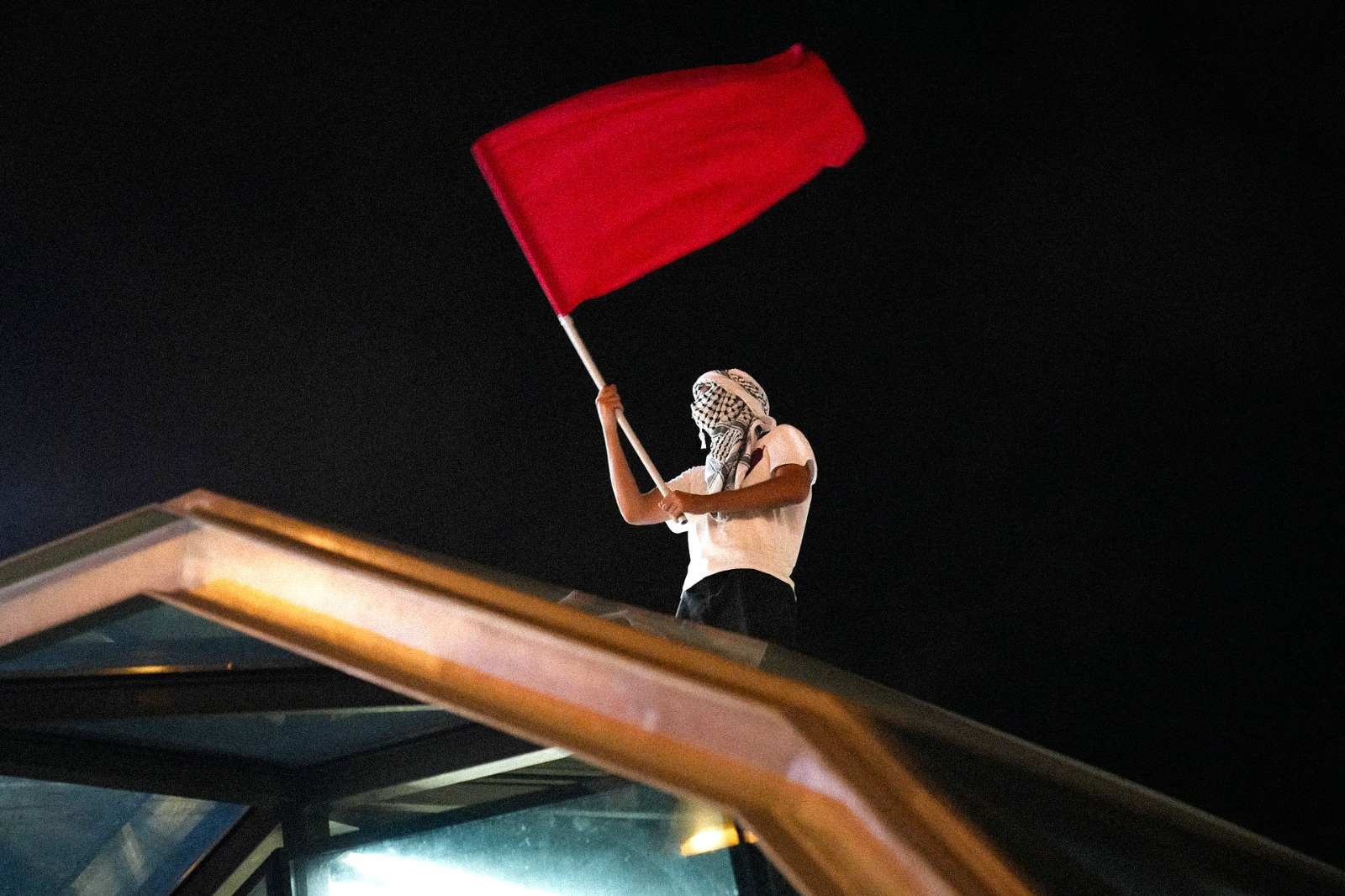
At its height, the movement this weekend saw the French masses fight the police to within 300 metres of the steps of the Elysée Palace. We can only imagine the tension in the President’s office. Across the country a million, perhaps two million people were mobilised. The ruling class has been shaken to its core.
Images of the burning town hall in Limoges have been played on an endless loop, and a great howl of sympathy has gone up for its charred brickwork and smashed glass. Meanwhile, not a peep about how police tear-gassed peacefully assembling protests that very morning to engineer these results; or how the past weeks saw the jaws, teeth, eyes, and hands of teenage kids blasted to bits by militarised police.
There has been an attempt to whip up a culture war, to blame this on Muslims, and so-called ‘recent arrivals’. Oh no, this has nothing to do with ‘recent arrivals’. This is the rage of a home-grown class of modern sans-culottes who have been humiliated and degraded their whole lives.
Fresh graffiti in Paris captures decades of accumulated feeling in the infamous words of presidents past and present: “Chirac called us ‘noise and stench’; Sarkozy said we need cleansing with a ‘pressure washer’ [i.e. water cannon]; Hollande called us ‘people with missing teeth’; Macron calls us ‘nobodies’ – to hell with their contempt!”
The ruling class has been utterly taken aback by the scale of it. 1,000 riot police were injured. “We’ve lost control”, admitted Interior Minister Laurent Nuñez. In some places, police took off their helmets in exhaustion, signalling defeat. But this is just the beginning.
Gen Z revolutions come to Europe
We predicted that the Gen Z revolutions would come to Europe sooner rather than later. Now they are here. France is at the forefront, living up to its revolutionary tradition. It is perhaps rivalled by Albania, where Tirana has seen running battles for days between enormous crowds of youth and the police.
But the whole of Europe is ablaze, and many countries are only one or two steps behind.
In the Spanish State, massive protests have swept the country week in, week out. Just as the French state batters children; so in Spain, multiple vans of riot police and a police helicopter were used to evict and kill an elderly pensioner, 87-year-old Maricarmen, who was violating the property rights of a Vulture Fund that now owned the home she had lived in for 70 years.
These are the liberal, ‘democratic’, western values in defence of which Europe is arming itself to the teeth and pouring weapons into the Ukrainian bloodbath.
In Spain, a general strike has been called for 11 November. In France, a day of action has, with great hesitation, been called by the trade unions on 5 November. Later this month, dockers are striking against militarism on 30 October. An all-European youth strike against militarism has been called for 20 November. In Italy, the CGIL leaders have called for a general strike on 20 November.
This will be a very hot autumn, with airs of 1968. In France, Spain, Portugal, Belgium, Greece, Italy, Ireland, Serbia, Albania, and elsewhere, movements have already erupted. The same inflammable material exists in abundance everywhere else.
Sparked by various questions, a confluence of factors is now running into a single stream: the cost of living, house prices, militarism, Palestine, the environment, austerity, housing, education, racist scapegoating, hatred of the right and fascism. There is fury at police violence, which far from repressing the movement, has stripped illusions in the ‘democratic’ state held by apolitical layers.
Europe acutely expresses all of the contradictions of the system. We recommend our readers read this article. The birthplace of capitalism, it is probably here where the system has progressed the furthest in its senile degeneration, where the capitalist class has become most parasitic, where the limits of the nation state are most suffocating for the productive forces. The defeat in Ukraine is giving the continent its final push over a cliff edge.
But Europe only gives an acute expression of a process raging everywhere. These are part of a chain of revolutionary events that stretch from Sri Lanka to Bangladesh, Kenya, Indonesia, Nepal, Madagascar.
Right now, those revolutionary events that began in South Asia have reached India, where the Modi regime, resorting to repression, is becoming brittle, and starting down the path of Hasina’s regime in Bangladesh.
In Brazil, millions of youth are mobilising against the far right. There are big movements ongoing at present in Chile, in Argentina, a general strike just weeks into the term of a far-right government in Colombia.
From all corners of the globe, we see revolutionary events erupting, reflecting many symptoms of the same disease: the death agony of capitalism.
An enormous leap
As young people once more occupy the Puerta del Sol in Spain and Syntagma Square in Athens, there are echoes of the movements in 2011. I remember watching on TV as the Egyptian masses bravely fought the thugs of the Mubarak regime in Tahrir Square on the ‘Day of Rage’ on 25 January 2011. It quickly spread to Europe, in a massive wave of strikes and town square occupations against austerity. It then caught on in the United States, with the Occupy Wall Street movement.
The present movement bears some similarity to that, but it is on an altogether qualitatively higher level. There has been an enormous leap in consciousness.
In 2011, the mood wasn’t just apolitical, it was anti-political and confused. Naturally. In most places – with the exception of the Iraq War protests – these were the first mass mobilisations in decades.
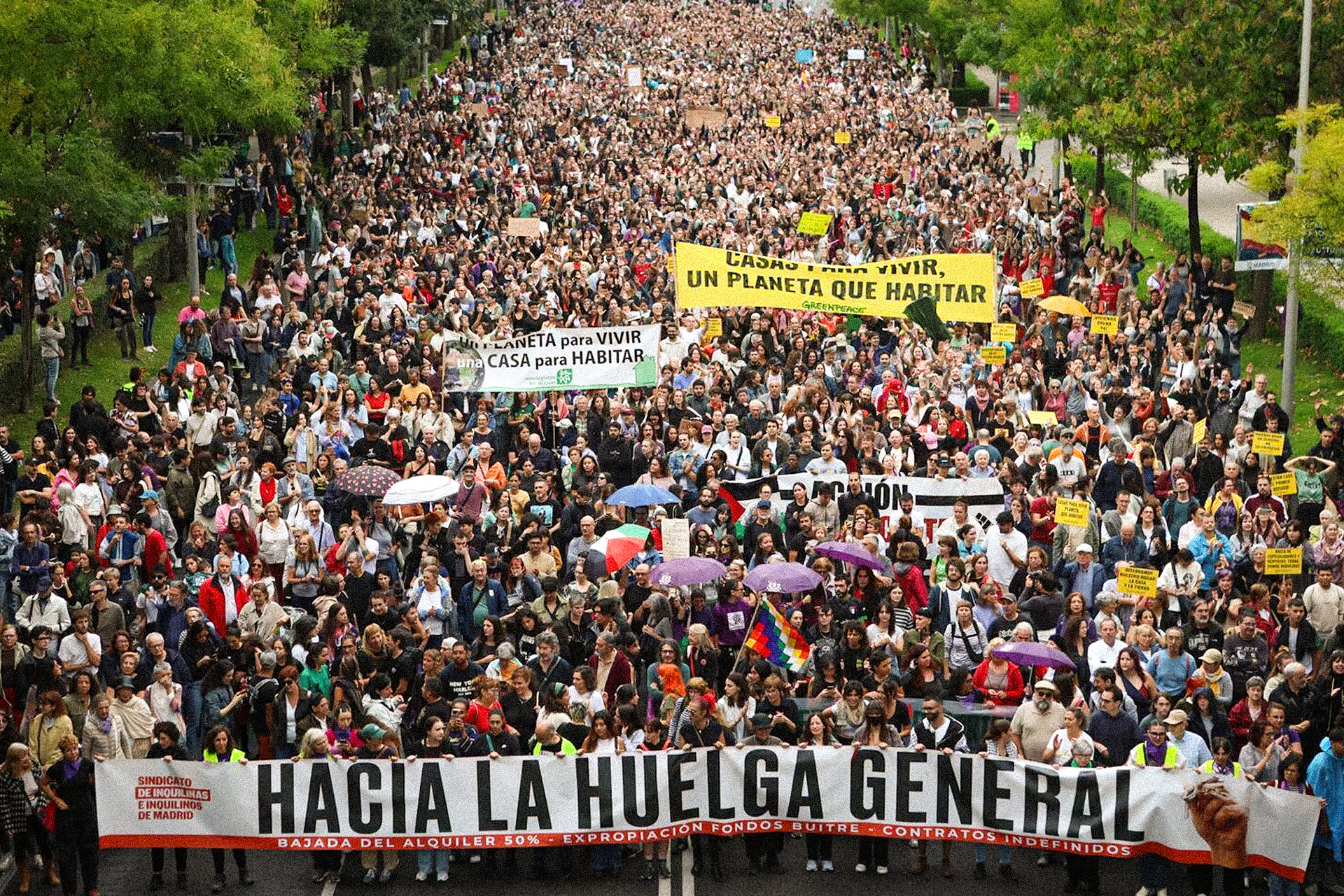
The talk at the time was about how this isn’t about ‘left versus right’ but rather ‘those above and those below’. Podemos, the party which gave this mood a political expression in Spain, said we, ‘la gente’ (‘the people’, not the working class) were fighting ‘la casta’ (‘the caste’) – whoever they were.
There was suspicion not just of political parties but leadership in general. I remember my university being occupied in 2011, and it was quite a large occupation. I brought some young workers to that occupation, and they left it in a state of bafflement. “What are these students going to achieve if they spend all their time debating whether it’s undemocratic to take a vote or elect leaders?” Good question.
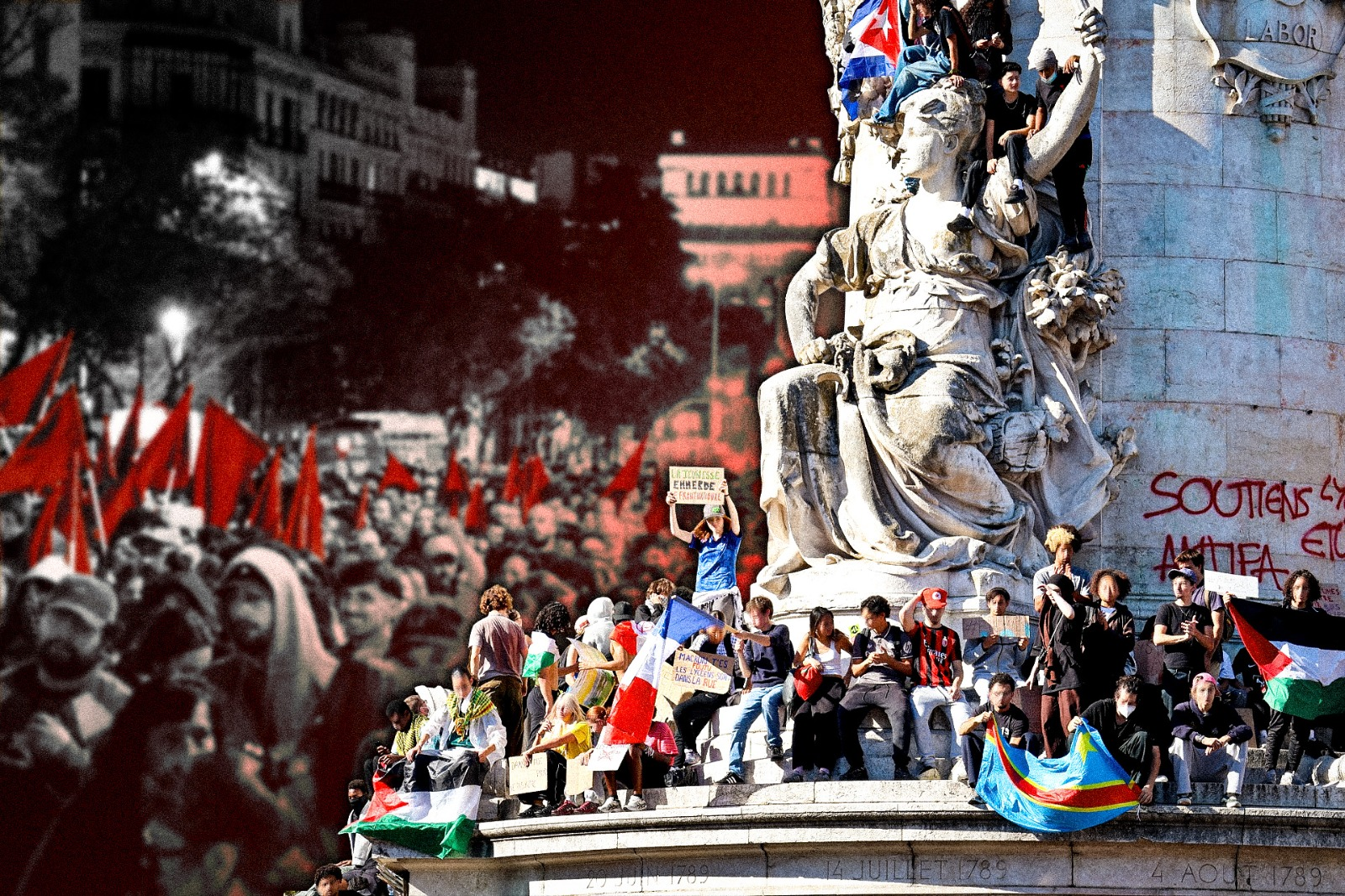
In contrast, today, we see red flags everywhere. Everywhere, the youth are clearly on the radical left, and communist ideas are in the ascent. They are consciously pushing the class question to the fore.
From the start we saw the slogan, “Hacia una huelga general” (‘towards a general strike’), spontaneously raised by youth in the Spanish State long before the unions took up the idea. When striking teachers marched to the encampment at Puerta del Sol in Madrid, they were met with chants of, “Esto es lucha de clases, no podemos hacer las paces” – “this is class struggle, we will not make peace”.
In France, it’s the same. Videos and pictures circulate of French youth raising revolutionary slogans like, “Vive La Commune!”, “We will make a new May ‘68”. In the Place de la République, they sang the workers’ anthem, The Internationale in French. In stirring videos circulating a week later, school students in Athens respond by singing The Internationale in Greek. In Spain, the revolutionary songs of the Civil War are being heard on the streets for the first time since the 1970s. In Italy, the communist partisan song, “Bella ciao”.
For years, the Revolutionary Communist International has stood against a stream of opinion on the so-called ‘left’, which, looking only at the surface appearance of things – the predominance of right-wing demagogues, of war, and media-driven anti-migrant hysteria – pronounced that we were living in an era of reaction, even imminent fascism. They pointed to right-wing voting patterns and low strike figures, and declared that the working class is inert, backward and racist.
We alone said that, no, a tremendous mood of anger was building up. Among the youth especially, this mood is shifting sharply to the left, towards revolutionary conclusions. The way was being prepared for stormy revolutionary outbursts.
The reports we are getting also suggest something else that is quite significant in this leap forward in consciousness. The youth have watched how the revolutionary events in Sri Lanka, Bangladesh and Nepal played out. Governments were overthrown by overwhelming numbers on the street, then new governments came to power and governed in the same way – their policies dictated by the markets.
Having learned that this movement will flow and ebb, that it won’t be a one act drama, significant layers have understood that something will only remain at the ebb if we get organised.
The revolutionary communists must throw open the doors to these youth, must treat them like comrades coming home, and give them an organisation, ideas, direction, and a role to play.
The unions run to catch up
Everywhere, what stands out is the gap between the advanced, revolutionary consciousness of much of the youth, and the conservatism of the trade unions and parties that claim to represent the workers – especially, but not exclusively, their top-level leaderships.
The youth are leapfrogging these organisations. Small and accidental groups, like the Renters’ Union in Spain, are able to call forth huge protests. In Brazil, the Workers’ Party (PT) called a very sombre election rally on the Friday immediately before the first round vote a few weeks ago. After the result gave Bolsonaro 47 percent to Lula’s 45 percent, it wasn’t the PT, but the student unions who called mass protests – to which millions responded in angry, vibrant, youthful protest.
The trade union leaders find themselves trapped in a very uncomfortable situation. They clearly see it as their role to hold back and contain the movement. They have no perspective of revolution. But if they don’t do something, they are in danger of being outflanked and of losing all influence, especially among the youth. And then how would they be able to play their role of holding things back?
Thus, in Spain, the day the youth occupied the Puerta del Sol in Madrid, the small radical union, the CGT, met with members of the Renters Union to discuss the question of a general strike. This was what whipped the leaders of the big union federations, the UGT and CCOO, to quickly call a general strike on 11 November.
They set a nice and distant date to suck momentum out of it, and have done little to mobilise for the strike since. They applied the flame to the blue touch paper with a trembling hand. They did everything to damp and contain the results. But they had to make the call out of fear that someone else would steal a march on them if they hadn’t.
Nevertheless, given the fact that Spain hasn’t experienced a general strike in 15 years, even this trembling act by the union leaders has been seized with enthusiasm. They may get exactly what they dread: an enormous show of strength from the working class.
Stormy events have also arrived in Italy. The south of the country is blockaded by fuel protests. In the north, poor youth have organised over TikTok to fight the police in cities like Milan, and the windows of a few luxury brand shops have been broken. How has the CGIL trade union federation responded to this expression of blind, working-class rage in Milan? By organising a counter-protest for ‘peace’!
Nevertheless, watching what has happened in Spain, and remembering how the small, radical USB union outflanked them and called a general strike for Palestine last October, the union leadership is in a tricky spot. Thus, general secretary Landini announced a general strike for 20 November, explicitly connecting it to the European-wide youth strike against militarism that same day.
CGT plays with fire
But it is, again, in France where we see the role of the union leaders playing out most clearly. Year in, year out, the CGT leaders have played the same cynical game. They don’t call general strikes, but rather ‘days of action’ when everyone is invited to call their own protests. These are usually on weekdays when workers – naturally, given that they are not striking – are at work.
Instead of seeking to strengthen the movement and really throw down the gauntlet to the government and the ruling class, they sought to cut across the mobilisations last weekend on 17 October, by calling not for a general strike, but for another ‘day of action’ on 5 November!
This has led to real anger aimed at the union tops – rightly so. The timing couldn’t have been more cynical: far enough in the future to let things blow over a little, to sap momentum, and after the half term holidays, in the hope that they would defuse the mobilisations of school students who initiated this movement.
But they may have miscalculated. The breadth of the movement means, half term or not, the youth are coming out. And the success of 17 October means there will now be a series of mobilisations leading up to 5 November.
In a situation where any speaker who doesn’t call for Macron’s immediate downfall is booed, CGT leader Sophie Binet has been forced to radicalise her rhetoric to keep a grip on the situation. In so doing, she has made remarks that give a whole new flavour to this ‘day of action’.
Emerging from budget negotiations with the press, she said the following (the emphasis is my own):
“The time has come to take the mobilisation to the next level. Strike action must take the baton. That is why the CGT, together with the inter-union coalition, calls for the largest mobilisation possible on 5 November. We urge all workers to set up general assemblies everywhere – in every workplace, with all their colleagues, in every sector and every factory – to spread and generalise the strike, both on 5 November and beyond. Strike action: that is what must be placed at the top of the agenda. When workers stop working, the country stops, the economy is paralyzed. Only then will our demands finally be heard.”
These are words she could easily live to regret! To keep up with the radical mood, she is now forced to pose 5 November as a strike day, and even to call for the workers to organise assemblies, hinting at the idea of this kicking off a wave of strikes.
Let us not forget that the revolutionary general strike of May 68 started as a single day of strike action on 13 May, which the workers took as the signal for an all-out general strike, which could only be a struggle for power.
We welcome every step by the union leaders, however hesitatingly taken, that really pushes the movement forward. But we must warn the workers that their record shows they have no clear perspective. They lag miles behind the movement, which they are consciously attempting to hold back!
Furthermore, this movement is drawing in diverse layers: school students, university students, yellow vests, pensioners, farmers, not just union members.
As these movements peak across Europe, at their most advanced they will naturally pose the need for more flexible, ad hoc organisations to give an expression to the genuine mood of the broad masses, and their core demands, not just the crumbs that the trade union bureaucrats would happily settle for.
This is how to fight the right!
What is really astonishing is how, all across Europe, these movements led by the revolutionary youth have cut across the racist, culture war atmosphere that the ruling class has cultivated. This is the way to really fight the right wing.
In Spain, the movement is putting forward very radical demands, including for nationalisation of corporate landlords, indefinite tenancy agreements, and a 50 percent reduction in rent. Opinion polls show 83 percent of the population at least partially support the demands of the movement – including 65 percent of the voters of both PP and the far-right Vox!
Meanwhile, in the midst of this, the far right Vox is preparing for the elections, and has come out for cuts to education and healthcare, and for the privatisation of pensions. The anti-establishment credentials they claimed to possess are in tatters. Now, in protest at Vox and the PP, their traditional base, the pensioners, are coming out in protest against them!
What a turnaround! Just a few weeks before the eviction and murder of Maricarmen, what was the dominant political narrative in Spain? It was a reactionary one, of fear-mongering and racism after tens of thousands of migrants swam to the Spanish territory of Ceuta from the Moroccan side of the enclave.
Now, the youth are raising the excellent slogan, “los invasores son los inversores” (“the invaders are the investors”). The class struggle methods of the radical, left-wing youth are cutting across the culture war crap.
In France too, where the youth on the street are infused with hatred of the right and far right, 55 percent of the voters of the Rassemblement National (RN) are against the protests… but that leaves another 45 percent. And even then, more than half support the school students’ demands. They are evenly split.
Mélenchon’s party, La France Insoumise, which to its credit has stood firmly behind the school students and the protests, is strongly in the ascendancy. Meanwhile, Le Pen, trying to prove her respectability in advance of the elections in six months time, is focusing on what? On calls for repression and on proving her ‘fiscal responsibility’, with a vow to carry out €150 billion in cuts – amidst the biggest anti-austerity movement in a generation!
Failure of reformism
This is how to fight the far right. When a fighting, radical left-wing leadership emerges, as it has from among the youth, more backward layers can be drawn behind it. Class questions come to the fore, culture war questions recede. The right is exposed and floundering.
Until the youth began mobilising, this lead was exactly what was missing. The established reformist parties of the so-called ‘left’ had a miserable track record of carrying out the attacks demanded by the capitalists.
Thus, we have an ironic situation. These movements have swung the pendulum sharply to the left in Europe and far beyond. Yet, what do we see on the electoral front? Vox in Spain; AfD in Germany; Le Pen in France; Bolsonaro in Brazil; Reform UK in Britain; Chega in Portugal. Right-wing demagogues on the rise, many of whom may indeed win power in the coming period.
The crisis of capitalism is churning up the whole of society. Politically backward workers and middle-class layers are also being churned up. As those layers seek an alternative, the right is demagogically capturing some of this anti-establishment anger.
This is precisely because of the failure of the weak, class-collaborationist so-called left and trade union leaderships, which has left a vacuum wide open. But this does not mean that these layers are hopelessly reactionary and racist. They can be drawn behind a really revolutionary alternative.
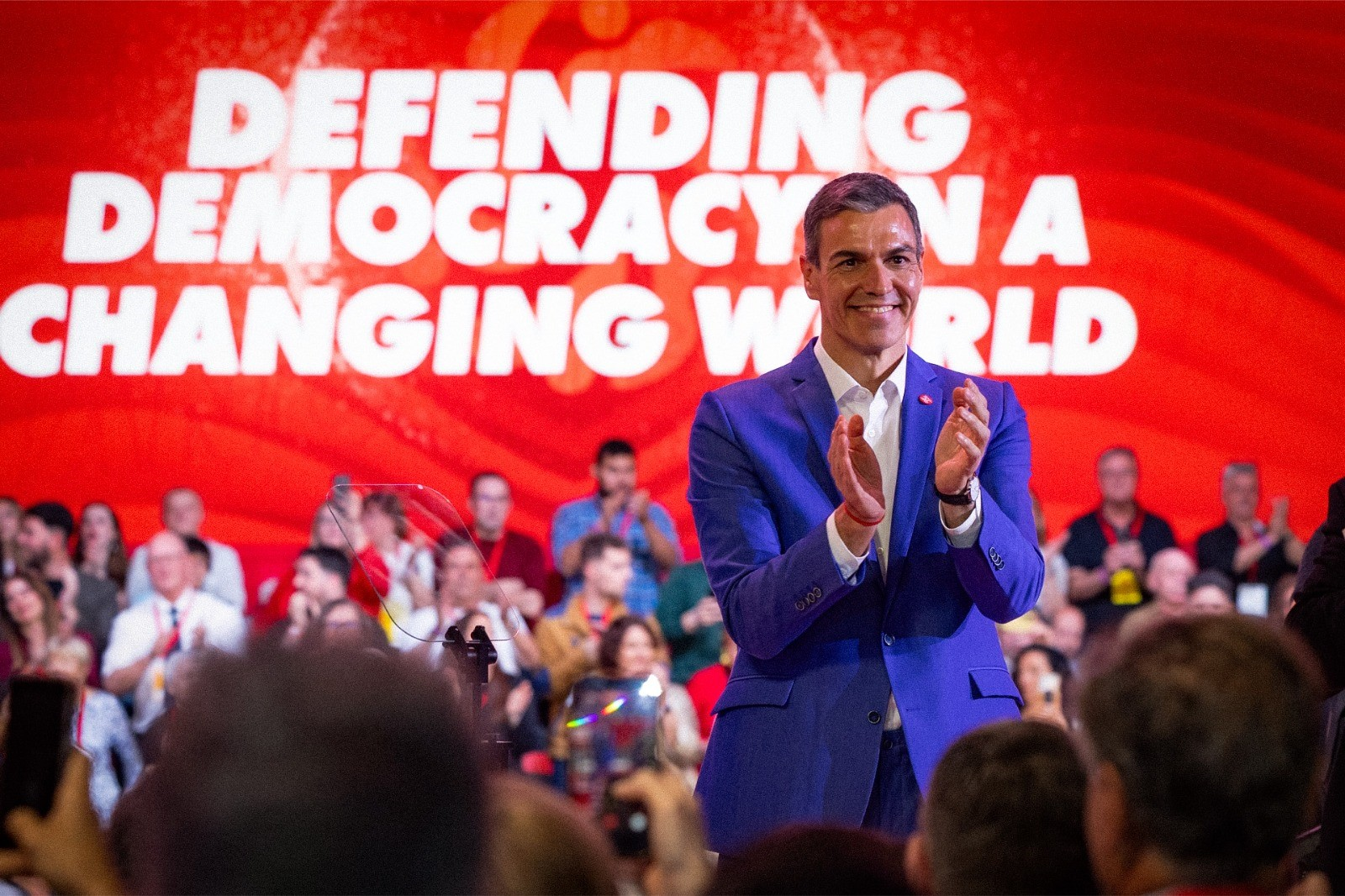
But in its absence, where reformist figures are attempting to capitalise on the mood in society, we see what a weak performance they put on. In Spain, Pedro Sánchez, Socialist Party Prime Minister, has cynically attempted to pose as a friend of the housing movement. He has put a few minimal reforms to parliament, where they were defeated, and has now called an election.
But how can there be any enthusiasm for Sánchez? His government has had eight years to do something about the housing question and has done nothing until now.
In Brazil, it is even clearer. The movement of millions on the streets is against Bolsonaro, and therefore, de facto, it is for Lula. But under whom have conditions worsened to the point where Bolsonaro may now win? Under Lula.
Thus, the movement against Bolsonaro has developed despite the role of Lula and the PT. As one teenager at a protest told the media, “We’re fighting for Brazil, not Lula”. Among millions this is seen as a movement for democracy, against the continent-wide aggression of US imperialism, against the openly reactionary, military-linked right wing.
But a big section of this youth see far beyond Lula, who they merely wish to use to defeat the right. They are groping towards much more radical, even communist ideas.
Fight for communism
We are far from having seen the peak of the present wave of struggle. The crisis, meanwhile, is mounting daily for European capitalism.
Just this week, the yield on French bonds hit five percent for the first time in 23 years. The difference between French and German bond yields brings back echoes of the eurozone crisis of 2011-2015. Except this time we aren’t just talking about small economies like Greece being in the eye of the storm, but the core economies like France, Italy and Germany itself. This is an existential danger for the whole project of the European Union.
Why are bond yields spiking? There is unpayable debt, and now bond markets look on fearfully at these weak, hated governments, and they don’t believe they can do what is ‘necessary’ from the point of view of the capitalists: make the workers pay through austerity.
In the words of the Financial Times, France is caught “between the bond market and the barricades”. Governments are caught between enormous piles of debt, and the revolutionary anger of the masses.
In its editorial before 17 October, Le Monde warned Lecornu’s government not to make concessions to the youth, which it can’t afford: “Priorities must be established, even if it means making unpopular choices.”
After 17 October, its editorial warned the government to be careful not to rely overly on repression. It accused the government of “disastrous escalation: ever more force, ever less restraint and control in its use”.
It is right on both counts. Neither concessions nor repression will extricate it from this crisis.
What opens up is a period of intense class struggle. The ruling class is too weak to strike a decisive blow against the working class. It hangs in mid-air, terrified. Fatalistically, it knows it must attack the working class to ‘calm the markets’, but what can it do against millions of workers once they are mobilised?
But the workers and the youth face a problem too. Their trade union leaders certainly didn’t ask for this movement, and are doing everything in their power to defuse it. The youth themselves have presented the embryo of the alternative: a revolutionary, militant leadership. But they are not organised.
Without organisation, even the most powerful movement will fail to decisively break through. In the elections that followed May 68 in France, it was De Gaulle who won – not because of any lack of fighting spirit among the workers, but because their traditional parties, the Socialist Party and the Communist Party were not prepared to do what was demanded by the moment: to seize power and carry out a socialist revolution.
In the present situation, there is only one way out: for the workers and youth to seize power into their own hands, to form a workers’ government, to carry out the nationalisation of the major industries and financial institutions, seizing the wealth into the hands of the working class. To begin the socialist transformation of society. That is the task of our epoch.
The only other option, the one pursued by the reformist leaders, is to ‘manage’ the capitalist system, and time after time, that has only handed initiative back to the right.
Therefore, in the building wave of struggle, our message to the revolutionary youth is: get organised! We invite you to join the Revolutionary Communist International.

