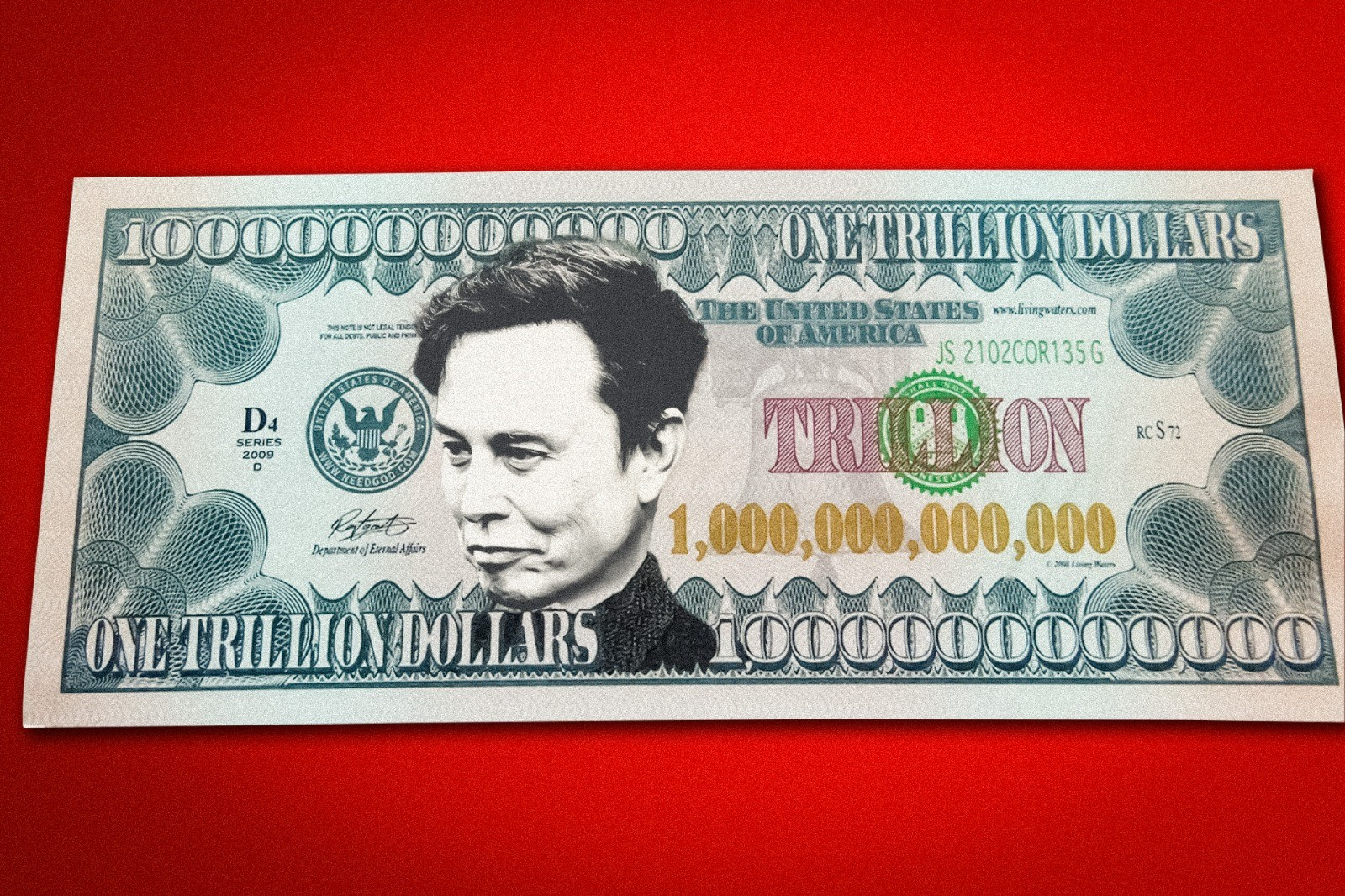
SpaceX’s Initial Public Offering (IPO) briefly rocketed its CEO Elon Musk into the status of history’s first trillionaire. No mean feat for a man who spends more time inciting far-right riots and sharing memes than actually running his company. This milestone begs the question: what use could a rational society make of such riches?
Right-wing sycophants were quick to praise Musk for becoming the first man to enter the ‘four comma club’. British media blowhard Piers Morgan posted the following message of congratulations on X (a social media platform that Musk owns):
“Amid all the predictable seething jealousy and bitter resentment to this news, I’d like to congratulate (@elonmusk) on an astounding achievement. He’s got there by being the most driven, creative, hard-working and ambitious business genius in history. Salut, Elon!”
If our readers can prevent themselves from retching for a moment, they will surely recognise this argument. When mere mortals object to the obscene wealth of megacapitalists like Musk, their cheerleaders accuse us of being green with envy at the success of talented people who earned their money through hard work and ingenuity.
In reply, we propose a simple exercise in mathematics. The median net worth of an average US citizen today is $124,041. Now, this might sound like a fair bit of money. It is approximately eight million times less than one trillion dollars.
So, following Morgan’s logic, either we are to assume that Musk has strived literally millions of times harder than the typical American worker, or he is millions of times more talented and intelligent. Which, given his inane public utterances, we have cause to doubt.
A trillion dollars is an incomprehensible figure for most people. So let’s try to visualise it. If Elon Musk were to cash out his net worth in the form of single dollar bills and stack them one on top of the other, they would reach a height of almost 68,000 miles, which is over a quarter of the way from the earth to the moon. Meanwhile, his SpaceX company has so far managed to send a rocket a maximum distance of 870 miles.
Which is to say, he would delve orders of magnitude deeper into space by simply sitting on his earthly fortune than by stepping into one of his spaceships.
Putting a price on prosperity
Perhaps a better question than what a trillion dollars looks like is what could be done with it: right here and now? The academic Rowan Hooper has done some of the maths in his book, How to Spend a Trillion Dollars, released in 2021 at the height of the COVID-19 pandemic.
During that crisis, faced with the alternative of complete social collapse, the capitalists opened their wallets. The same governments that had spent a decade carrying out austerity, while insisting there was ‘no money’ for social services, managed to cobble together vast sums of cash to fund the development and rollout of vaccines in record time.
They also kept thousands of businesses from collapse and stopped millions of workers from being hurled into unemployment with stimulus measures and furlough schemes. There is no such thing as a free lunch, and this spending spree helped provoke the inflationary crisis we are currently experiencing. But the point is there are huge resources in society that could immediately be put to good use.
Hooper assumes a hypothetical scenario in which we have a trillion dollars to spend on solving humanity’s most-pressing problems. To derive an accurate balancesheet, he looks at technologies and social programmes that either already exist, have been trialled, or are currently under development.
His book is far from a finished programme for a future socialist society, but some of his proposals offer food for thought – and many come surprisingly cheap!
For instance, he puts the cost of ending extreme poverty through the immediate transfer of cash and assets (like livestock, tools and machinery) at $400 billion. Combined with the $600 billion necessary to roll out universal education, he suggests splurging the trillion on a “ten-year period in which everyone in the world is lifted out of poverty.”

What about curing disease? As a starting point, Hooper estimates that the research, development and distribution of cures and preventative measures for HIV, malaria and tuberculosis might come to the very reasonable figure of $150 billion. To offer a second opinion, the UN puts the cost of eradicating tuberculosis alone at $250 billion. A more modest goal that would nevertheless save 1.5 million lives a year, and is still well within our budget!
Future-proofing measures, such as vaccine development and an expanded immunisation programme for emerging diseases, represent a $100 billion investment. While mapping all cell types in the human body and curing damaged cells to extend healthy lifespans amounts to an outlay of just over $200 billion.
He concedes that free, universal healthcare for all of mankind is outside our speculative budget. Instead, he proposes a trial in a single country with poor health outcomes, to serve as a model: Ethiopia. He suggests the success of this pilot scheme would be enough to convince other countries to invest in similar measures.
All-in-all, the cost of eradicating some of humanity’s deadliest diseases and increasing the average global lifespan by a decade, plus rolling out universal healthcare in Ethiopia, leaves us $140 billion to spare out of our trillion dollar warchest!
What if we were to prioritise ending the climate crisis? This is one of the more ambitious projects set by Hooper’s book.
He estimates that you could just about accomplish a full transfer to renewable energy for one trillion dollars. Promoting biodiversity and reversing the mass extinctions attributable to human activity comes out at around $860 billion. Meanwhile, removing excess CO2 from the atmosphere through a combination of long-term investment in carbon capture technologies, reforestation and ocean engineering would amount to just shy of $750 billion.
So, unfortunately, even if we could send three ghosts to persuade Elon Musk to donate his entire fortune to the betterment of his fellow man, we wouldn’t even be able to fully reverse the damage capitalism has inflicted on the planet. Let alone solve all the ills that plague us.
But the good news? Musk’s net worth is not even one percent of the total wealth on earth. By the end of 2026, global GDP is projected to reach $126 trillion. This means that humanity has, at least materially, solved the ‘problem of bread’. For the first time ever, enough resources exist to clothe, house, feed and educate every single person on the planet.
And as Hooper points out, the benefits of accomplishing this would not be merely arithmetic. When people are educated, healthy and securely housed, they become much more productive, and capable of contributing far more to society as a whole. The burden of social problems like crime, disease and forced migration also rapidly diminish, meaning fewer resources need to be expended on treating these symptoms.
In other words, if we could grant a decent and civilised existence to the billions of people currently living in a state of backwardness, we would unlock a universe of potential that is currently crushed by poverty. We would be able to raise humanity’s cultural sights to unimagined levels. Which begs the question: if Elon Musk can ‘earn’ a trillion dollars, why can’t we solve these problems?
Poverty amidst plenty
The answer is that we do not control society’s resources collectively. Instead, they are controlled by a tiny clique of rich parasites. The world’s 12 richest people command more wealth than the poorest half of humanity combined. This dozen individuals have enough money between them to resolve every problem Hooper considers in his book.
The fundamental problem is that capitalism is a system based on the private ownership of the means of production (industry, machinery and raw materials) and investment of capital to generate profit. There is no profit to be made from building hospitals in Ethiopia or investing in research that may or may not result in a novel vaccine. And nobody can compel the capitalists to ‘waste’ their money.
In fact, there is a huge outflow of wealth from the poorest countries to the imperialists in the form of so-called Third World debt. Combined with the direct looting of resources, dozens of poor countries are held in a state of backwardness, unable to develop the infrastructure to meet people’s basic needs.
Meanwhile, the capitalists spend far more than Musk’s trillion-dollar net worth on arsenals to defend ‘their’ markets and spheres of interest, wreaking destruction and death on countless innocent people. Musk is personally bound up in this orgy of militarism, holding billions of dollars in military contracts through SpaceX.
The reason that so many people react to Musk’s fortune with revulsion has nothing to do with envy. They are justifiably disgusted that trillionaires exist alongside record levels of hunger, seemingly endless war, and conditions of squalor for millions of people.
They also understand instinctively that nobody acquires a trillion dollars without leeching working people dry. This feeling is reinforced by the fact that the masses feel poorer every day, while the rich flaunt their billions (or, indeed, trillions).
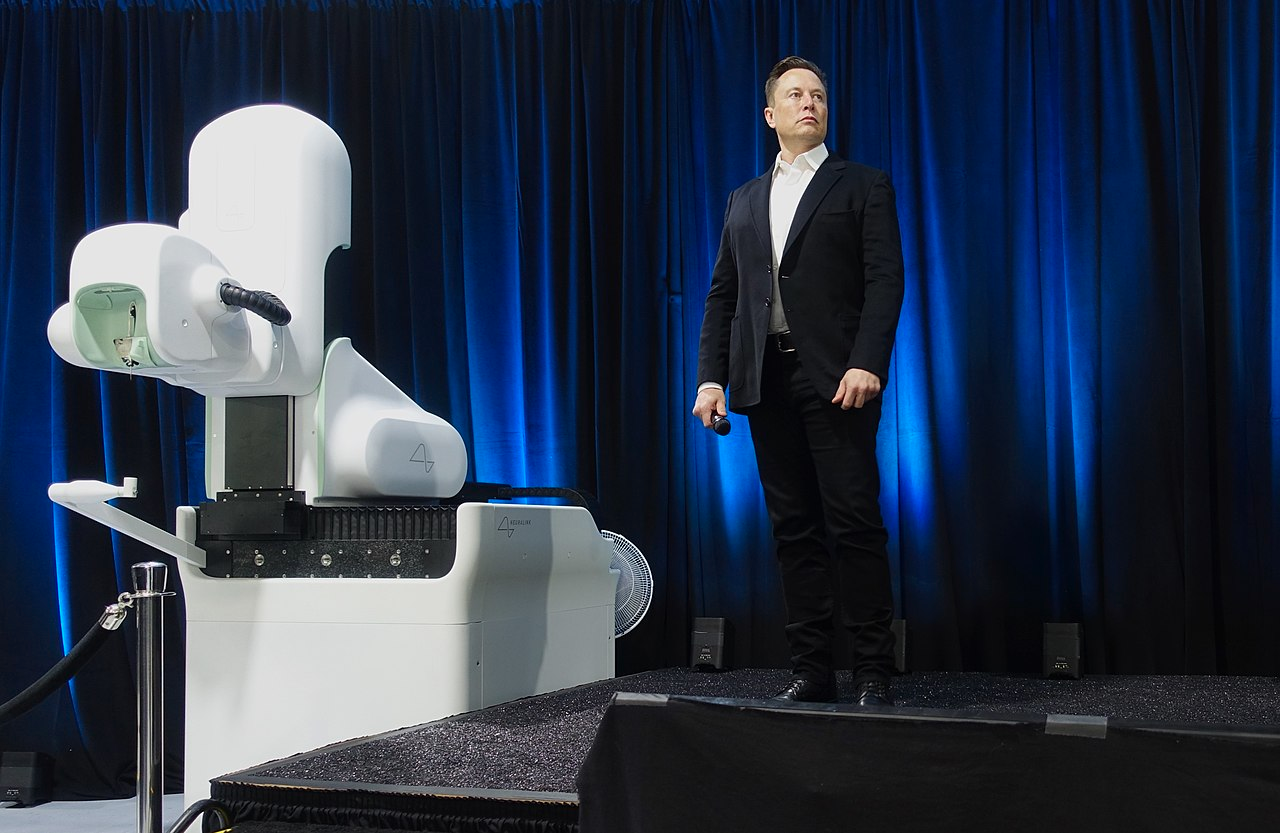
Inequality is a feature of capitalism. In volume one of Capital, Karl Marx describes the accumulation of wealth at one pole of society as “at the same time accumulation of misery, agony of toil, slavery, ignorance, brutality, mental degradation, at the opposite pole.” But today, this dynamic has reached truly outrageous proportions.
Since 2020, billionaire wealth has grown by 81 percent. Meanwhile, the spending power of working people has been gnawed away by inflation across the world, while poverty is accelerating in the poorest countries. In other words, there has been a vast transfer of wealth upwards.
Elon Musk embodies the senile decay of capitalism today. He made a fortune at the head of a company that was a loss-leader for years, propped up by handouts from the US state. He has amassed unfathomable wealth that could be transformative for millions of people. Yet he spends his days sharing painfully unamusing ‘jokes’ to an audience of bots and bootlickers; and scaremongering about migrants undermining ‘western civilisation’, while fomenting racist pogroms in some of the most deprived communities in Western Europe.
That such a man is ‘worth’ a trillion dollars is a shattering indictment of a system whose overthrow is long overdue. But we communists do not want to expropriate Musk’s ill-gotten gains alone. We are coming for all the billionaires: those frequent fliers to Epstein’s island, who fattened themselves on the blood and sweat of the proletariat.
One limitation of Hooper’s book is that he restricts himself to solving problems within capitalism. But if the billionaires’ resources were put at the command of a democratically planned economy, we would massively increase the general level of production, giving access to vastly more resources than currently exist.
The expropriation of bloodsuckers like Musk would only be the beginning. But nevertheless, with their trillions, we could change the lives of billions for the better.

