
“I saw them in Moscow vomiting champagne and caviar on their Pierre Cardin suits. I saw them in Bangkok screwing children, girls and boys, for a handful of small change. I saw them in Montreal in their offices with their dirty boss eyes, their dirty boss voices, their dirty boss faces, haughty, contemptuous, arrogant.”
Montreal, 1985. In a dimly lit reception room of the Queen Elizabeth Hotel, three trumpets blare out a deafening rendition of “God Save the Queen”. Tonight, dressed as merchants from a bygone era, the dignitaries of the Beaver Club are celebrating. Founded two hundred years earlier by the elite of the colonial power in the Province of Quebec, this exclusive club of the Canadian establishment has remained faithful to its traditions. During a Canadiana-themed party, honorable crooks mimic their fur-trading ancestors, their mouths full of petits fours and fatuity.
They are not the only ones laughing. Under the guise of a harmless university research project, a couple of filmmakers—Manon Leriche and Pierre Falardeau—are watching them from the shadows. Their cameras record the vain speeches of La Presse editor-in-chief Roger D. Landry, who is clearly drunk. They catch Liberal Minister Marc Lalonde flirting with his young female dining companions, or waddling awkwardly across the dance floor. To the frenzied applause of the audience, waiters dressed as Indian chiefs and lumberjacks put on a show to the sound of bagpipes.
All the depravity, vanity and mediocrity of the powerful splash onto the screen. In fifteen minutes, Le Temps des Bouffons plunges us into the foul atmosphere of their mothballed ceremonial. But it is undoubtedly thanks to Falardeau’s incendiary commentary, layered over these already powerful images, that the film acquires universal significance. In a hoarse voice off-screen, the pamphleteer rails against the “profiteers who pass themselves off as philanthropists,” the “groveling journalists dressed up as servile editorialists,” the “senile senators” and other specimens of rapacious capitalists, “in New York, Paris, Mexico City.”
The project, initially funded by the National Film Board of Canada, was scrapped once the first cut was delivered. They demanded a “neutral tone,” to which Falardeau rightly protested: “Why should art be neutral? Art isn’t neutral! We have the right to be shocked, to be enraged! It’s not a sin, damn it!” The vulgar language of the narration also certainly shocked NFB officials. But as Falardeau seems to remind us when he denounces “this fine bunch of mediocrities, […] vulgar and crude with their fancy suits and luxury jewelry,” the real obscenity is that of extreme wealth.
It would take nine years after filming for the documentary tapes to finally be distributed, under the table. On the back, a label invited each viewer to make and distribute as many pirated copies as possible.
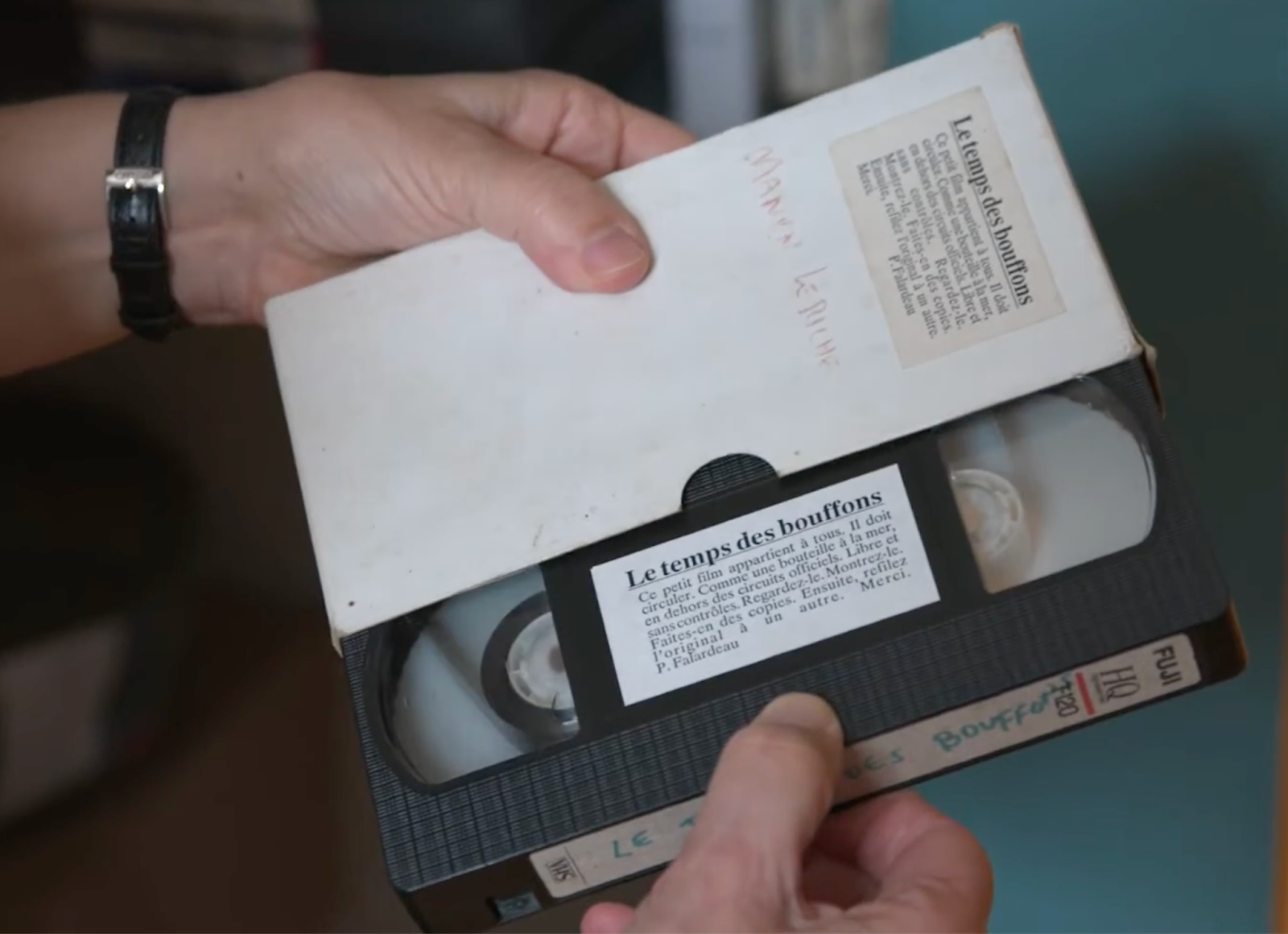
Its clandestine distribution and vibrant frankness make it a unique work in Quebec cinema. The class anger it expresses has led to it being translated into various languages and viewed around the world, wherever these wealthy debauchees are found. During the 2012 Quebec student strike and the Yellow Vests movement in France, in particular, its denunciation of the parasites perched at the top of society found new resonance.
But truth be told, as brilliant as it may be, this indictment has a major Achilles heel. An ardent nationalist, Falardeau focuses his attacks on the repugnant Anglo-Canadian bourgeoisie, ignoring the equally rotten complicity of Quebec’s elites, even the sovereigntists, in this masquerade. Since the Conquest, our own buffoons have certainly managed to carve out a place for themselves at the table. The Beaver Club has become the preferred meeting place for all the plutocrats from coast to coast, whether they bow to the maple leaf or the fleur-de-lis.
In this regard, writer Marc-André Cyr recently revealed that a prominent guest at the banquet was deliberately spared by the filmmaker. Invited by his federalist colleagues, the PQ then-premier, Pierre-Marc Johnson, was apparently stuffing himself with appetizers not far from the restrooms, beaming. A gaggle of exploiters without borders, sharing the same fundamental interests and smiling at the same vices: this is what Le Temps des Bouffons admirably describes, despite Falardeau’s precautions to spare the sovereignist wing of the Quebec bourgeoisie.However, this hiccup should not overshadow the countless qualities of the short film. To borrow the words of Jules Falardeau, son of Pierre and Manon, “it is the most subversive film in Quebec history.” At a time when the Epstein files are being unveiled—featuring Quebecers such as Jacques Villeneuve and Guy Laliberté—the scathing lines in this fiery film have never been more accurate. Beaver Club or Little Saint James, the conclusion remains the same: it’s a small, sleazy, obscene, smug clique, and we’re not invited. It’s high time to crash their party.

