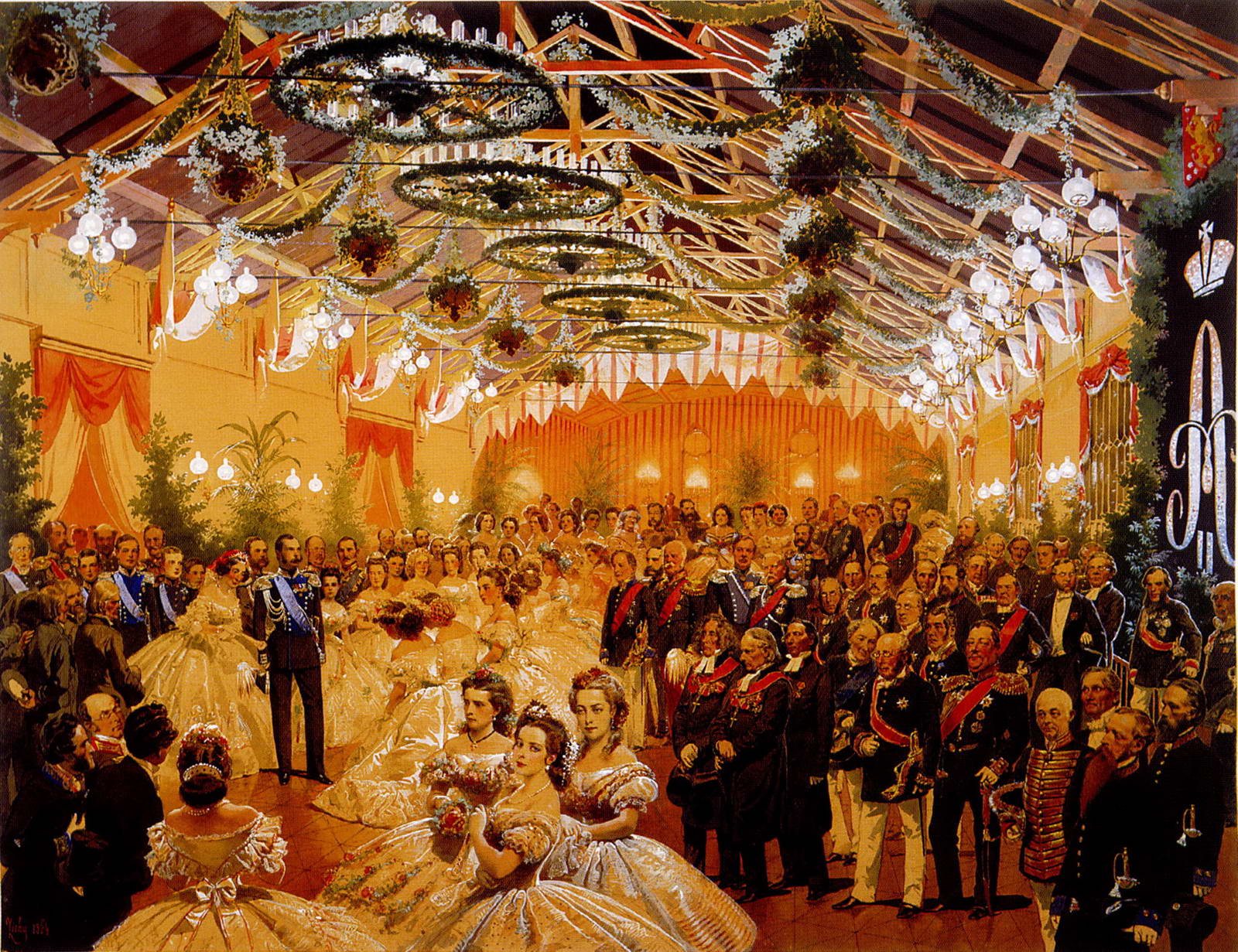
Great literary fiction is a lie that tells the truth. It offers a window into life under a given society that is more intimate and alive than what even the best historian can render. In doing so, it provides insight into the history and nature of the society that produced it regardless of the intended moral commentary of the author. In fact, the intended moral commentary itself can tell us enormous things about the society in question.
The tragedy Anna Karenina, by Leo Tolstoy, is a compelling example of this, and makes a fantastic accompaniment to Trotsky’s History of the Russian Revolution. Tolstoy’s psychological realism creates a vivid picture of 1870s Russia, and those at the top of Russian society. He masterfully conveys subtle emotional shifts, contradictions in thought, and half-conscious motives in a way that makes the reader feel like they’ve just read something they weren’t supposed to. But what makes the book really striking is that Tolstoy isn’t just telling the story of individuals, but revealing the psychology of an entire class. When Trotsky writes in The History of the Russian Revolution about the decay of the ruling class, their inability to carry society forward, it’s as if he’s talking about people you’ve actually met; you’ve been introduced to them through Tolstoy.
The book begins with the famous line, “Happy families are all alike; every unhappy family is unhappy in its own way.” This bombshell is followed by the stories of several families within the Russian aristocracy woven together, showing the sleaze, scandal, misogyny, and self-obsession that the conditions of Russian Tsarism produced within its ruling class. Anna Karenina herself is not the main character. She is simply the lynch-pin which allows the nature of Russian society under Tsarism to be expressed. The gossip of the salon, the most “cultivated” society one could find in Russia, reveals the insincerity and vacuousness of its attendees: “They spoke of Anna as of something that interested them, but did not concern them.”
The main character is Levin, a rural aristocrat who is increasingly uneasy with the conditions of post-emancipation Russia, and a stand-in for Tolstoy himself. Through Levin we explore the main philosophical problem of the novel: the search for a meaningful and ethical life. The abolition of serfdom in 1861 did not resolve the contradictions of Russian society, but intensified them, as serfs were freed into crippling poverty. Levin’s thirst for moral clarity reflects the real disorientation of a class caught between a decaying feudal order and an emerging capitalism that it could neither fully embrace nor overcome. His philosophical conclusion is, consequently, a sort of anarcho-pacifist retreat: utopian, highly religious and abstract.
However, his false conclusions actually reveal the truth of the conditions he was writing about. They reveal, through their very distortion, the real contradictions of Russian society and the inability of the ruling social class to resolve them. Levin is not merely expressing Tolstoy’s personal philosophical conclusions; in reality he’s exposing the historical limits of an entire class; limits which would, decades later, necessitate a workers’ revolution to overcome.
Lenin himself wrote as much in 1910,
“Tolstoy’s indictment of the ruling classes was made with tremendous power and sincerity; with absolute clearness he laid bare the inner falsity of all those institutions by which modern society is maintained: the church, the law courts, militarism, ‘lawful’ wedlock, bourgeois science. But his doctrine proved to be in complete contradiction to the life, work and struggle of the grave-digger of the modern social system, the proletariat. Whose then was the point of view reflected in the teachings of Leo Tolstoy? Through his lips there spoke that multitudinous mass of the Russian people who already detest the masters of modern life but have not yet advanced to the point of Intelligent, consistent, thoroughgoing, implacable struggle against them.”
To combine Tolstoy’s fictional masterpiece with Trotsky’s own historical masterpiece is a perfect way to fully understand the necessity of the revolution, as the culmination of long-festering social contradictions. You will see many of the characters, tendencies, and attitudes from Anna Karenina appear under different names and forms in Trotsky’s History of the Russian Revolution. What reading them alongside one another does more than anything, however, is demonstrate the incredible insight of both writers. To the extent that Trotsky proves Tolstoy, Tolstoy proves Trotsky.

