The U.S. and Israel’s war on Iran has meant immense suffering for the masses of the Middle-East. But the economic fallout is now punishing workers the world over. The closure of the Strait of Hormuz has meant that the price of crude oil has surged by 50 per cent since the start of the war. These higher prices mean higher costs for ordinary people already struggling to get by. But they also mean immense profits for oil barons who are making an absolute killing.
Massive profits from death and destruction
While the Middle East suffers, the oil and gas capitalists in nations like Canada see this as a gift from above. How they must have jumped for joy when the news of bombs raining holy terror on their biggest competitors went to press. Canadian Natural Resources Limited executives even announced a generous bump to their quarterly dividend.
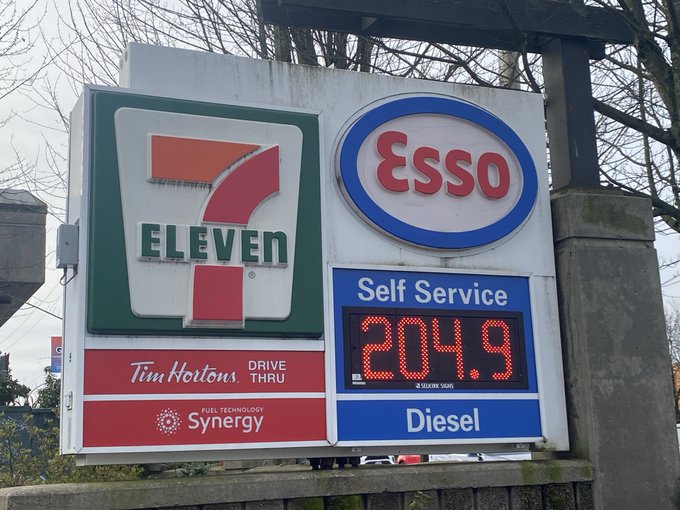
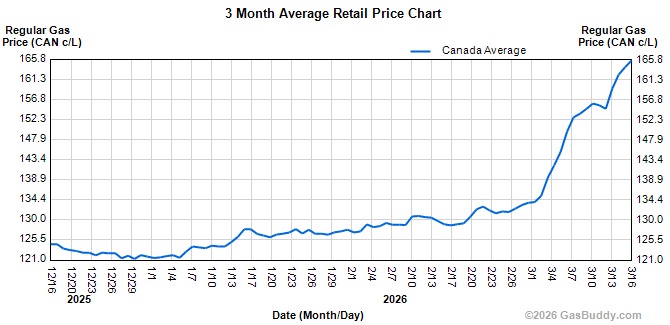
But where are these new-found profits coming from? Working class people have been forced to pay a ransom at the pump. Gas prices have shot up by almost 30 per cent on average and are still climbing—reaching $2 a litre in some parts of the country.
This is due entirely to the logic of the capitalist market. Oil and gas infrastructure in Canada has not been damaged—but a war on the other side of the world has created conditions where the oil barons can profit enormously off of the shortages.
In Alberta, the right wing has been peddling the myth that more profits for the oil barons means good things for workers. But while workers will pay more at the pump, these profits will not be shared with them. For example, during the fuel crisis triggered by the war in Ukraine, 50 per cent of the profits from U.S. oil and gas firms went to the wealthiest one per cent.
Downstream effects
While higher gas prices hurt a lot now, more pain is coming. High crude oil prices increase the cost of virtually everything. If something is shipped, farmed, manufactured, mined or refined, it’s almost certain that a product of crude oil went into its production. If the products of crude oil cost more, it will have a knock-on effect throughout the whole system. According to Capital Economics, a “five per cent rise in oil prices adds around 0.1 percentage points to developed market inflation.”
The world runs on diesel. The vast majority of shipping is done by cargo ships, trains, and trucks, all of which run on diesel, and now run with much higher fuel costs. These costs will filter through the entire economy.
Take a loaf of bread. The price of urea fertilizer has skyrocketed around 30 per cent since the beginning of the month, with a lot of the supply coming from the Strait of Hormuz. This comes just in time to gouge farmers for spring planting wheat on the prairies. Now add on 30 per cent higher diesel costs for farmers to run their tractors, add shipping, and add higher energy costs to process wheat into flour. All these costs will compound and push up the price of bread at the supermarket.
How long will this continue?
The current economic situation has some economists worried about stagflation: a period of inflation combined with a recession. The International Monetary Fund estimates that every 10 per cent persistent increase of oil prices results in a 0.1 to 0.2 per cent decrease in economic output.
The current crisis is reminiscent of the 1970s, when an oil embargo triggered a massive crisis of capitalism, and the world plunged into recession. In the second oil-price shock in 1979, four to five per cent of global oil supply was offline for a period of seven months. Oil prices stayed at least double and, in some cases, five-fold pre-1973 levels for the next 13 years.
Today, 20 per cent of global oil supply is offline in the world’s most vital oil-producing region.
This is being called the “biggest supply disruption in history”.
The International Energy Agency (IEA) ordered the release of a record 400 million barrels of oil from emergency stockpiles. This held prices steady, but it is a drop in the well. Twenty million barrels of oil flow is lost every day, and the member nations of the IEA have spent nearly a quarter of their reserves.
The difference between the ’70s and today is that back then infrastructure and oil fields were left largely intact. Today they are targeted by drones and missiles. The more damage done to energy assets in this war will mean higher oil prices for longer, and the worse the situation is for ordinary people.
Even when the bombs stop falling, the economic consequences will not be resolved immediately. The Strait of Hormuz may need to be swept for mines. Infrastructure will take months and even years to rebuild. Even the installations that are undamaged will not be able to start up immediately. Restarting oil wells is much trickier and more expensive than shutting them down. Many have to be re-primed, and carefully repressurized, costing money and time. Qatar Energy announced on March 4 that it would take an entire month for it to get liquid natural gas production back online—but this was before more hits destroyed 17 per cent of its production capacity for the next five years. The costs to restart production will be substantial, and will be added on to the cost of energy, and everything downstream of it.
The longer the closure, the worse and more prolonged the economic situation will be. On March 11, a spokesperson for Iran’s military command warned, “Get ready for oil to be $200 a barrel.” This scenario is not at all farfetched if this continues.
Three weeks into the war, there is no off-ramp in sight.
Nationalize oil and gas
These unforeseen profits, made by gouging consumers because of a war on the other side of the planet, have made many people angry. In response, politicians have come up with varying solutions.
The Alberta Federation of Labour (AFL) suggested imposing a windfall profits tax on the oil companies. AFL president Gil McGowan argues that “The money raised by the tax should be used to fund subsidies for Alberta consumers who will face inflated costs caused by higher energy prices.”
Different parties across the country called for cuts to taxes on gas, like the PQ and the PCQ in Quebec, and the NDP in Saskatchewan.
These measures are bandaids at best. A windfall tax would lead to further increase in the price of fuel, as oil barons try to shift the burden onto consumers. And any tax cut would only contribute to the public debt crisis–leading to austerity and further attacks on workers down the line. Meanwhile, these solutions don’t address the more general problem of inflation that will inevitably arise, as explained.
But it doesn’t have to be this way.
Communists fight for a new society in which we are not held ransom by the oil and gas capitalists. By nationalizing oil and gas, we can take profiteering out of the equation and make sure that workers don’t suffer.
This would allow us to avoid not just the opportunist profiteering of the oil barons in times of crisis—but to take control of all of the immense wealth of the oil and gas capitalists and use it for the benefit of society as a whole.

