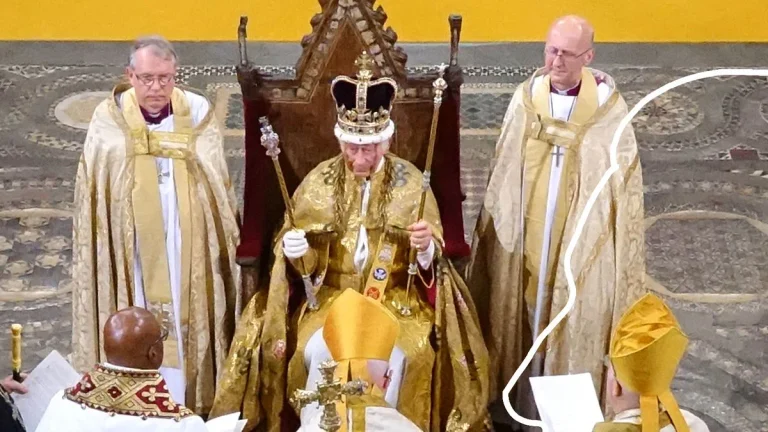
The Quebec Superior Court has ruled that, in order to take their seats, all 127 MNAs elected this fall to the National Assembly must swear an oath to King Charles III. Since none of them have done so, the parliamentary session scheduled to begin on Dec. 1 could well be jeopardized. This is yet another reminder of the anti-democratic and reactionary character of the monarchy and the Canadian Constitution.
‘A great day for Canadian democracy’
In 2022, following the refusal of three Parti Québécois MNAs to participate in this musty colonial ceremony, the National Assembly unanimously passed a law that made the oath to the king optional. But this summer, constitutional lawyer Lawrence David challenged the law in court. As a result of his lawsuit, the law is now suspended.
“This is a great day for Canadian democracy,” David said triumphantly after getting this “democracy” to bow before a foreign hereditary monarch whose office comes straight out of the Middle Ages. And he said it with a straight face!
The suspension of the law was entirely predictable. The oath to the king is enshrined in Section 128 of the Canadian Constitution, which forms part of the very foundations of Canada’s political system. No law can amend away the monarchy without the unanimous support of the legislative assemblies of all ten provinces, the Senate and the House of Commons. Needless to say, it is practically inconceivable that the Constitution could be amended, let alone by the Quebec National Assembly alone.
Justice Minister Marie-Claude Sarrazin has announced that she will take the matter to the Court of Appeal, while PQ leader Paul St-Pierre Plamondon (PSPP) insists that “nothing [in the ruling] prevents us from sitting” while the legal challenge proceeds.
If the Court of Appeal does not immediately overturn the requirement to swear an oath to the king, the PQ may stand its ground and convene the National Assembly in outright defiance of the court ruling. If that happens, we will be entering uncharted territory. On the one hand, the PQ might reason: who is going to stop us from sitting, or dare refuse to implement laws passed under our government? On the other hand, will it dare take that risk? We could be witnessing a game of chicken between the PQ and the institutions of the state.
Should we defend the ‘rule of law’?
In a statement released on Nov. 23, PSPP declared: “[T]he ‘constitutional rules’ on which this ruling is based have no democratic legitimacy whatsoever.” Faced with this kind of open criticism of the Canadian political system from the premier himself, the grey-haired figures of the establishment were left bristling with indignation.
Steven MacKinnon, Leader of the Government in the House of Commons, wagged his finger at the premier, calling for respect for the “rule of law.” The Globe and Mail editorial board did the same, politely inviting PSPP to “plan a trip to Louisiana” to see what Quebec might have looked like without the glorious Canadian Constitution and federation. Echoing similar comments that have appeared in the Canadian press, Lawrence David called PSPP’s remarks “classic demagoguery,” going so far as to compare him to Trump. Nothing less!
This hysteria is revealing. The “rule of law” these ladies and gentlemen sing the praises of, the “rule of law” presented everywhere as the safeguard of “our” democracy, is nothing more than a fig leaf concealing the tyrannical rule of Canada’s big capitalists and their lackeys.
This “rule of law” is the rule of exploitation imposed on workers throughout Quebec and Canada, codified in legislation by governments attacking their right to strike. It is also the rule of oppression of Indigenous peoples. And, in the ultimate irony, it is the subjection of Canada’s supposedly “democratic” system to a senile sovereign, elected by no one, whose entire family is mired in scandal and whose representatives in Quebec and Canada cost a fortune.
The Superior Court ruling explains that any exception to the Constitution (such as the law putting an end to the oath to the king) “invites constitutional disorder, if not chaos.” This is precisely what lies behind all the uproar in defence of the oath. The ruling class fears that a constitutional crisis could call into question the very existence of the Canadian federation and the capitalism it protects, and that even the smallest concession could set off a chain reaction. Similarly, if the PQ can defy the Constitution in this way, why shouldn’t workers be able to defy anti-union laws? These are the kinds of fears that preoccupy the ruling class.
Some left-wing figures, such as Alexandre Dumas and Frédéric Bérard—who quite rightly despise the PQ—have seized the opportunity to criticize PSPP, accusing him of blowing the issue out of proportion for political theatre. They too call for respect for the “rule of law.” In doing so, they are siding with the reactionary institutions of the monarchy and the capitalist state. It is a shameful spectacle. Far from scoring points against the PQ, they are only reinforcing PSPP’s image as a champion against an utterly reactionary institution.
PSPP is right not to submit to a ruling that upholds an archaic obligation to swear allegiance to a king. Every socialist, every person on the left, and every consistent democrat should stand with the MNAs who refuse to take their seats. Rather than siding with the establishment, the left should seize this opportunity to expose the hypocrisy of these defenders of the capitalist “rule of law.” On this basis, it could then criticize the PQ’s shortcomings, including its lack of any realistic plan to abolish the monarchy.
A sceptre as a club
The monarchy is indeed a reactionary institution that deserves to be thrown onto the scrap heap of history—and the oath is only the tip of the iceberg. Behind it stands all the anti-democratic pillars (intimately bound up with the monarchy) on which the Canadian federal state rests: the Senate, the governor general, lieutenant-governors, royal assent to legislation, and so on.
At a time when capitalism has never been so discredited in Canada, the monarchy is a last-resort instrument for the ruling class to protect its interests and ensure the “stability” of the system. Consider the most recent example, in 2008, when Michaëlle Jean—then the Queen’s representative in Canada in her capacity as governor general—prorogued Parliament to spare the Harper government a confidence vote that would have brought it down.
To paraphrase Victor Hugo, one must be wary of the scepter, which is “the first of all clubs.” This club, this anti-democratic weapon, is something the Canadian bourgeoisie will not hesitate to wield against workers when it is backed into a corner in the period ahead.
The Senate was used to criminalize communists during and after the 1919 Winnipeg General Strike. Queen Elizabeth used her reserve powers to bring down Australia’s Labour government in 1975. There is nothing to rule out similar anti-democratic manoeuvres being used again against nationalizations, pro-worker legislation and—even—an eventual workers’ government in Quebec or Canada.
Quebec’s former lieutenant-governor said so himself in 2015: his powers were “not merely symbolic,” and he would not hesitate to “refuse to sign a law” which he considered “undemocratic”! Far from being a mere relic that we can afford to ignore, the monarchy is therefore a real threat to the left and the labour movement. It is the duty of all consistent democrats to fight for its abolition.
Abolish the oath—and the king
As we wrote five years ago:
“The Canadian ruling class has specifically written its constitution so that there is no institutional way to abolish the monarchy…Therefore, we can only conclude that the system cannot be reformed and the monarchy cannot be eliminated without revolution.”
This, however, is far from the PQ’s perspective. Rather than exposing the fundamentally anti-democratic character of the Canadian federation and calling for its overthrow, it confines itself to the idea that Quebec could simply and peacefully free itself from the monarchy and the Canadian federation, without a struggle. It is also worth noting that there are only 48 days left before the expiry of its promise to “abolish the monarchy in Quebec” within its first 100 days in office. It is not going to happen.
To put an end to the oath to the king (and to the king himself), we must confront the interests concealed behind the monarchy: those of the big capitalists who use it as a safety valve. That is why, against hereditary monarchy, communists advance the demand for a socialist republic: a genuine democracy based on workers’ control over the economy and politics.
Only by ending the dictatorship of the bankers and bosses will the monarchy be abolished in Quebec and Canada.

