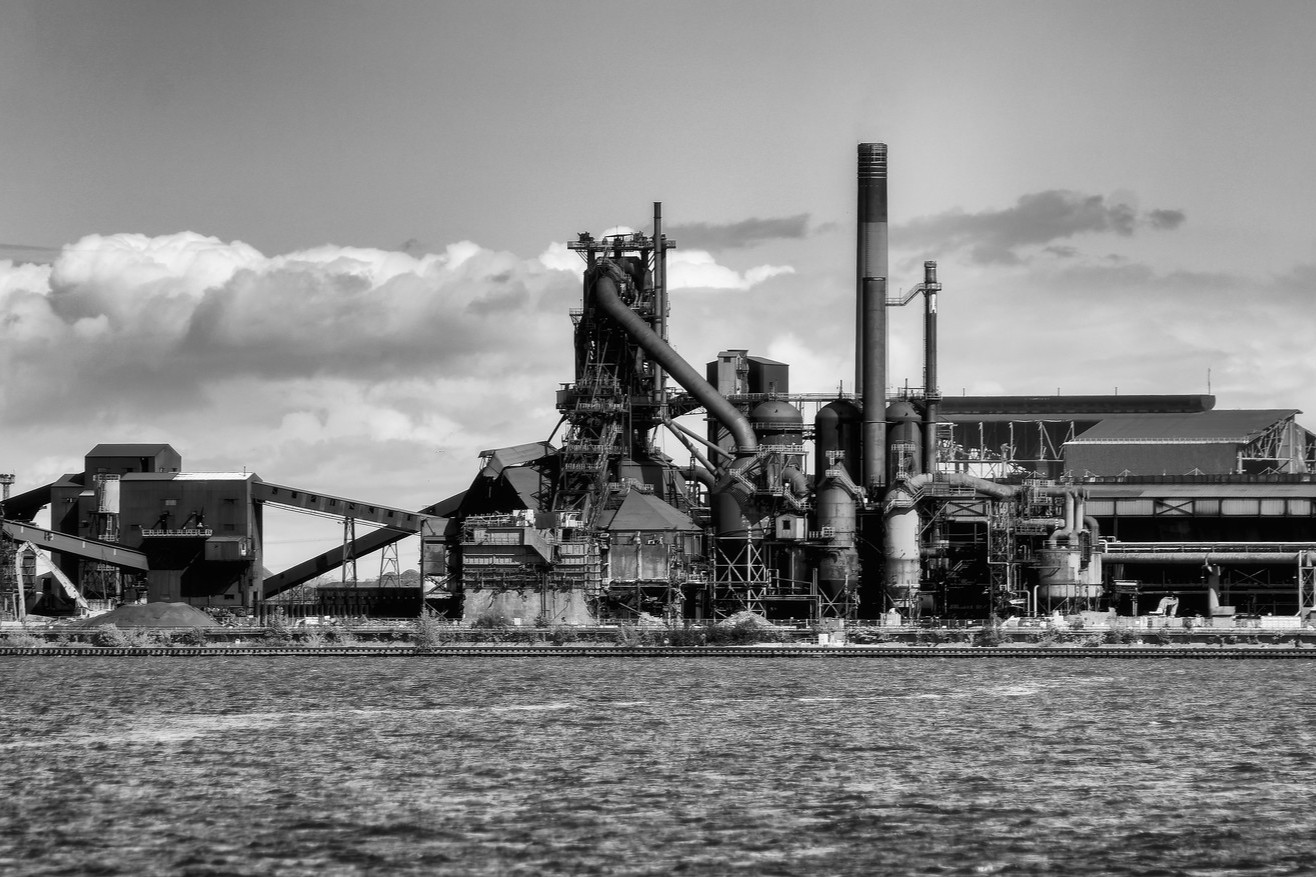
Steel manufacturer Stelco is laying off up to 500 workers at its Hamilton plant and Lake Erie facilities, following a decision by its U.S.-based parent company, Cleveland-Cliffs, to shut down its Canadian galvanized steel production lines. The company cites a loss of profitability in finished steel due to the latest U.S. tariffs, calling the layoffs “unfortunate but necessary”. This is the cold calculus of capitalism that now threatens to push hundreds of steelworkers into precarity.
Throwing money at the problem
Mark Carney has bemoaned that Stelco has “betrayed” Canadian workers and claimed there was “money on the table” to keep employees on the job, signalling his readiness for yet another multi-million-dollar corporate payout. Insiders say the federal government “tried everything,” enticing Stelco with a package that included bridge financing, long-term loans, and retrofitting funds. And yet, the company refused.
Cleveland-Cliffs CEO Lourenco Goncalves flatly declared “no amount of money” from the federal government would have reversed his decision, claiming “there’s no market in Canada for the amount of galvanized steel we produce in Canada.”
It is true that Canadian steelworks were never conceived for the Canadian market alone; they were scaled to supply an integrated North American manufacturing network. While domestic buyers absorb roughly half of production, the remaining output is destined almost entirely for the U.S. market.
For the capitalists who own these operations, maintaining this export volume is a necessary condition for production—without high-capacity utilization to drive down per-ton costs and generate profits, they will not keep the mills running. Consequently, when U.S. tariffs squeeze exports, capitalists will not accept lower profit margins to protect jobs; they will invariably pull the plug. Algoma Steel proved as much earlier this year by laying off more than 1,000 employees shortly after pocketing a $500-million government bailout.
So, when Goncalves says the federal government is like “a doctor offering a sick patient cash instead of prescribing a drug to cure their illness,” it is difficult to disagree. No amount of corporate welfare will prevent the capitalists from axing these jobs.
Suing the jobs back?
Out of carrots to offer, Carney is now reaching for the stick: the Canadian government is threatening to sue Cleveland-Cliffs for violating the conditions of its acquisition of Stelco in 2024, which included maintaining a certain number of unionized employees at its facilities.
Ron Wells, president of United Steelworkers Local 1005 representing Stelco’s Hamilton workers, strongly praised this move, adding that he hopes Ottawa “makes an example out of [Cleveland-Cliffs].” USW National Director Marty Warren similarly “welcomed” Carney’s stance and called on the government to “act decisively.”
But what reason do the workers have to trust Carney to protect them? From day one of the trade war, the Liberals have coddled corporate bosses with billions in cheap loans and subsidies. Carney won’t do anything to endanger Cleveland-Cliffs’ profits today, especially not while he is trying to court more foreign capitalists to invest in Canada. It is the same reason the government’s repeated threats to sue Stellantis over job guarantees have led to zero action.
Even if a court case does go ahead, it will inevitably drag on for years stranding hundreds of steelworkers in a limbo. We saw this in 2009 when the government sued U.S. Steel over similar broken employment promises after acquiring Stelco: after years in court, the suit was quietly settled for vague investment pledges, failing to save a single job.
The courts are a dead end; these legal obligations aren’t worth the paper they’re written on when corporate profits are on the line.
How to beat back the layoffs
So, what is to be done?
Stelco workers are already being laid off, with barely a day’s notice. Instead of waiting on the government, the union should take immediate action to stop this jobs massacre. The workers should occupy the facilities and block any attempt to shut down or move any production lines. This is the only way to save these jobs.
Cleveland-Cliffs has already explicitly demonstrated that it prioritizes corporate profits over any obligation to Canadian workers. Rather than waiting for lengthy litigation to play out, the union should demand that Stelco be nationalized without compensation. Large sums of public money have already been poured into sustaining this company, not to mention the decades of massive profits generated off the backs of the very workers now being thrown out the door!
If allowed to proceed, these layoffs will ripple across Hamilton, devastating the local businesses and services that depend on steelworkers’ paycheques. Neither corporate goodwill nor the courts will save the city from becoming another Rust Belt casualty; it is time for workers to take control of their own future.
Future of Canadian steel
Under the logic of the market, Canadian steel is doomed if its products cannot find buyers, given that capitalists will not fund unprofitable production. Yet it was precisely this chronic lack of investment into modernization that made the industry uncompetitive (and unprofitable) in the first place. Decades of private ownership have run Canadian steel into the ground by placing short-term profits ahead of long-term investment required to keep the industry viable.
The current trade war with the U.S. hasn’t caused this crisis; it is merely revealing the decay at the heart of Canadian capitalism.
Solving the crisis demands bringing not just Stelco but the entire steel industry under a socialist plan of production. This is the only way to ensure revenues are reinvested into modernizing infrastructure while guaranteeing well-paid, secure jobs.
Steel production is the bedrock of any serious industrial economy. It is the literal raw material required to build modern transit, housing, clean energy, and heavy manufacturing. Capitalists have repeatedly shown they cannot be trusted to keep this foundational industry alive. The path forward demands socialism, where production is driven by human need, and not private profit.
Carney speaks endlessly about “nation-building” infrastructure projects, but grand ambitions like high-speed passenger rail lines or nationwide clean-energy power grids cannot exist without a guaranteed supply of domestic steel. If he were truly committed to developing Canada’s productive capacity, he would take vital producers like Stelco and Algoma out of the hands of private speculators and place them under public ownership. Of course, as a representative of the capitalist class, Carney will never do this; his ultimate commitment is to guarantee corporate profits.
Only by replacing market chaos with rational, democratic planning of the economy can we unleash our true economic potential, undertake these transformative projects and provide a high quality of life for everyone.

