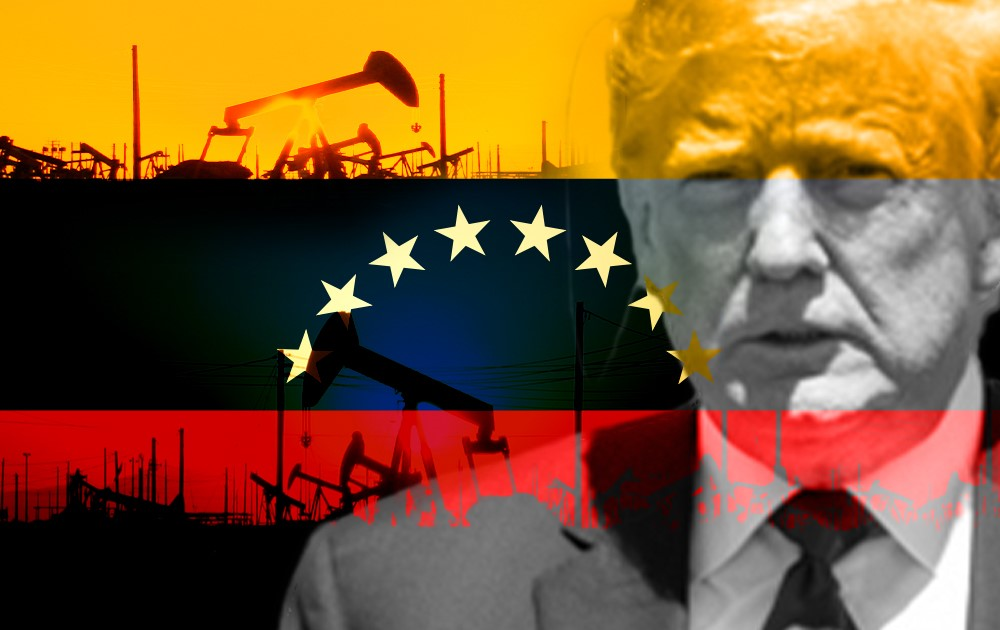
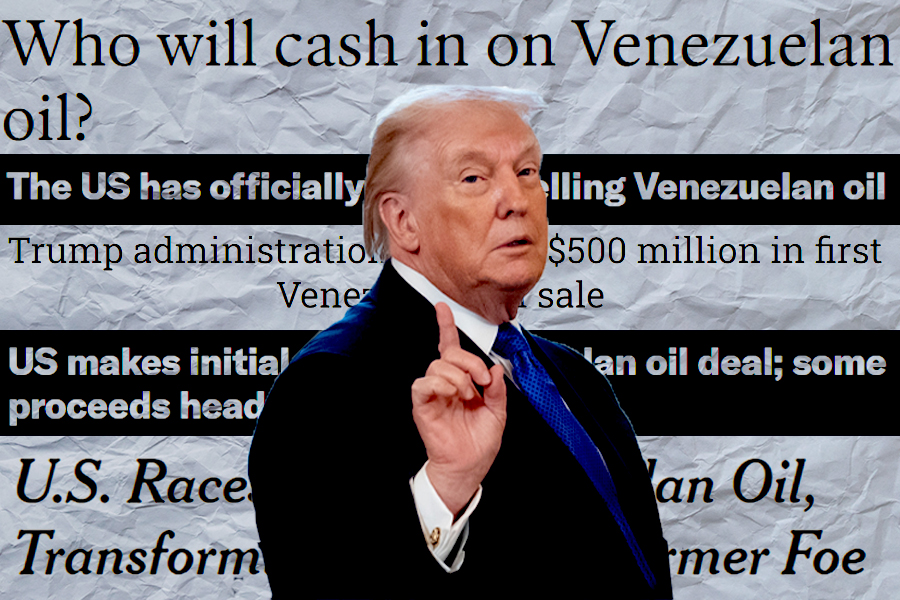
On 28 August, in a social media post, Trump announced what he described as “THE BIGGEST OIL DEAL IN WORLD HISTORY!” by which the US takes majority control over 65 billion barrels of oil in Venezuela. That was followed by a shameful grovelling message by Venezuelan President Delcy Rodríguez in which she tried to frame this “historic agreement” as one which was positive for Venezuela, arguing that it “will facilitate a significant flow of investment aimed at the recovery and reconstruction of strategic infrastructure for the development of our hydrocarbons industry”.
This is yet another major qualitative turning point in the handing over of Venezuela to US imperialist control after the 3 January military invasion and kidnapping of President Maduro.
Those events are not even mentioned in Delcy’s statement, which shamefully says that “this initiative is the result of the strengthening of relations between Venezuela and the United States”!! By “strengthening” she means the US domination of Venezuela through military intervention and blackmail, of which she has become an agent.
The details of the deal are not known. All we have is a statement by Delcy Rodríguez and a White House ‘Fact Sheet’. With Trump, there is always an element of hyperbole – a very strong element of hyperbole and exaggeration. Let us therefore start with the parts which are clear, as they figure in the official statements about the deal by both the US and Venezuela.
What has been agreed?
The agreement involves 17 oil fields, with total proven reserves of 65 billion barrels of oil. That represents over a fifth of Venezuela’s total oil reserves and is more than the total proven reserves of the United States, of 46 billion barrels.
Of the 17 fields, eight are greenfields (not yet exploited) in the Orinoco Basin, where Venezuela’s reserves of extra heavy crude oil are located. Another nine are mature fields in the Maracaibo Lake region, already producing light and medium crude. The deal promises $100 billion in investment and would generate $209 billion in tax revenue for Venezuela.
At this point, the story gets murkier. The White House fact sheet explains the deal in the following terms:
- Venezuela has granted North American Blue Energy Partners (NABEP) 100-year concessions for 17 oil fields.
- The US Department of War has a 35 percent stake in this ‘Venezuelan’ private sector company, at no cost (through something called ‘penny warrants’).
- NABEP grants the US Department of State the right to buy 20 percent of production at cost price, plus first dibs over the remaining 80 percent, so that it can replenish its Strategic Reserves (massively depleted as a result of the Iran war) as well as “to provide supply for military and other sensitive uses.” In other words, Venezuelan oil will now feed the US war machine.
- Though NABEP is technically a Venezuelan private company, according to the White House, the US government has the right of veto over all appointments to NABEP’s board, a majority of which must be US citizens and the NABEP-US government agreement is governed by US law. So much for a ‘Venezuelan’ company!!
- The White House underlines that the ‘deal’ is part of the US’ ‘three phase plan’ for Venezuela, “following the incredible success of Operation Absolute Resolve”. This makes it perfectly clear that the US takeover of a large chunk of Venezuela’s oil reserves is the direct result of the 3 January military attack on the country and the kidnapping of its president. US Secretary of Energy Wright described this as “Trump’s energy diplomacy” – a very peculiar type of diplomacy.
- The fact sheet also describes NABEP concessions as part of the “privatisation” of Venezuela’s oil industry, governed by the new 2026 hydrocarbons law (passed under US pressure), which repeals Chavez’s laws.
- NABEP will pay royalties and taxes (at which level it is not known), but these will be handled in the same way as the current sale of Venezuelan oil: proceeds deposited in a US account, controlled by the US Treasury and disimbursed to the Venezuelan government under the supervision and approval of the US government (“The U.S. government’s robust governance and audit provisions, along with the Trump Administration’s banking reform, payment oversight and financial monitorship, will ensure tax and royalty payments are spent in the interests of the Venezuelan people.”)
- The US will continue dictating Venezuelan internal policy through its supervision of the ‘reconciliation’ talks between the Rodriguez-Cabello government and the remnants of the reactionary opposition-dominated 2015 National Assembly. These talks have already produced a reform of the judiciary, the release of dozens of prisoners and will resume in mid-September.
- The White House explicitly says that the deal is part of the ‘Donroe doctrine’ of reestablishing US “dominance” in the continent and expelling rivals by kicking out Chinese and Russian oil companies. (“REASSERTING THE MONROE DOCTRINE & EXPELLING FOREIGN ADVERSARIES FROM OUR HEMISPHERE: The majority of the incremental oil fields to be operated by NABEP were previously controlled or operated by Russian and Chinese firms”). The Chinese government has already complained about the implications of this.
The Venezuelan government has not denied any of the details contained in the US fact sheet. The only major discrepancy seems to be that they are saying the deal is for 25 years.
In summary, the ‘world’s largest oil deal’ is in reality ‘the world’s largest oil heist’. It has been imposed on Venezuela by US imperialism through military aggression, and the Venezuelan government is enthusiastically complying and trying to present it as a success.
Furthermore, NABEP is a company already operating in Venezuela, which is owned by one Alejandro Betancourt. He is a very good representative of a coterie of upstart businessmen which made a fortune in Venezuela, first on the back of high oil prices and then by dealing in all sorts of risky assets and business opportunities created by US sanctions. They inhabited the murky world of backroom deals, kick backs, and shadowy bank accounts and shell companies, which mushroomed under the Maduro presidency.
According to a report in Axios, Betancourt was on the side of Guaido’s farcical self-proclamation as Venezuelan president in 2019 (a Trump-backed attempt to remove Maduro from power), but was then brought into the fold of the PSUV government by Delcy Rodríguez.
The Axios report claims that he was instrumental in sounding out whether Delcy would work with the US before and after the 3 January attack. How much of this is true, we do not know. Venezuelan oil workers in fields operated by his company, NABEP, claim they have not been paid for three months. That much is true.
The practical implementation of this deal will face many difficulties. NABEP certainly does not have $100 billion spare to invest in Venezuela, and returns in the Orinoco Basin will take a few years to materialise even after multi-billion dollar investments. That is probably the reason why the company has been re-engineered to have the full backing of the US Department of War, a most unusual arrangement.
Those involved probably think that this will be a sound guarantee that will bring the necessary investments. Meanwhile, it should be possible to significantly increase production in the nine mature fields in the Maracaibo Lake with much less investment. The figure being bandied about is 1.5 million barrels a day, a significant jump from NABEP’s current production of 200,000.
This deal has been months in the making and is an attempt to funnel investment into Venezuela’s oil sector, after the initial reluctance of several of the major US players. Trump is desperate to present a victory, a huge one, ahead of the mid-term elections where he is expected to be trashed.
The claim he made that this deal will bring lower gas prices at the pump and insulate the US from the turmoil in the Strait of Hormuz is pure propaganda. Even in the best case scenario, the impact of the deal on US gas prices and energy security would take years to materialise.
What is clear is that US imperialism is on the offensive in the American continent, in an attempt to grab energy sources, critical minerals and infrastructure, kicking its competitors out in the process. The Venezuelan oil heist is a key component of this strategy. The Delcy Rodríguez government is now fully part of the general strategy of US imperialism, not just regionally, but globally. This can be seen in this oil deal, but also in the reestablishment of diplomatic relations with Israel, and with Venezuela’s departure from the International Criminal Court. There is now talk of Venezuela abandoning OPEC, following in the footsteps of the UAE.
Delcy’s public statement trumpeting the deal was then backed up by a curious statement by the PSUV national leadership expressing “full support for comrade Delcy” (though they used the old word ‘compañero’, preferred by the old Acción Democrática, instead of the Bolivarian chavista ‘camarada’). They said they “back the leadership of the President” and, just in case it was not clear, it declared that “the PSUV remains firmly united behind our High Political Command”.
Opposition to the sell out
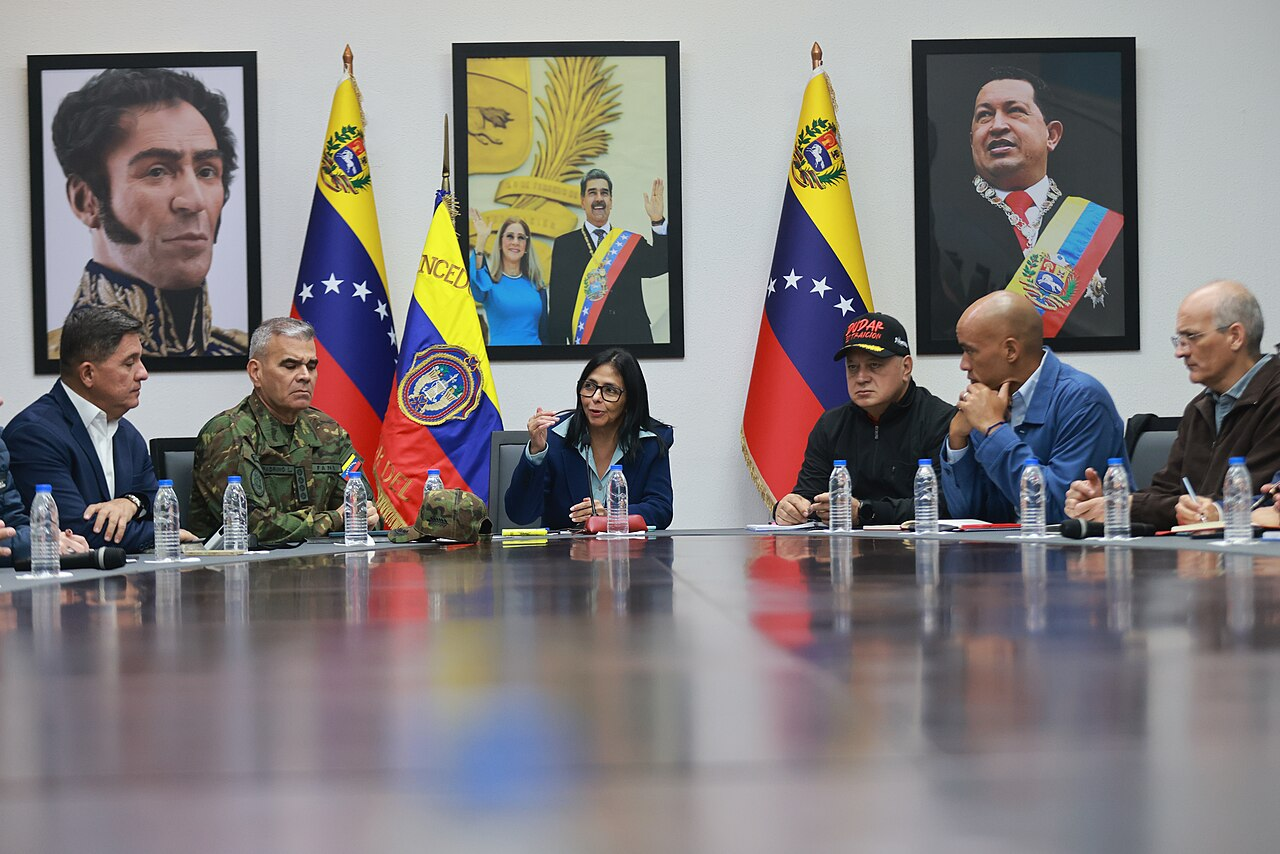
The PSUV statement was then followed by public backing from Nicolás Maduro’s son, the Army High Command, and even the publication of a smiling picture of Nicolás Maduro from his captivity. The National Assembly rushed to approve the deal, even though the deputies have not seen the actual wording of it.
All of this can only mean one thing: there are deep and serious divisions – even within the party and its organisations – about the policies of submission to US imperialism and President Trump carried out by Delcy Rodríguez. These divisions have deepened after the recent reestablishment of diplomatic relations with the genocidal state of Israel.
A growing number of organisations and intellectuals linked to the PSUV, which had backed Delcy’s leadership up until now, have started to break ranks and come out in opposition to various degrees.
The different arguments and justifications which have been used up until now as a fig-leaf for the complete betrayal of what little was left of the Bolivarian Revolution – in substance and in form – are no longer able to hold the tide of discontent.
Pro-government journalists, intellectuals and organisations, like Mario Silva, Luis Britto García, the Coordinadora Simón Bolívar in the 23 de Enero district of Caracas, and many others have all come out in one way or another in opposition to the vendepatria [treacherous ‘country-seller’] actions of the Delcy-Cabello government.
The problem is that after many years of justifying every single step back by the PSUV leadership in the name of pragmatism, these formerly revolutionary organisations are mostly empty. They are devoid of any real internal life, having mostly become channels for government subsidies in exchange for voter loyalty.
The protracted demise of the Venezuelan Revolution
In Venezuela, many on the revolutionary left are shocked and angry, but not really surprised. They have seen the progressive hollowing out of the Venezuelan Revolution, the silent destruction of the achievements of Chávez’s governments, accompanied by the emptying out of mass popular organisations, the repression against left critics, etc.
This was a long, protracted process of Thermidorian counter-revolution, which started all the way back in 2013, with the death of Chávez and the election of Maduro.
Amongst those who witnessed the process in its full development and tried to resist it, were the comrades from Tatuy TV. They have now published an editorial article in which they sum up the current situation aptly:
“Although the story did not begin on 3 January (and the path leading to that point must be analysed), recent months have been marked by a dizzying political shift favouring the national and foreign bourgeoisie, as well as US imperialism. Our current status as a nation is one of completely mortgaged sovereignty.
“If oil revenues go into a US Treasury Department’s account, and the national government must submit a budget just to have its own resources (partially) released; if judicial and electoral bodies are appointed under US supervision; if key laws are drafted in consultation with the White House and Chevron executives; if the imperial army can freely enter and exit – and bomb whatever it pleases – within national territory; then what really remains of an independent nation?
“In what world can the country that maintains criminal sanctions against our people – and that bombed Venezuela and abducted the president – be considered an ‘ally’? The US ambassador strolls around ‘inspecting’ infrastructure and hospitals as if he were the plantation overseer, escorted by the Adeco [Acción Democrática] first deputy foreign minister, who smiles like a dutiful, pro-Yankee lapdog.
“We could dwell on the battle of figures regarding the recent ‘historic’ oil agreement with the Trump Administration. However, the analysis is quite clear. The national government had already rolled back national control and participation in the oil industry to disastrous levels, and this agreement will offer even less favourable terms for the country.
“Put simply, Venezuelan oil reserves – even if formal ownership is retained – have been placed at the service of an empire seeking to halt its own decline. That Gringo monster, which sows death and destruction across the globe, now feeds on Venezuelan fuel. (The battle to go back to our history, TatuyTV)
But outside Venezuela, where many did not follow the process as it unfolded, the surprise and bewilderment is greater. It has taken several months and important events for many to draw the necessary conclusion: the Venezuelan Revolution is no more, Delcy’s government is an agent of the country’s submission to US imperialism.
To those who now have reached this inevitable conclusion we recommend that they go back and read what we wrote and warned about at the time. In 2012, when Maduro destroyed workers’ control in Guayana; in 2015, when the PSUV lost the National Assembly elections; in 2018, when Maduro introduced a monetarist, anti-working class package; in 2020, when the assault against left-wing political parties (UPV, Tupamaros, PPT, PCV) started.
A summary of the whole process can be found in an article in the May 2026 issue of In Defence of Marxism magazine.
More generally, it is necessary to learn the lessons of the achievements but also the limitations of the Bolivarian Revolution under Chávez. I would recommend all those interested to read the new edition of Alan Woods’ book about it, The Venezuelan Revolution: A Marxist Analysis.
We in the Revolutionary Communist International (previously the International Marxist Tendency) have the right to say, “we told you so”. But this is not about point scoring. There is a more important question at stake, or rather, two more important questions.
The first one is that we need to draw the necessary lessons from this betrayal, for that is what it is. If we do not strive to understand the ‘why’ and the ‘how’, then inevitably we will fall into pessimism. This is also necessary in order to arm ourselves, so as not to make the same mistakes again.
Unconditional solidarity or critical support
The second one is this. For many years, the movement in solidarity with the Venezuelan Revolution was divided, deliberately, between those of us who thought that solidarity had to be unconditional but not uncritical, and those who argued that we, in the West, could not and should not comment on nor contribute to the debates about the strategy of the Bolivarian Revolution. The leadership in Caracas knew best, we were told, and we should abide by their wisdom.
In reality, the division was also between those of us who saw solidarity as a revolutionary duty, who saw the defence of revolution abroad as part of our own struggle for revolution at home; and those who saw international solidarity as a nice gesture, a moral imperative, a charitable act, and in many occasions as a fig-leaf for their own rotten policies at home.
On one occasion, I think it was at the Conference of the National Union of Journalists in some seaside town in Britain, we had a Hands Off Venezuela! (HOV) fringe meeting – Hands off Venezuela! being the international solidarity campaign that our comrades took the initiative to establish in 2002. Also at the conference was the director of the Cuba Solidarity Campaign (CSC). We got talking and suggested that it would be a good idea to link the two campaigns more closely, as clearly the two issues were intimately related.
He argued against: “your campaign is political, ours is not”. I was surprised. “What do you mean ‘political’, surely there is nothing more political than solidarity with the Cuban Revolution?!” I put it to him.
And he explained: “no, no, CSC is not a political campaign. We have people in the campaign who support Cuba for many different reasons. Some like Caribbean holidays, Cuban cigars, Cuban rum, in our parliamentary group there are even Tory MPs (!!) and we would not want to alienate them.”
Incidentally, this understanding of ‘international solidarity’ goes a long way in explaining the lack of any real mobilisation on the part of CSC in the last few months, when Cuba has been faced with the most dangerous assault by US imperialism in decades.
The same was true in the Venezuela solidarity movement. The same types (Stalinists, trade union bureaucrats, etc.) set up a campaign to rival HOV, using all sorts of underhand methods (including bribery!) Their aim was to replace a revolutionary solidarity campaign with a fan club of the Bolivarian leadership. They were happy to travel to Venezuela, stay at five-star hotels and be given a sanitised tour of the achievements of the Bolivarian movement, devoid of any real revolutionary content.
They are now at sixes and sevens. Many of them continue to argue for uncritical support for Delcy and her government, even when it is abundantly clear what the character of that government is. For others, the penny has dropped and they now denounce Delcy’s betrayal, which they understand purely as a conspiratorial act, without an inkling of the real protracted political process which led to this betrayal and prepared the ground for it. A process which certainly did not start on 3 January.
There is a lesson here, one which, by the way, also applies to solidarity with the Cuban Revolution and the right of communists, in Cuba and abroad, to participate in the debate about the best way to defend it and the course chosen by the Cuban leadership.
As Trump’s Venezuela oil heist puts the final nail in the coffin of the Bolivarian Revolution, our duty as revolutionary communists is two-fold. Firstly, to grasp the main lessons of the Venezuelan Revolution and how its shortcomings led to disaster. Secondly, to participate in the process of fighting back against imperialist domination in Venezuela and internationally.
That struggle involves fighting US imperialism but also its agents in the government in Caracas. The comrades of Revolución Comunista, the Venezuelan section of the RCI, will be at the forefront of this fight.

