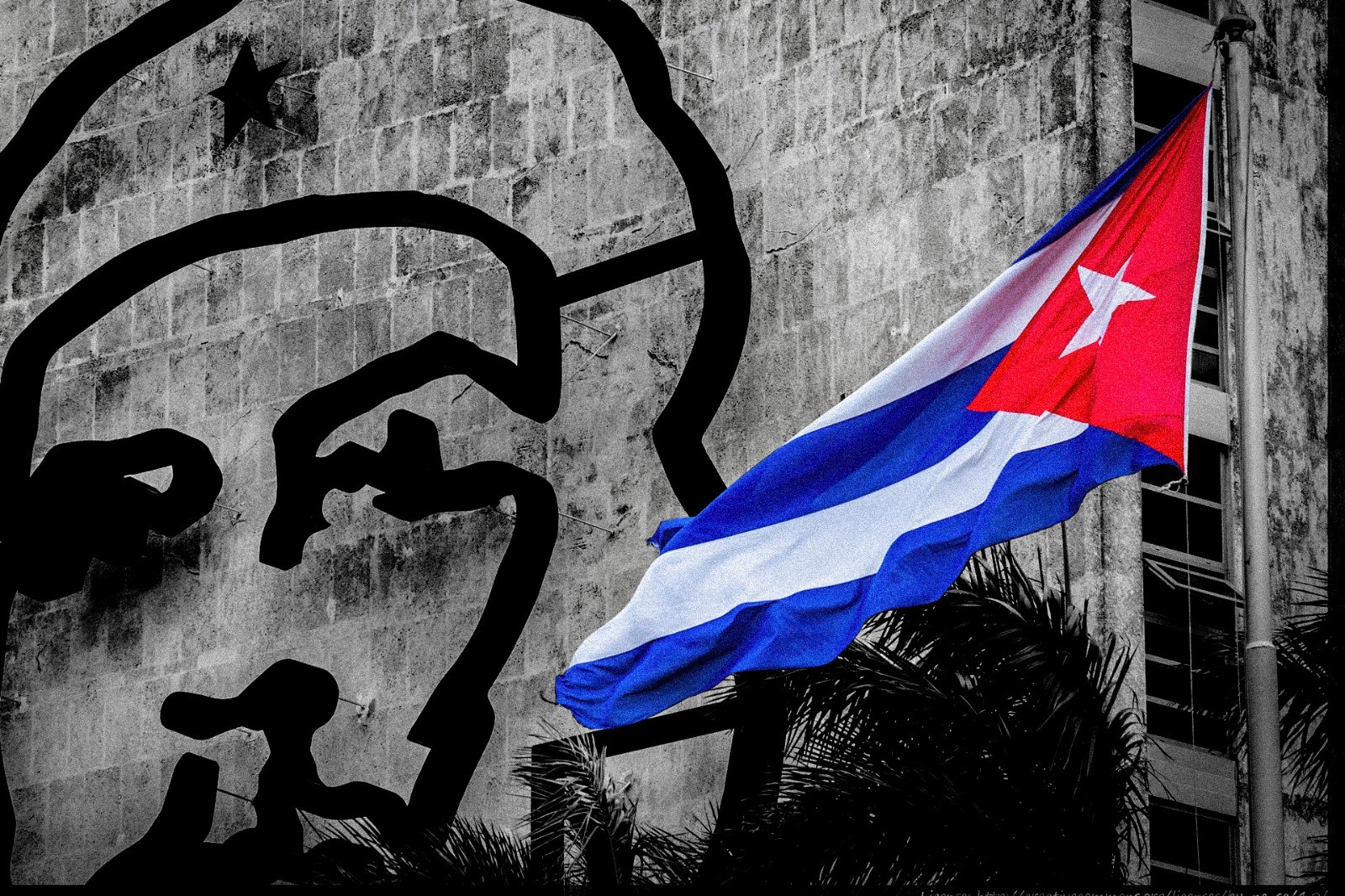
The oil blockade decreed by Trump on 29 January is slowly but surely asphyxiating Cuba, which relies on oil imports for 60 percent of its energy production. The Cuban government has admitted talks are taking place with the United States, but these take place in conditions of extreme imperialist blackmail. How can the Cuban Revolution be defended?
A total oil blockade
Cuba has not received any oil or fuel since 9 January, when a PEMEX oil tanker arrived at the island from Mexico. After that, the Mexican government suspended all shipments of oil under blackmail from Donald Trump, who threatened punitive tariffs on any country selling oil to Cuba. Despite a decision of the US Supreme Court which ruled that the legal argument Trump had used in his Executive Order was unlawful, Mexico has not resumed oil shipments.
When asked about this, Mexican president Claudia Sheinbaum said that they are “looking into different schemes, we will report”. The fact is that Mexico, which had become Cuba’s largest source of oil, has submitted to US blackmail and completely cut off oil supplies. It is true that the Mexican government has sent much-needed humanitarian aid, but on the crucial question of oil, it has chosen to abide by Trump’s demands.
After the 3 January US imperialist attack on Venezuela, that country, which was Cuba’s second largest supplier, also cut off oil shipments. That only leaves Russia. The Russian government has issued strong public statements in support of Cuba and rejecting the American oil blockade, but so far no Russian oil has reached Cuba.
At the beginning of February, the Sea Horse tanker was loaded with 200,000 barrels of Russian fuel off the coast of Cyprus and set course towards Cuba. However, on 24 February, the ship stopped 1,300 miles from Cuba and started drifting in the North Atlantic with no clear destination. A few days later, on 17 March, it was reported that it had set course towards Cuba again and was scheduled to arrive on 24 March.
This was in the context of the United States lifting sanctions on Russian oil in an attempt to control rapidly rising oil prices, as a result of Trump’s war on Iran. Nevertheless, as of 20 March, Reuters reported that the Sea Horse had changed course and its destination was now Trinidad and Tobago. It is not clear whether this is just a ruse to evade the blockade.
Separately, on 18 March, it was reported that the Russian tanker Anatoly Klodniko had set course to the Cuban harbour of Matanzas, loaded with 730,000 barrels of Urals crude. This is an oil tanker subject to US sanctions, so it is not clear whether it will be intercepted by the US navy and coast guard, which are actively patrolling the Caribbean and have seized several tankers trying to avoid US sanctions on Venezuela.
Furthermore, on 19 March, the US sanctions agency, OFAC, issued an amendment to the 12 March General Licence 134, to exclude Cuba from purchasing Russian oil, despite the lifting of sanctions. Clearly, the man in the White House is firmly committed to enforcing the criminal oil blockade on Cuba.
What do Trump and Rubio want?
In the last few days, the aggressive rhetoric coming from the US against Cuba has intensified. Donald Trump has repeatedly said he wants to “take it, one way or another”. He has hinted at a “peaceful takeover”, but not ruled out other means. Marco Rubio has stressed that Cuba’s economy is in dire straits – conveniently forgetting the role played by the US blockade in destroying it! – and added that the leadership does not know how to deal with it, and that they need to step down.
In his inimitable style – a mix of brutal, ignorant arrogance and a real estate shark’s disregard for diplomacy – Trump declared: “I mean, whether I free it, take it, I think I could do anything I want with it, if you want to know the truth. They’re a very weakened nation right now.”
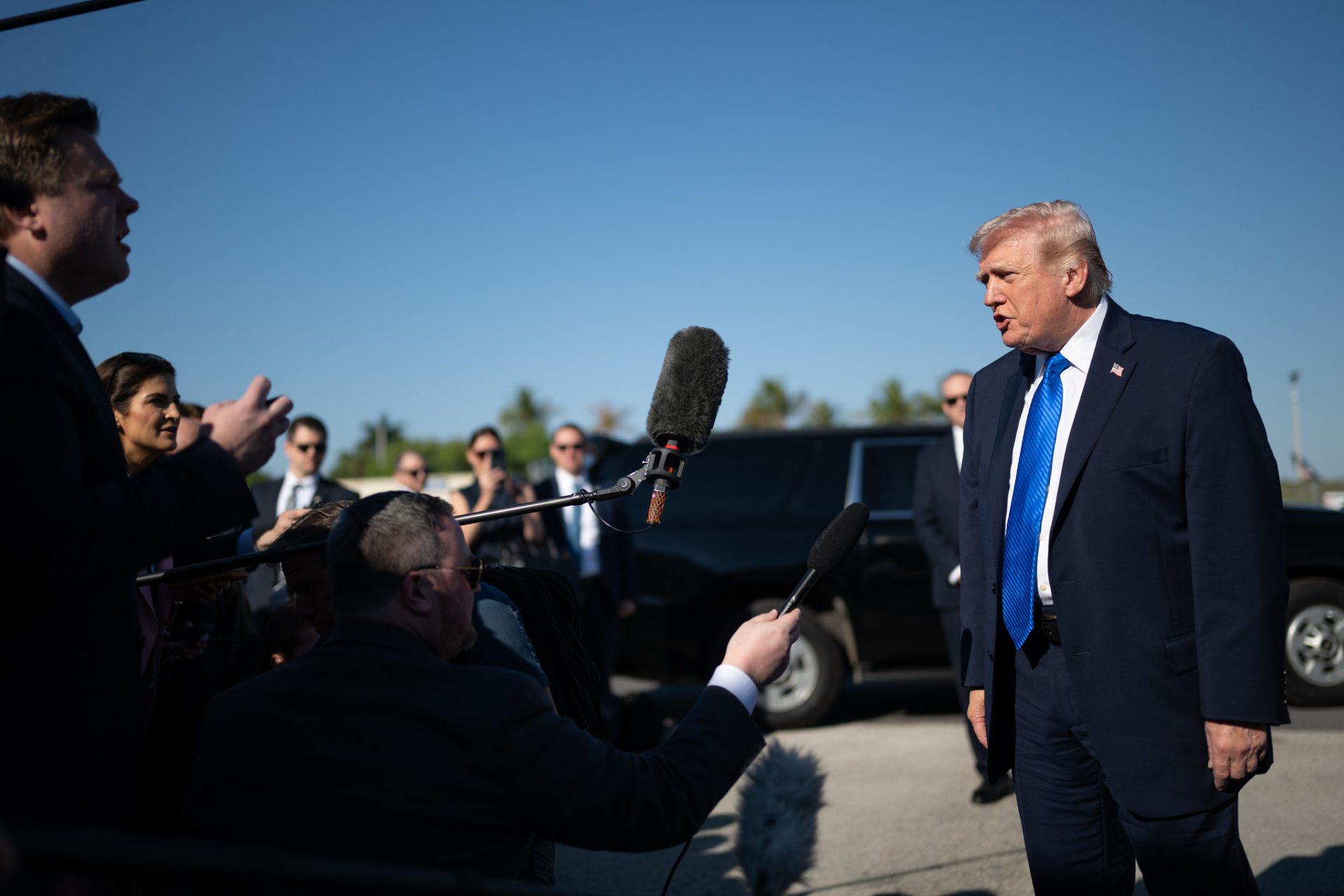
Several US media outlets have reported that the two main strands of demands on Cuba are wide-ranging ‘economic reforms’ (read: full capitalist restoration), as well as the removal of the Cuban president Miguel Díaz-Canel (a measure which would make it clear that Cuba has capitulated). That would be a version of what the US did in Venezuela, where US control of the country’s oil and mineral resources was combined with the removal of president Maduro through a military intervention.
The removal of Díaz-Canel would be the scalp that Trump needs to be able to show as a sign of having achieved victory. The underlying objective is to make Cuba into a semi-colony of the US, removing any hint of Chinese and Russian influence and opening the country up to US businesses.
Clearly, the United States would also demand a whole series of other concessions (release of prisoners, bourgeois elections further down the line, etc.), but their main aim is the restoration of capitalism and they want to achieve it, if possible, without social turmoil that could lead to a wave of migration to the United States.
Officials consulted by The Atlantic describe the situation in the following terms: “There’s billions of dollars to be made there.” According to them, Trump’s approach is: “We control our hemisphere, and we have the ability to do this. We want these hostile regimes out of our hemisphere, and we’re going to set up the business community, because we don’t believe in diplomacy.”
However, the Trump administration also has to contend with the reactionary Cuban-American community in Florida, which would not be satisfied with the removal of Diaz-Canel. They want revenge for the Cuban Revolution and the expropriation of the properties of their parents. This rabidly anti-communist mob would like to see a complete overthrow of the revolution, the destruction of the state and an end to ‘Communism’ as they see it.
As with the supporters of María Corina Machado in Venezuela, they would not be satisfied if Trump made a deal with a section of the leadership. The reactionary Cuban-Americans command much more clout in US politics than their Venezuelan counterparts.
A report in The New York Times on 16 March, said that “the Trump administration is seeking to push President Miguel Díaz-Canel from power”, but was not “pushing for any action against Castro family members, who remain the country’s top power brokers”. According to this report, the US is focused on “having Cuba gradually open its economy to American businesspeople and companies — laying the groundwork for a client state — while getting a few symbolic political wins for Mr. Trump to announce.”
This report enraged many of Florida’s gusanos – who are baying for blood – and this backlash is probably what forced Marco Rubio to publicly reject it, saying The New York Times’ sources were “charlatans and liars”.
A report along the same lines had been published a few days earlier in USA Today. “An agreement could include a relaxation on Americans’ ability to travel to Havana”, the article read, “discussions have included an off-ramp for President Miguel Díaz-Canel, the Castro family remaining on the island and deals on ports, energy and tourism.”
What is Cuba’s response?
After weeks of denying talks were taking place, finally, early in the morning on 13 March, the Cuban president Díaz-Canel admitted these were happening. The press conference was also attended by the whole leadership of the Communist Party and the state (the Political Bureau, the Secretariat of the Central Committee of the PCC, and the Executive Committee of the Council of Ministers).
Notable was the presence of Raúl Castro’s grandson, Raúl Guillermo Rodríguez Castro, who had been mentioned for weeks in reports about talks with US officials, despite the fact that he has no official leading position in the Cuban government or the Communist Party.
In his statement, Díaz-Canel talked of “identifying which bilateral problems require a solution”, determining “the willingness of both parties to materialise actions for the benefit of the peoples of both countries”, and identifying “areas of cooperation to address threats and guarantee the security and peace of both nations”.
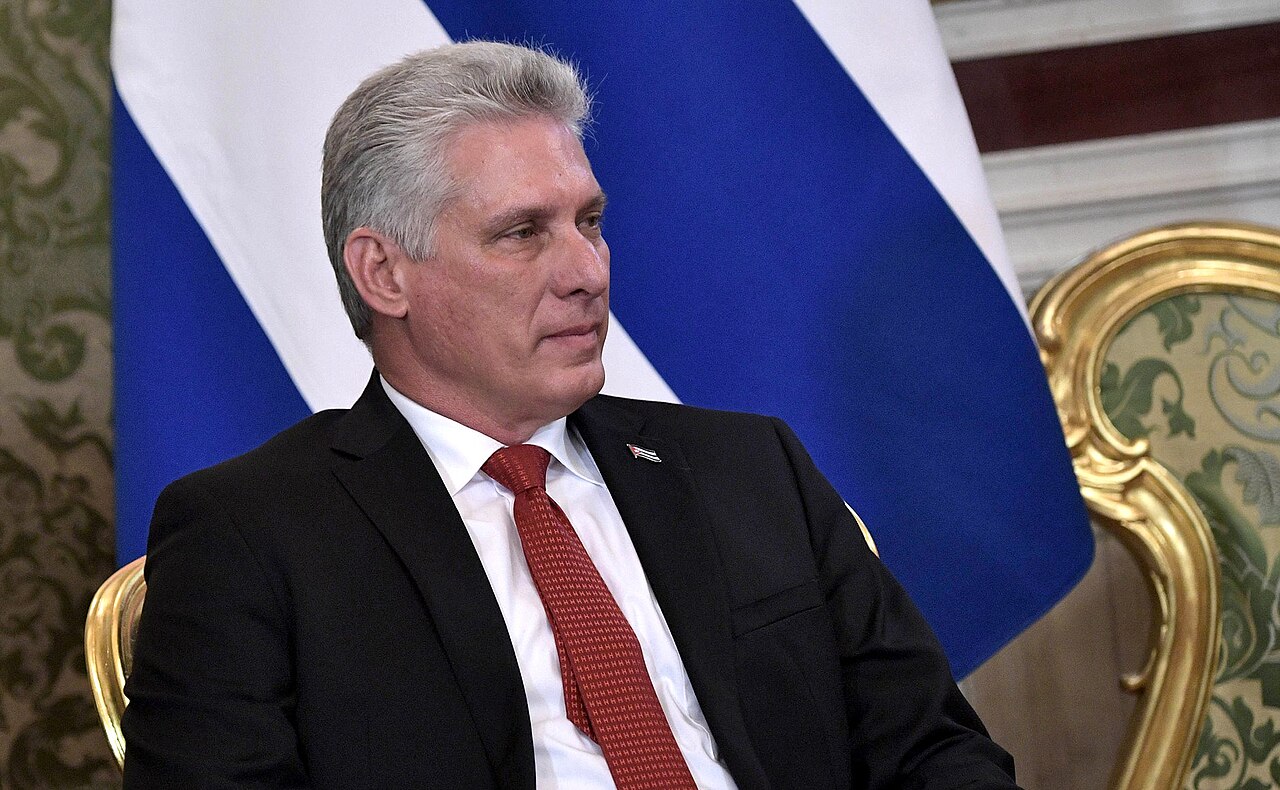
He insisted that the Cuban side in the talks had expressed its will “to carry out this process on the basis of equality and respect for the political systems of both states, and for the sovereignty and self-determination of our Government”.
These are fine words, but in reality there can there be no talks on the basis of mutual benefit, cooperation and respect, when US imperialism holds a gun to the head of the Cuban Revolution, or more precisely when it has a tight noose around its neck and is tightening the stranglehold day by day!
Shortly after Díaz-Canel’s press conference, the Ministry of Foreign Commerce announced economic measures to allow Cuban Americans and other US citizens to invest directly in Cuba (until now they had to do it through companies based in Cuba). They may invest not only in small businesses, but also in sectors like infrastructure, and they now have access to the Cuban banking system. The minister in charge is Oscar Pérez-Oliva Fraga, who is also the country’s Deputy Prime Minister. He is one of the people whom the rumour mill of the US capitalist press wants to present as the ‘Cuban Delcy’, that is, a person who would be subservient to US imperialism once the top leader was removed.
Marco Rubio was quick to dismiss this announcement as “not enough”:
“Cuba has a dysfunctional economy and a political and governmental system that they haven’t been able to fix. Therefore, they must make drastic changes. What they announced yesterday isn’t drastic enough. It won’t solve the problem. So, they have some important decisions to make.”
Clearly, US imperialism feels it has the necessary leverage to demand substantial and rapid moves towards full capitalist restoration under the domination of Washington. On the face of it, the balance of forces is extremely unfavourable to the Cuban Revolution.
While the oil embargo is now the main tool of imperialist blackmail, the United States is also preparing legal indictments against the political and military leadership in Cuba, including 95-year-old Raúl Castro. The South Florida State Attorney is already coordinating a multi-agency effort to make up a legal justification for a US attack on Cuba. This is exactly the same method that was used in Venezuela, where Maduro was accused of being the leader of a mythical Cartel de los Soles, only for that trumped-up charge to be dropped as soon as he was in custody in the US.
How to defend the Cuban Revolution?
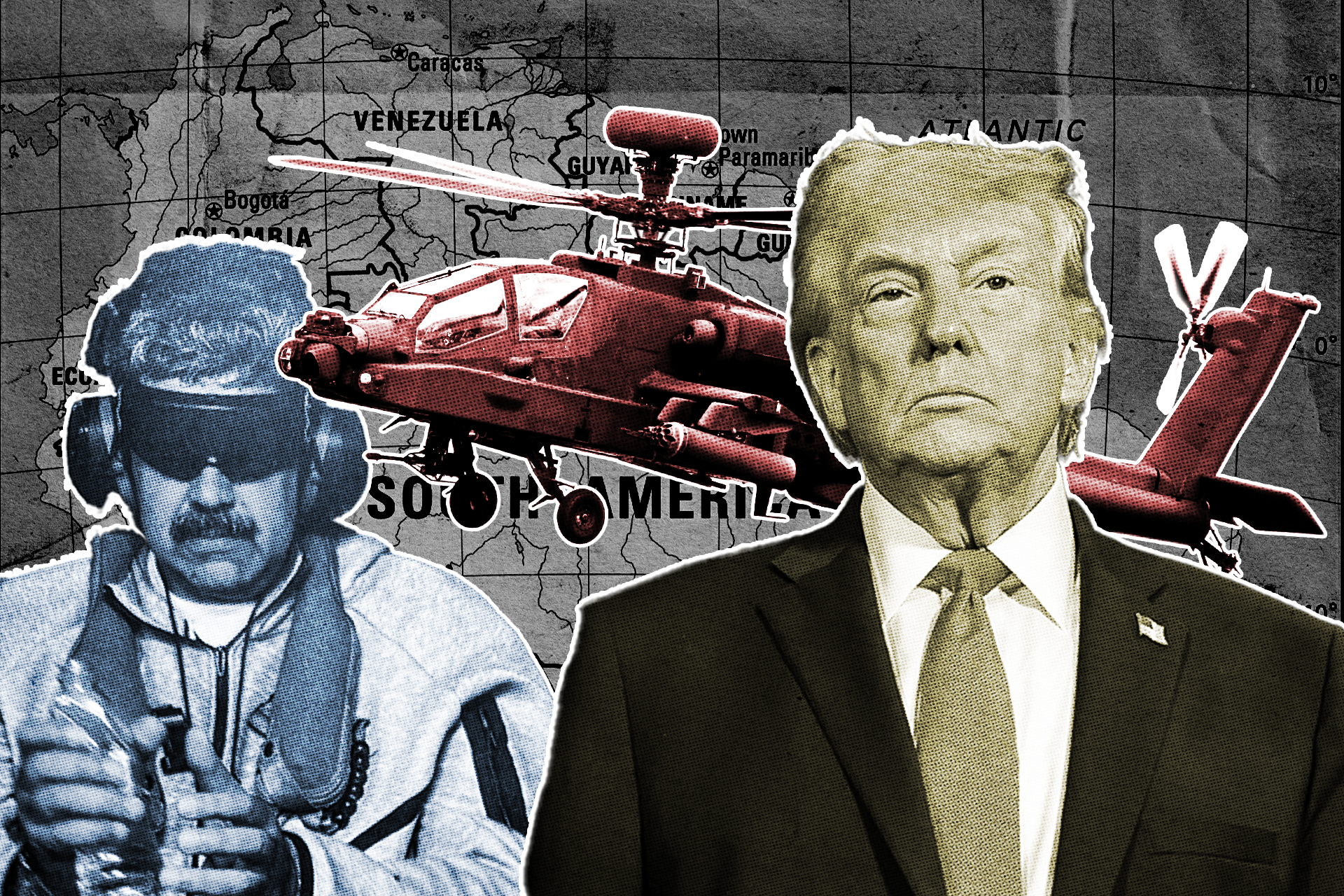
The 3 January attack on Venezuela was a shock for the leadership and the population in Cuba. It was shocking for several reasons. Firstly, it proved that the US will not limit itself to economic and diplomatic bullying, that it will not shy away from direct military intervention, and that it has overwhelming military and technological means to carry it out if it so decides.
Secondly, because of the way in which the Venezuelan political and military leadership, which was so close to Cuba, put up so little resistance and was so willing to submit to US imperialism in the aftermath of the attack.
Thirdly, because of the way in which Cubans disproportionately bore the brunt of the casualties, with 32 of their military personnel being killed while defending Maduro, in direct combat with US forces. The remains of the 32 Cuban soldiers were received back on the island with three days of national mourning and a mass outpour of emotion.
Finally, the speedy way in which the US was able to subjugate Venezuela also revealed that neither Russia nor China, nor any of the so-called ‘progressive governments’ in Latin America were able or willing to help defend Caracas in the hour of need. Instead, they limited themselves to strongly worded statements of condemnation.
In recent weeks I’ve spoken with many Cuban comrades. One idea that several shared was this: “If they come with a military invasion, we will resist, even though our technical resources are far inferior. It won’t be like Venezuela.”
One of Cuba’s best-known singer songwriters, Silvio Rodríguez declared “I demand my AKM [an assault rifle], if they launch an attack. And let it be known that I mean it.” The day after he was given an assault rifle by the Cuban armed forces in a very public ceremony. Silvio’s gesture exemplifies a deep-seated proud anti-imperialist mood in Cuba. And this sentiment includes many who are quite critical of the bureaucracy, its methods, and the growing process of capitalist restoration.
But the comrades I spoke to also added: “But if they come with a proposal along the lines of ‘we lift the blockade and you implement economic reforms,’ the leadership will agree, and moreover, the majority of the population will be in favour, even though that means the restoration of capitalism.”
The explanation they gave me was: “People are exhausted, worn out, the current situation is unsustainable, having to cook with charcoal, having only four hours of electricity in 48 hours… And how are we going to resist? What’s the alternative?” They told me, “Many people think along the lines of ‘anything would be better than what we have’.”
That’s an important factor to consider. A very large segment of the population has lost all confidence in the leadership, precisely because everything the leadership has done has gone wrong.
The impact of pro-capitalist reforms…
To demonstrate this, we could go back to the 2011 Economic Guidelines, which generated a very broad debate. The proposal was to make concessions to the market in order to ‘release the productive forces’. Nothing fundamentally changed.
Obama’s re-opening of diplomatic relations in 2014 offered a glimmer of hope that things would improve, but then Trump came along and brutally tightened the blockade. That was followed by the savage blow of the COVID-19 pandemic, which had a massive economic impact by cutting off one of the country’s main sources of hard currency, tourism, while at the same time increasing expenses.
This was followed by the currency unification of 2020, which caused an even greater drop in purchasing power and an increase in social inequality.
When Díaz-Canel came to power, he had a certain amount of political capital. He was seen as someone close to the people, a down-to-earth person. Over a period of time he has lost it all.
The Cuban leadership, particularly in the last 15 years, bet everything on the ‘economic reforms’ that were supposedly going to ‘liberate the productive forces’. In other words, it embarked on the path of gradually restoring capitalism, following the Chinese (or Vietnamese) model. Pro-capitalist reforms were presented not as necessary concessions in the face of capitalist encirclement, but as a progressive way out of the crisis facing the revolution. The idea that state planning was the problem and that market competition and private businesses were the solution became dominant.
…and an international policy based on geopolitics
Internationally, the policy of the Cuban leadership was one of supporting ‘progressive governments’ and advocating for ‘multipolarity’ as the way forward. The central theme was the fight ‘against neoliberalism’ (not capitalism), and the idea that alliances with Russia and China, and joining the BRICS, would allow Cuba to break out of its isolation. The call for “two, three, many Vietnams”, made by Che Guevara in 1966, was a distant memory.
World revolution was not even part of the discussion. Worse than that, when the opportunity arose in Venezuela, during the Bolivarian Revolution, the advice from the Cuban leadership was, ‘Don’t copy our model; each revolution has its own path’. Under the pretext of ‘we don’t export the revolution’, the lessons of the Cuban Revolution – that only by expropriating capitalism can national democratic tasks, agrarian reform, and national sovereignty be achieved – were not shared. Worse, they were hidden and advocated against by the Cuban leadership.
Orlando Borrego, who had enormous political authority and had worked with Che Guevara, went to Venezuela to give lectures to workers saying that “workers’ co-management” [a form of workers’ control and management] was “counterrevolutionary” and had to be discarded.
The result? The Bolivarian Revolution, which had been a lifeline – economic, but also and above all political (as Cuba was no longer alone) – was not completed with the expropriation of capitalism, and thus inevitably failed and degenerated. The final conclusion of that process of Thermidorean counter-revolution was 3 January 2026.
The idea that Venezuela should not learn the lessons of the Cuban Revolution led directly to its further isolation.
Once commodity prices collapsed after 2014, the Latin American reformist governments also went down, and those that exist today are too scared to dare to defend Cuba. Mexico, Colombia and Brazil are all oil producing countries but have not lifted a finger to supply Cuba when faced with US threats. Russia and China issue statements, but when push comes to shove, what they defend is not the Cuban Revolution but their own capitalist interests.
Even their support for Cuba is conditional. A couple of years ago, representatives of the Stolypin Institute of Russia went to Havana to push even further in the direction of capitalism. China and Russia are capitalist countries. While they may be interested in having links with a country 90 miles away from their main rival, their interest is certainly not to defend the Cuban Revolution.
This economic policy of ever-increasing concessions to the market, and this foreign policy of supporting reformism and geopolitics, is compounded by the impact of the dead weight of the bureaucracy. The more or less open repression of critical thought alienates the most vibrant and revolutionary elements of society, especially among the youth, who are seeking an alternative path on the left.
All of these factors (the brutal and ever-tighter economic blockade and imperialist aggression, the policies of capitalist restoration, the impact of the COVID-19 pandemic) have combined to create a generalised mood of despair and despondency. Over a million Cubans have emigrated, mainly amongst the younger generation. The economy has been in recession since 2022.
And these policies continue, even in the midst of Trump’s assault. At the beginning of March, a professor of architecture at the Technological University of Havana (CUJAE) did not get his contract renewed because he had expressed criticism of the policies of the bureaucracy on social media. At the same time, the Cuban government has just announced the opening of elderly care to the private sector.
The material gains of the revolution in the fields of education, healthcare, and housing have been severely eroded. At the same time, the ills of capitalism, in the form of a growing social differentiation, are already present.
The generation which led the revolution back in 1959 has almost completely disappeared. The children and grandchildren of that leadership have none of their qualities. Many of them are involved in private business, and the worst of them obscenely flaunt their newly acquired wealth and privileges on social media.
Many of them, as Trotsky explained in The Revolution Betrayed, are thinking in terms of how to go from being state functionaries and managers of the state-owned sections of the economy, to capitalist owners of the businesses themselves.
The tasks of revolutionary communists
The danger facing the Cuban Revolution is serious and imminent. Our duty as revolutionary communists around the world is to defend Cuba. We are not only defending a small sovereign country against the criminal aggression of the world’s most powerful and reactionary imperialist power, we are also defending a country which abolished capitalism. The planned economy has been severely weakened – by US blockade, by the bureaucracy, and by pro-market reforms – but it still exists.
The restoration of capitalism in Cuba would mean the brutal subjugation of the country to US imperialism, a return to the era of the Platt Amendment – which ratified the USA’s dominance over the island – and a massive collapse of the living standards for the majority of Cubans, while wealth would be concentrated in the hands of a small minority.
We must mobilise the world’s working class movement against Trump’s oil blockade, with all the forces at our disposal.
At the same time it is important to discuss how we have reached this point.
The whole history of the Cuban Revolution demonstrates the impossibility of building socialism in one country. It was only in the periods in which it was linked to the Soviet Union (despite the negative political impact that had in the process of bureaucratisation) and then to the Bolivarian Revolution, that Cuba was able to have a certain breathing space.
The policy of capitalist market reforms and bureaucratic management at home, combined with geopolitics and ‘multipolarity’ in international policy are not only unable to defend the Cuban Revolution, they are harmful and contribute to its destruction. They must be opposed by a struggle for the widest forms of workers’ control and democracy at all levels, in the state and the economy; as well as a genuine policy of proletarian internationalism, the struggle for world revolution.
For our part, as revolutionary communists outside of Cuba, we will offer our comradely opinions in this necessary debate that is already underway.
Our central task is to accelerate the construction of the revolutionary tool that can bring our class to power, in one country or another, because in the last instance the only effective way to defend the Cuban Revolution is… world revolution.

