In his now-famous Davos speech delivered earlier this year, Mark Carney painted the rosiest of pictures of Canada’s new approach to engaging the countries it seeks to do business with. In his words,
“Our new approach rests on … ‘values-based realism,’ or, to put another way, we aim to be principled and pragmatic. Principled in our commitment to fundamental values: sovereignty and territorial integrity, the prohibition of the use of force except when consistent with the UN Charter and respect for human rights.”
Speeches are all well and good, but since that speech was delivered, Carney has shown that of all the virtues whose praises he sang at Davos are nothing but window dressing for that most holy of virtues of the market economy: cash money.
Against the backdrop of souring trade negotiations with the U.S., Carney’s government is actively negotiating a comprehensive free-trade agreement with India, with the two countries aiming to reach a deal by the end of this year. This may seem like a rather quick turnaround—after all, wasn’t it just a couple years ago that a Liberal government was accusing agents of the Indian government of murdering Canadian citizen Hardeep Singh Nijjar via an organized crime network? Never mind! Will India be paying cash or credit?
In other news, Carney made diplomatic history this month by making the first dedicated bilateral visit to Turkey by a Canadian prime minister. Reportedly, the main goal of the visit was to make real progress in building a strategic economic, energy and military partnership. However, is this not the same Turkey that has been brutally oppressing the Kurds, fuelling Syria’s civil war and funding the Al-Qaeda-linked terrorists who now run that country? Well, the Kurds are broke, and Turkey’s autocrat has money to spend on Canadian weapons.
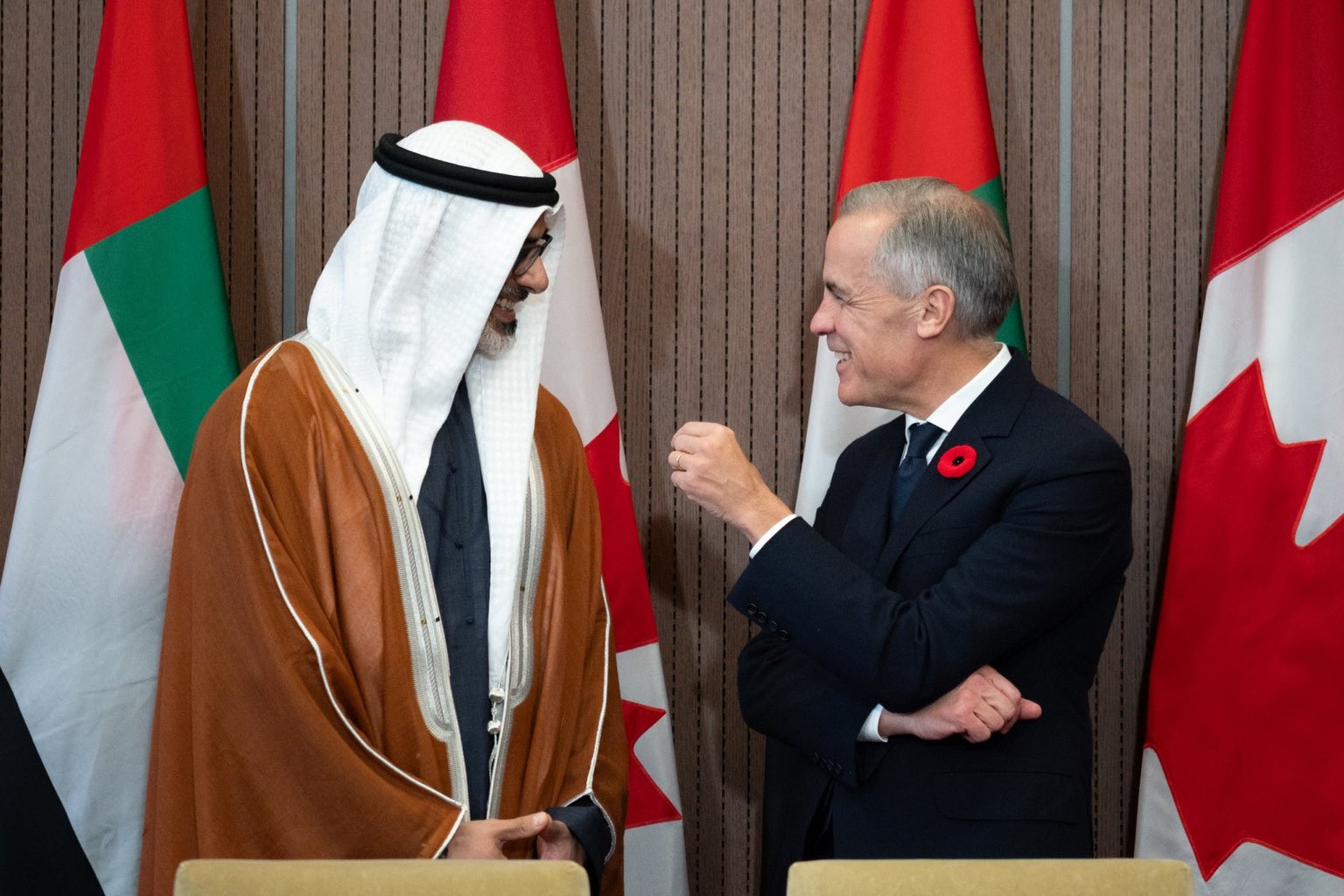
While he was in the neighborhood, Carney also invited the Crown Prince of Abu Dhabi over to Ottawa to discuss the finer points of their “shared values.” By all accounts, this was a very productive discussion. Not only did they ink out a free trade agreement—Carney was so reassured as to the compatibility of their shared values, that his government is also working on a bilateral extradition treaty! If signed, this would establish a formal legal framework for transferring individuals between Canada and the United Arab Emirates to face criminal prosecution or serve sentences.
Canadians who know the U.A.E. as a dictatorship run by a gang of depraved aristocrats may pose some nagging questions about which “shared values” are justifying such a deepening of relations. The U.A.E. regularly jails political dissidents and is known for treating migrant workers as slaves in all but name.
Aside from oil money, the U.A.E. also generates a steady cash flow by exploiting gold mines in Sudan, while paying off the genocidal RSF to defend its interests in that country—a policy which has helped to fuel the deadliest civil war of the 21st century.
What does Carney’s talk about democracy, shared values, human rights, etc. ultimately add up to? Actions speak louder than words—and money talks louder than either. This smiling cynicism is the real face of Canadian capitalism: talk up peace and love—but above all else, and at the cost of any perception of hypocrisy, keep the profits flowing.

