The war on Iran is not simply a regional military conflict. It has rapidly become a global economic and political crisis whose consequences are being felt far beyond the battlefield.
The closure of the Strait of Hormuz has triggered shortages, intensified global inflation, and heightened the risk of worldwide recession. Damage to critical fuel infrastructure has disrupted the supply of vital resources like gas and fertilizer, threatening both the lifeblood of economies and the lives of working people around the world.
The war has exposed the deep instability of world capitalism and sharpened existing contradictions in economies already weighed down by debt, austerity, and declining living standards.
Asia feels the immediate shock
So far, Asia has been hit the hardest. The region absorbs the overwhelming majority of crude oil and LNG passing through Hormuz, leaving it acutely exposed. Pakistan and Indonesia reportedly hold only around 20 days of reserves, while Vietnam’s reserves are estimated to last less than three weeks.
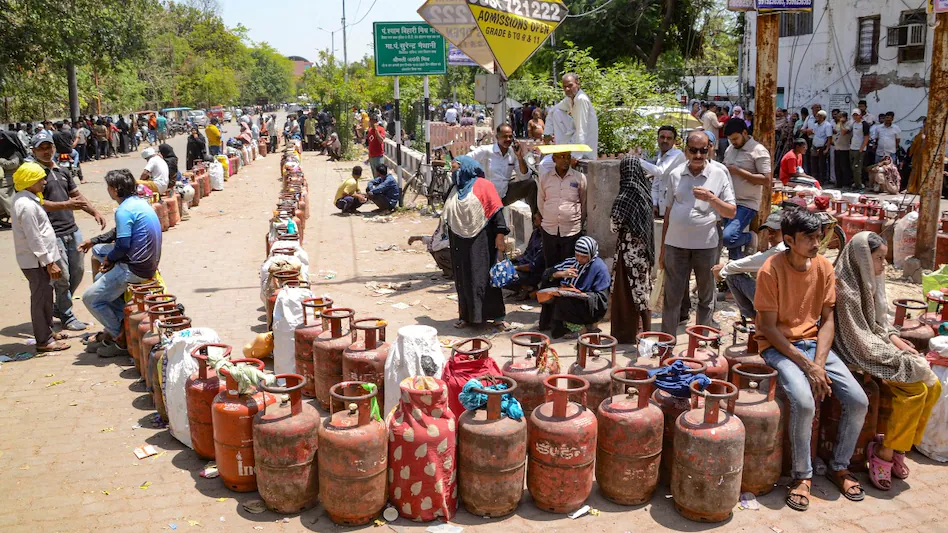
In April, the Pakistani government raised the cost of fuel by over 70 per cent in one month. In Bangladesh, ordinary people are being made to wait over 15 hours to refuel their vehicles. In India, the price of a household gas cylinder has surged by 344 per cent, forcing ordinary people into hours-long queues to secure enough fuel to cook. Tens of millions of the poorest workers have been forced to use less-safe fuel sources like coal or kerosene for cooking, to eat uncooked food, or skip meals entirely.
Fuel rationing has been introduced in Bangladesh and Sri Lanka, while Nepal and India have begun rationing cooking gas. Across the region, governments have imposed shortened working weeks, work-from-home orders, and other emergency restrictions on public workers. This has all severely disrupted economic activity, undermined production and impacted the circulation of food, industrial materials, and essential services.
Agro-based economies such as India, heavily dependent on fertilizer, are facing a massive crisis which will drive up prices of basic foodstuffs which hundreds of millions of poor people rely on. The United Nations estimates that in India alone 2.5 million people could be pushed into poverty, and up to 8 million across South Asia.
Crisis in the imperial core
Even the western imperialist countries are far from safe.
In Europe, the energy crisis is estimated to be costing the EU around €500 million (CAD 820 million) per day. EU Energy Commissioner Dan Jørgensen has warned that the Iran war has not produced “a short-term, small increase in prices,” but a crisis “probably as serious as the 1973 and 2022 crises combined.” It’s worth remembering that the 2022 energy crisis in Europe resulted in 68,000 deaths according to The Economist, as a large number of working-class households were not able to afford heat—and current energy prices are expected to remain high at least until winter this year.
Energy bills are expected to rise by over €1,900 (CAD 2,800) annually—that is, 12 per cent of average household expenditures—with officials warning of “devastating” additional costs. Simultaneously, the new energy crisis is accelerating the process of deindustrialization that began when Europe cut itself off from Russian oil, decimating the manufacturing sector and all the livelihoods dependent on it.
In Canada gas prices have gone up by over 30 per cent. Fertilizer prices have gone up just when farmers are planting their fields, which means lower yields, more pressure on farmers, and more food insecurity for everyone else.
Basis laid for social explosion
This drastic increase in living costs comes on the back of a prolonged period where wages have not kept up with inflation. In countries all over the world, the scene is set for a massive social explosion.
From Nepal to the Philippines to Indonesia, the past year has already seen “Gen-Z revolutions” driven by inequality, unemployment, corruption, and collapsing living standards. The war on Iran has only worsened these conditions.
Terrified of a widespread revolt, governments are rushing to squash social movements. In India, strikes against brutal working conditions have been met with hundreds of arrests.
Protests have erupted in Pakistan, Sri Lanka, and Egypt, over electricity tariffs, fuel prices, austerity, and IMF-linked reforms. In Ireland, protests by farmers and hauliers over rising fuel prices quickly escalated into nationwide blockades.
What began as resistance to fuel shortages and rising living costs is rapidly escalating into broader movements, as capitalism’s inability to resolve the crisis fuels generalized hostility toward the ruling class and the system as a whole.
Even a small spark can ignite an enormous fire, and the conditions for such sparks are multiplying globally.
Capitalism offers no way out but barbarism: endless war, deepening poverty, and repression. Workers did not choose this war, nor should they be made to pay for it.
The coming months are likely to bring intensified attacks on the working class, and with them, intensified class struggle. The task now is to consciously organize to end the system that reproduces crisis, war, and misery again and again.

