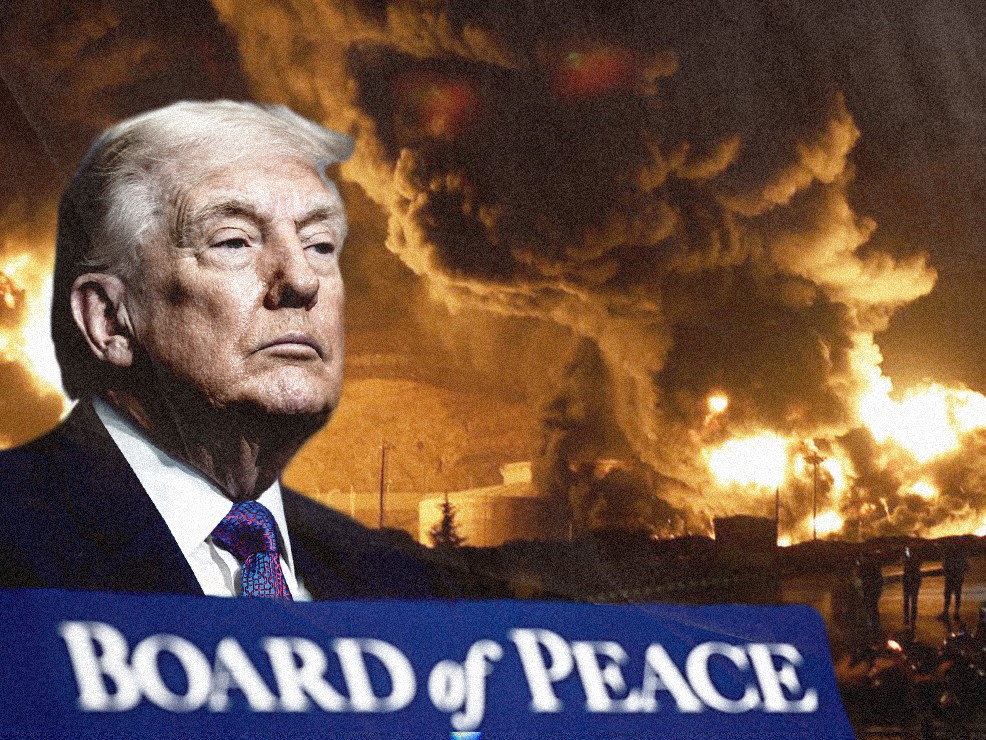
In the morning of Saturday 28 February, Tehran was shaken by a series of loud explosions as US and Israeli missiles struck the capital of Iran. Clouds of smoke were also seen rising from Tehran, Qom and other Iranian cities, announcing the commencement of war.
At a stroke, the endless parody of meaningless negotiations was suddenly interrupted by reality.
For months this absurd farce was played out in the full gaze of public opinion with the intention of creating a false illusion that a deal would soon be struck and peace and harmony would reign.
Aware of both Washington’s intentions and how close a US military strike appeared to be, Oman’s foreign minister, Badr Albusaidi – whose country has been facilitating the negotiations – hurried to Washington in an urgent effort to present the talks in the most positive light possible. In an unusual move, he even appeared on CBS and disclosed significant details about the emerging arrangement, saying a peace deal was within reach.
However, Albusaidi was granted a meeting only with Vice President JD Vance, where he argued that the negotiations were on the verge of a major breakthrough. He maintained that the proposed agreement would surpass the 2015 nuclear deal, which Donald Trump withdrew from in 2018.
According to Albusaidi, Iran had accepted conditions that included eliminating its stockpiles of highly enriched uranium, converting its existing reserves into less enriched material within the country, and allowing comprehensive monitoring by the International Atomic Energy Agency (IAEA). He added that US inspectors could potentially be allowed to operate in Iran alongside the IAEA. Under the proposed terms, Iran would limit its uranium enrichment strictly to levels necessary for civilian nuclear energy purposes.
A very reasonable set of proposals, and one that could presumably have been accepted by the US side – assuming, of course, the US side was remotely interested in peace.
And it replied to the reasonable proposals with a shower of bombs and missiles.
Dmitry Medvedev, deputy chairman of Russia’s Security Council, castigated Trump for the attack on Iran and questioned which of the belligerents has the staying power, given the relatively short history of the United States is 250 years old, whereas Persian civilisation is 2,500 years old.
“The peacemaker once again showed his face,” Medvedev said. “All negotiations with Iran are a cover operation. No one doubted it. No one really wanted to negotiate anything.”
As an Iranian Telegram channel put it: “Once again the US attacked while Iran was pursuing diplomacy. Once again diplomacy does not work with the terrorist state of the US.”
A repeat performance
It is not the first time that we have witnessed such a farce. Precisely the same diplomatic game was played out last summer.
The script was identical. The actors, more or less the same. And the ending, equally predictable from the start.
The man in the White House now complains that the negotiations failed because the Iranians were not prepared to negotiate “in good faith”.
That is a lie. If anyone was negotiating in bad faith it was not the Iranians, but the Americans, who deliberately used the smokescreen of fake negotiations in order to conceal their determination to attack Iran and overthrow its government.
But this time, there are some important differences in this game of diplomatic hide and seek.
Last summer, the Iranians were taken off guard by a treacherous attack, which was launched suddenly and without any warning, precisely in the middle of negotiations, which were allegedly making good progress.
This time, things were very different. The Iranian side no longer trusted the Americans to negotiate in good faith.
They particularly distrusted Donald J. Trump, and warned in advance that they would not be taken by surprise, and would meet any attack with a massive response.
Here we see a second important difference.
Despite all his bellicose rhetoric, Trump’s preference is always to attempt to do a deal (which is cheap) as opposed to waging war (which is expensive in more ways than one).
After a week or so last June, when the Americans and Israelis realised that they had failed in their central objective, which was to overthrow the regime, they re-examined the balance of forces and concluded that they were not in the position to prolong the war any further.
Despite severe bombardment in the initial stages, Iran survived and went onto the offensive, showering Israel with missiles, which began to penetrate its so-called Iron Dome, which was supposed to be invulnerable.
And whereas Iran possessed a large stock of missiles accumulated over a long period of time, supplies of air defence missiles in particular possessed by the United States and Israel were insufficient to keep up a war for any length of time.
Donald Trump therefore decided to end the hostilities when he saw that it would be dangerous to continue. He therefore called a halt to what was to be later called the Twelve-Day War.
What is the position today?
It is true that the United States has amassed a formidable military force in the region, backed by the powerful U.S. Navy.
But this apparent strength conceals an underlying weakness, which is not new, and which poses a very serious risk to the whole operation.
Recently, the American president held a meeting with leading representatives from the US Armed Forces and the CIA. He asked them to assess the possibilities of a successful attack on Iran and the risks that might be involved.
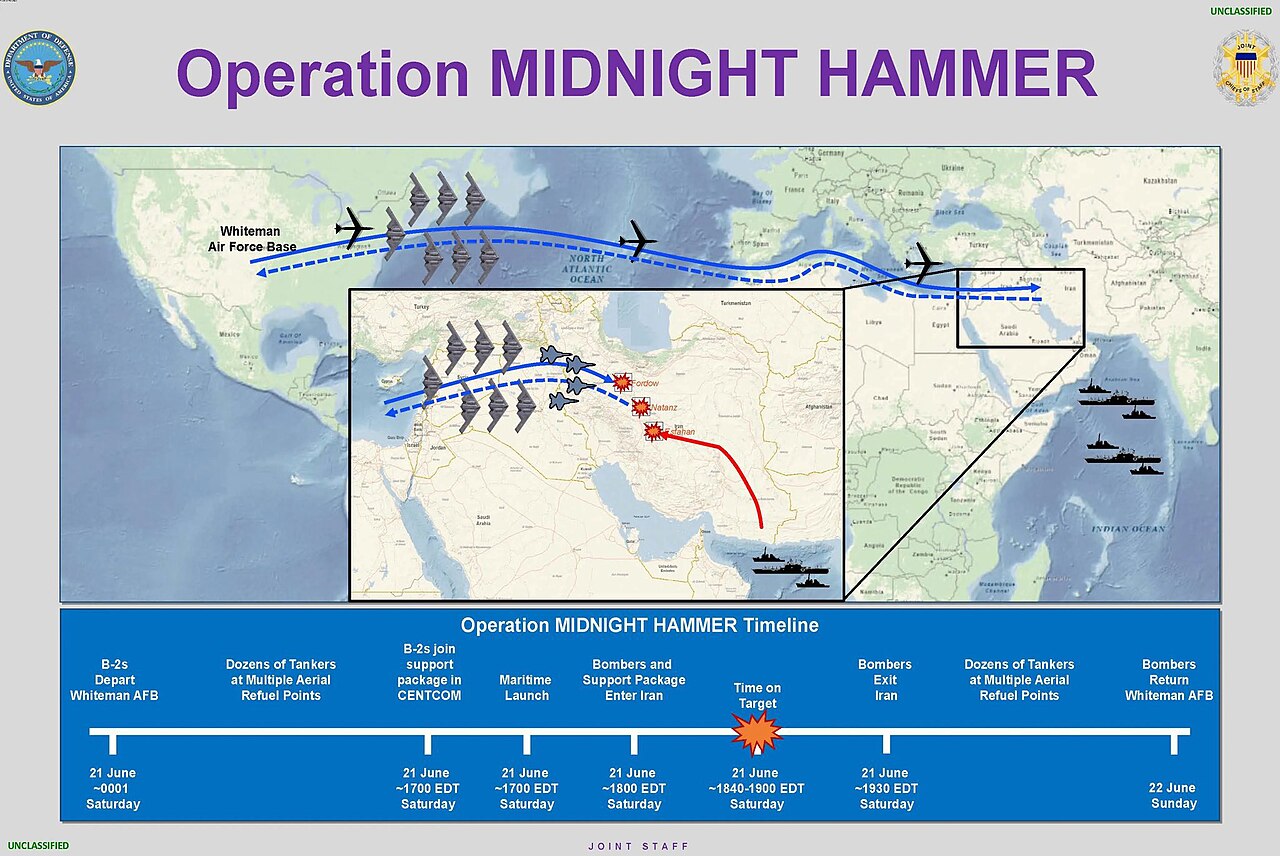
The meeting was held in secret, but judging by certain leaks in the press, he was not happy with the answers he received. None of the assembled military chiefs were able to provide him with the guarantee of success. Nor could they assure him that this war could be ended as quickly and easily as the one last year.
They further told him that American forces could well sustain losses – potentially very serious losses in such a conflict.
For a man eternally obsessed with his standing in the polls, this was not what he expected to hear. The press reported that the president emerged from the meeting both angry and frustrated.
These reports should have given Donald Trump pause for thought. Mr Trump is least of all a man given to serious thought. On the contrary, he gives every impression of a man driven by sudden impulses and instinct, swayed by the last person he has spoken with on any subject whatsoever – and subjects on which he has very firmly established opinions above all. That includes Iran, a country about which he can never completely conceal his deep-rooted and undying aversion.
In an astonishing statement issued at the time of the American attack on Iran this morning, Trump produced a lengthy litany of crimes allegedly committed by the evil Iranians against innocent citizens of the United States over a period of decades.
He begins his tirade by referring to “a violent takeover of the US embassy in Tehran, holding dozens of American hostages for 444 days.” This incident occurred on November 4, 1979, when militant Iranian students stormed the US embassy.
That is to say, an event that took place almost half a century ago! Yet the man in the White House presents it as if it happened only yesterday. Evidently, this event has played on his mind ever since then, like a fishbone stuck in his throat.
And, finally finishing his list, he triumphantly adds: “And it was Iran’s proxy Hamas that launched the monstrous October 7 attacks on Israel.”
He conveniently overlooks the fact that the CIA itself issued a report which clearly states that this attack had nothing to do with Iran, which had no knowledge of it and was not involved in it.
But one should never let the facts spoil a good story. In the feverish brain of the American president, Iran has become the personification of Evil on Earth, a terrorist regime, guilty of a long list of unspeakable crimes, the source of all the problems and upheavals in the Middle East, and a threat to the security (indeed, the very existence) of the United States itself.
A very remarkable script, and one that would be very suitable for the kind of television drama so beloved by the man in the White House.
In reality, however, in common with most dramas of this kind, its relationship to the truth is extremely tenuous, and in fact, it frequently stands the truth on its head.
If we wish to point a finger at the regime that has been most responsible for wars, upheavals, death and destruction on a global scale for the past decades, it must be pointed, not at Iran, but at the United States of America.
In saying this, we in no way wish to gloss over the crimes committed by the regime of the mullahs in Tehran. But, by comparison, these shrink into insignificance next to the appalling record of mass terrorism, criminal wars and aggression, slaughter and destruction perpetrated by US imperialism.
And if we are looking for the principal culprit that has caused most of the upheavals, wars and terrorist actions in the Middle East, the guilty party would undoubtedly be America’s main ally and proxy in that region – Israel.
For years, Washington has given the Israeli regime a completely free hand to pursue its aggressive and expansionist policies in the Middle East.
It has armed it to the teeth and subsidised its economy, enabling it to fulfil its aggressive ambitions without any hindrance.
If we leave aside the genocidal war being perpetrated by Israel against the people of Gaza and its monstrous oppression of the Palestinians on the West Bank, Israel has never ceased to stage continuous acts of unprovoked aggression against neighbouring countries, including Lebanon, Syria, Yemen, Iraq – and last but not least, Iran itself.
It is evident that this war inflicted upon Iran by the USA and its Israeli partners in crime, is a direct continuation of the aggressive policies of the warmonger Benjamin Netanyahu, who is desperately striving to maintain his control over an increasingly discontented population in Israel.
There can be absolutely no doubt that it was pressure from Netanyahu that induced Trump to declare war on Iran, when, despite all his belligerent rhetoric, it is a matter of public record that Iran presents absolutely no threat whatsoever to the United States.
As a matter of fact, Iran at the present time presents no immediate threat to Israel, or any other country in the Middle East. Far from being a terrorist regime, bent on causing wars, it has made every effort to avoid war and to make peace with the United States. It is in Washington and Jerusalem, not in Tehran, that the causes of the present war must be sought.
What are America’s war aims?
In any war, the belligerent powers must have two considerations firmly in mind: what are their aims, and what is the final result anticipated?
The absence of such claims is a sure recipe for endless complications, contradictions, and ultimately, defeat.
Yet Donald Trump appears to have stumbled into this war like a drunken man staggering directionless in a street, with no clear idea of where he is going.
The modus operandi of this gentleman appears to be to constantly act on impulse. But such an approach is least acceptable in the case of war.
He appears to assume that the employment of overwhelming military force can bring about the desired result in a short space of time. For certain reasons that we shall deal with later, he wishes to avoid a prolongation of the hostilities at all costs.
But what is the central aim? This has never been made clear. More correctly, different objectives have been put forward at different times.
During the recent mass protests against the regime, he threatened to take military action if the regime carried out acts of repression against the protesters.
Predictably, the repression took place and a number of protesters were killed. The figures suggested by Donald Trump are certainly inflated, as neither he, nor anyone else can say for certain what the real figure was.
In any case, this is hardly relevant, since no action took place either during or immediately after the protests occurred. Nowadays, the whole question is quietly dropped and scarcely, if ever, mentioned.
Evidently, the fate of the demonstrators was not very high up in the president’s list of priorities. He now tells them that they should stay off the streets and remain at home, since otherwise they are likely to be killed, not by the regime, but by American bombs, which allegedly were sent to help them!
The other aims mentioned are the elimination of Iran’s stock of long-range missiles, which have accumulated considerably in recent years.
But there is no way that the Iranians could accept such a demand in the course of the negotiations, since it amounts to a demand to disarm in the face of Israeli aggression. That is, it is a request of the Iranians to commit suicide.
Since the Iranians can never agree to this, and given that the Americans and Israelis could never destroy them militarily, it could hardly be considered to be a realistic war aim.
The same is true of the demand that Iran should cease supporting its allies in the region, such as Hamas in Gaza, Hezbollah in Lebanon and the Houthis in Yemen. They are demanding that the Iranians simply abandon their allies in the Middle East, at the very time when the assistance of such allies clearly becomes an important factor. This is equally ruled out.
The demand that Iran should in effect abandon its entire nuclear programme was equally unacceptable.
In fact, no sovereign state could accept such a demand, which represents an unacceptable denial of its most elementary rights.
In the end, therefore, we are left with only one clear aim – and one that is now recognised openly by the President of the United States:
The principal – indeed the only real war aim of the United States is regime change in Iran.
The overthrow of the regime was, in fact, the real intention all along. It has long been the aim of the Israelis, and also of the US imperialist establishment.
The initial strike of Israel against Iran in the Twelve-Day War was an attempt to destroy the government in Tehran by a decapitation strike. They succeeded in murdering several prominent Iranian military officials. But the aim of beheading the regime escaped them entirely.
The regime survived and struck back with a missile offensive that placed Israel in a very dangerous position. It was for that reason and no other that Trump decided to call a halt at that time.
It now seems likely that history is repeating itself. But the conditions are now completely different, and the outcome will probably also be different.
Targeting Iran’s leaders
Satellite imagery would appear to show that the compound of the Supreme Leader of Iran, Ali Khamenei, has been almost completely destroyed, although at the time of writing there is no indication one way or another whether he was in the compound. It is clear that the Americans and Israelis have targeted the key leaders of the Iranian government.
Meanwhile, official Israeli sources are claiming that the head of Iran’s Islamic Revolutionary Guard Corps, General Mohammad Pakpour, was likely killed in this morning’s strikes in Iran, as well as Iran’s intelligence chief and minister of defence.
However, for the moment, none of the statements can be confirmed.
Meanwhile, reports of civilian casualties in Iran are growing.
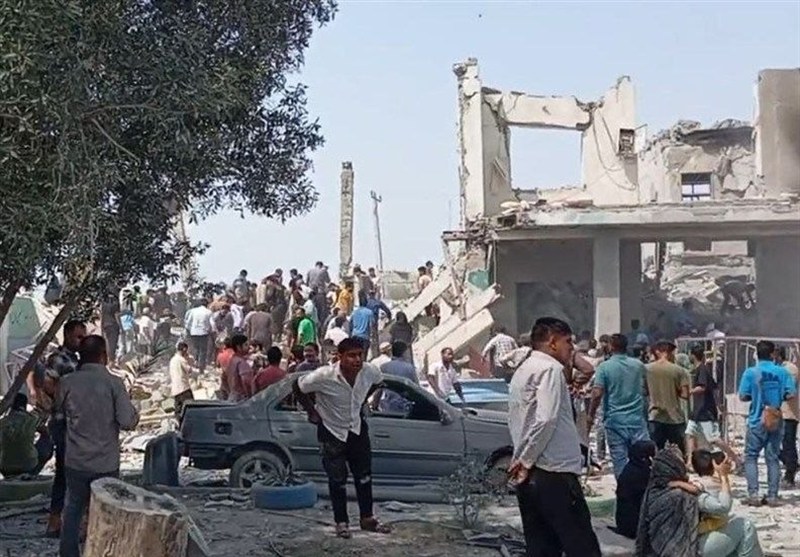
An Israeli strike hit an elementary girl’s school in Minab, a city in the Hormozgan province of southern Iran, killing more than 80 students. As the number of casualties grows, so the indignation and anger of the population will increase.
This fact does not provide any support for the idea that an American attack will lead to regime change anytime soon. Although a large section of the population hates the regime, their hatred towards US imperialism and Israel is greater by far.
It seems unlikely they will look upon them as potential liberators. Nor should they.
The Iranian response
Ebrahim Azizi, who chairs the Iranian parliament’s national security commission, warned that Iran would deliver a “crushing” response. “We warned you! Now you have started down a path whose end is no longer in your control,” he posted on social media.
Iran began launching rocket strikes in retaliation less than an hour after the strikes began. There were explosions all over Israel, including Tel Aviv, Jerusalem and Haifa, as Israeli aid defence systems attempted to shoot down incoming missiles.
It has also been reported that Iranian missiles have been fired at US military bases, which are to be found all over the region, including the Al-Udeid Air Base in Qatar, Al-Salem Air Base in Kuwait, Al-Dhafra Air Base in the United Arab Emirates, and the US Fifth Fleet headquarters in Bahrain. In Riyadh, Saudi Arabia, explosions could also be heard.
In Yemen, the Houthis declared they intend to resume missile strikes against Israel soon. Meanwhile, a militia in Iraq aligned with Iran said it would “soon start assaulting American bases in response to their attacks.”
The irrelevance of Europe
These events have underlined the complete irrelevance of Europe in world affairs. The Europeans were not consulted nor forewarned of the American plans. Von der Leyen bleated:
“The developments in Iran are greatly concerning. We remain in close contact with our partners in the region. We reaffirm our steadfast commitment to safeguarding regional security and stability. Ensuring nuclear safety and preventing any actions that could further escalate tensions or undermine the global non-proliferation regime is of critical importance. We call on all parties to exercise maximum restraint, to protect civilians, and to fully respect international law.”
A meaningless regurgitation of empty phrases, if ever there was one!
However, Norway’s foreign minister seems to have broken ranks when he stated that the strikes on Iran broke international law, calling for a diplomatic solution to the crisis.
But contradictory statements from London appear to underline the fact that Europe is in complete disarray over its response to these events.
The initial statement by an unnamed British government spokesperson stated: “We do not want to see further escalation into a wider regional conflict.”
But in a later statement, Prime Minister Starmer implied that Britain would be sending warplanes to the region – although for what purpose, it is hard to say.
At any rate, it is fairly obvious that nobody pays much attention to what the Europeans have to say these days.
What now?
Napoleon said that war is the most complicated of all equations. It is always difficult to foresee the outcome of any war, because there are any number of unknown factors which are difficult, if not impossible, to know in advance.
The present conflict is no exception. There can be several different outcomes, depending on the real balance of forces, which will only become clear in the course of the conflict itself.
These results will not necessarily coincide with the subjective intentions of the parties involved in the conflict. In fact, the two things will frequently contradict each other.
The clear intention of Donald Trump is to achieve regime change in Iran. But he can be under no illusions now that this is easier said than done. His generals have warned him that such an outcome is far from certain.
Worse still, they have told him that it certainly cannot be guaranteed in a short space of time. But time is precisely something that the Americans do not possess in great quantity.
Contrary to the general belief in the West that America has unlimited economic and military reserves, the facts tell an entirely different story.
As a result of constant involvement in many different conflicts in recent years, America’s stockpile of weapons has become severely depleted. There are many shortages – particularly an acute shortage of air defence missiles, like the Patriot.
The conflict in Ukraine in particular has acted as a colossal drain on America’s resources – both budgetary and militarily.
The result is now clear. According to some estimates, America can only sustain a war with Iran for a period of between five and ten days – no longer.
A couple of days ago, the Financial Times published an article with the title, “Defensive munition shortages to shape attack on Iran”.
The article begins by informing us that the “US and Israel burned through interceptors at an unprecedented rate during last year’s 12-day war”. And it concludes:
“Limited supplies of critical defensive munitions to protect US forces and allies from Tehran’s missiles are likely to shape the military offensive against Iran, according to officials and analysts.”
During the Twelve-Day War, Iran fired more than 500 missiles at Israel. About 35 managed to pierce Israel’s multi-layered aerial defences. This was a severe psychological shock to many Israelis, who had been taught to believe in the invulnerability of the so-called Iron Dome air defence programme.
And Iran possesses a stockpile of several thousand missiles at its disposal, which will allow it to continue its programme of intensive bombardment of Israel for a far longer period than the Americans and Israelis can compete with, given the serious problem faced by arms production in the USA.
Therefore, Trump is gambling on a short war, which he can end quickly, as he did last year. But it is by no means certain that he is now in a position to achieve this.
He now talks of a “limited strike”, in the hope that the Iranians will also show restraint in their response, as they did last year.
But the Iranians have warned that this time, Trump can start a war, but he cannot decide when that war will end. That decision will be in the hands of the Iranians, who will not be in any hurry to oblige the man in the White House. After all, why should they?
The prolongation of the conflict, and the acute shortage of missiles on the part of America and Israel, would impose severe strains on the latter.
Sooner or later, Trump would be forced into an undignified and humiliating retreat.
This would have very negative consequences for his reputation in America, which, in the run-up to the mid-term elections, is a very important consideration for him.
Trump now finds himself in a very difficult position. His economic policy has failed to bring the desired results and there is growing discontent in the MAGA base.
It was precisely that reason that inclined him to enter into the present adventure in the Middle East – something which he promised he would never do.
As a gambling man, he thought he would bet on an easy and quick war with Iran, ending in victory, hopefully with the collapse of the regime and the installation of a pro-American government in Tehran.
But as often happens to inveterate gamblers, bets do not always pay off. More often than not, they end in ruin.
A disastrous war in the Middle East would signify the end of Donald Trump’s ambitions, and a slow descent towards a humiliating defeat, loss of office, loss of face – loss of everything that is important to him.
The outcome
So what are the likely alternatives? To begin with, the one that Donald J Trump is hoping for: a short, successful war, leading to the collapse of the regime, a popular insurrection and the emergence of a pro-American regime in Iran.
While such an outcome cannot be entirely excluded, under present conditions, it seems to be vanishingly unlikely. I would say, frankly, that it is ruled out.
Incidentally, if the Americans succeed in overthrowing the present regime, the result will not necessarily be to their liking. Let us remember that all the American attempts at regime change led to disaster. The examples of Iraq, Syria and Libya immediately come to mind.
The overthrow of the present regime in Iran would very likely lead to a state of chaos, in which all the latent contradictions of Iranian society would come to the fore in a nightmare of violence, national and sectarian conflict, and all the attendant horrors that we have seen in other countries where the Americans have caused chaos.
This in turn would cause terrible chaos, wars and crises for the whole of the Middle East, creating a nightmare scenario for the masses that could last for decades.
Not a very nice perspective!
The second outcome is that the regime resists the initial onslaught, despite the obvious losses and damage caused by the bombing, which will be very significant, but not decisive.
To express things clearly: either the United States and Israel gain a quick victory, or, if the war drags on, they will soon find themselves in serious difficulties.
During the Vietnam War, Henry Kissinger once remarked: “we are losing, because we are not winning. And they (the Vietnamese) are winning, because they are not losing.”
The same argument would now apply with even greater force in Iran. All the regime has to do is to hang on, hold together and wait, while hitting out at targets that will seriously damage the USA and are well within Iranian capability.
The most obvious target would be to close the Gulf of Hormuz , one of the most important arteries of world trade. Such a closure would have a catastrophic effect on the world economy.
Ultimately, the US would have to admit defeat and try to get some kind of a compromise.
In fact, it is not entirely ruled out that behind-the-scenes, secret negotiations may be taking place between the Americans and Iranians to work out some way of avoiding the worst scenario.
At the moment, this seems to be at least highly unlikely. The crescendo of mutual recriminations, accusations and abuse, the extraordinary buildup of military force, above all the stubbornness of the man in the White House, all seem to point to further intensification of hostilities.
This indeed seems to be the most likely outcome. But who is to say? The murky world of international secret diplomacy always takes place behind closed doors, in which apparently unlikely deals may be reached under certain circumstances.
We must leave this question open, for the simple reason that it is impossible to say exactly what the result of the war will be.
Our attitude to the war
The attitude of communists to war is always a concrete question. It is not determined by any moralistic or sentimental considerations, but purely, in each given case, by the general interests of the world proletarian revolution.
Our attitude is never determined by such formal questions as who attacked first. Very often, countries that are engaged in a defensive war are compelled to resort to the offensive first.
But let us be clear about one thing. The United States of America is the most monstrous, reactionary and counter-revolutionary force on the planet.
And it is our duty as internationalists to conduct an implacable struggle against this counter-revolutionary monster and its Israeli proxies by every means at our disposal.
And if ever there was an example of an unprovoked act of aggression against any country, that must surely be the case here.
The Revolutionary Communist International must make its position absolutely clear and unambiguous:
We stand for the unconditional defence of Iran against the aggressive acts of American imperialism and its Israeli proxies.
This in no way implies support for the regime in Tehran. But the task of dealing with this regime is the task of the Iranian people, and the Iranian people alone. Under no circumstances, can they look to US imperialism to solve this problem for them.
Above all, we stand against reactionary imperialist wars and for unity of all the toiling people against the real enemy. And the real enemy is predatory imperialism and the capitalist system that lies behind it.

