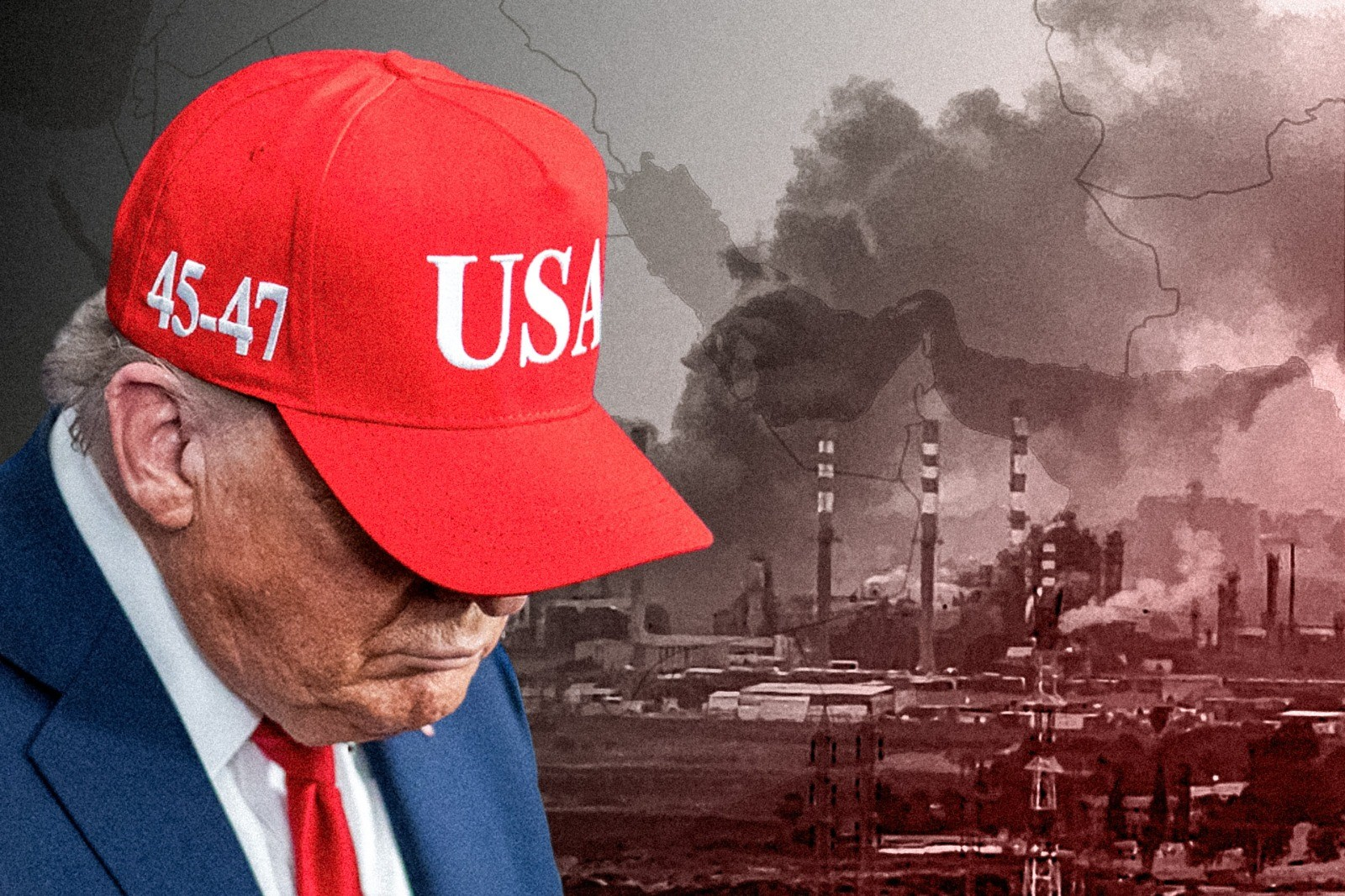
Four weeks into the US-Israel war of aggression against Iran, the war aims of US imperialism have not only not been achieved, but they look further away than before. Trump is faced with an impossible situation. If he cuts his losses and declares victory now that would represent a massive humiliation for US imperialism, and a massive personal blow. But any attempt to escalate would be fraught with danger and carry serious risks with only a slim chance of success. At the present time he appears as if he is attempting to do both at the same time.
In the last few days, Trump has made a series of wild statements, each one contradicting the previous one directly. One day he confidently announces the US has already won the war and is planning to “wind down”, only to threaten massive destruction the day after, unless Iran capitulates completely. This is then followed by a confident announcement that negotiations are taking place and that these are very promising and friendly.
One analyst remarked that the way to interpret the constant shifts in Trump’s messaging is to understand that he is talking to at least several audiences simultaneously, and he needs to tell each of them different things.
One of these audiences is ‘the markets’, that is the capitalist class, represented by investors on the stock exchange, speculators and holders of government bonds. They are worried about the impact of high energy prices on the world economy, and so Trump seeks to reassure them that all is well.
At a recent conference of top energy executives, held in Houston USA, the worries of the big oil companies were also expressed. Speaking about the war, one attendee from BP said that:
“We’ve not seen anything like this — there’s been no disruption of this scale in the past… It’s every oil analyst’s study piece or worst nightmare — one that we never thought would happen.”
Responding to this, the White House representative present attempted to reassure the room, saying that “President Trump knows exactly what he is doing”, stressing that in a couple of weeks the war will be over and that “once the military objectives are completed and the Iranian terrorist regime is neutralized, oil and gas will flow more freely than ever before and prices will rapidly drop again”. That is wishful thinking.
On Monday 23 March, half an hour after opening, the stock markets were going down, and oil prices were shooting upwards, after Trump’s earlier threat of a 48 hour deadline for Iran to reopen the Strait of Hormuz. Should Iran refuse to comply, Trump threatened to unleash hell, announcing on Truth Social that: “the United States will hit and obliterate their various POWER PLANTS, STARTING WITH THE BIGGEST ONE FIRST”.
But as the deadline approached, Trump’s messaging changed completely. He began to declare victory, speaking of “very good and productive talks” with the Iranians, that a deal could be reached as there were “major points of agreement, I would say almost all points of agreement.” He declared that on this basis he was giving Iran a five day postponement.
Unbelievably, the markets swallowed the whole thing: oil prices went down, and the stock exchange partially recovered. Whether they actually believed what Trump was saying, or if they were just afraid of somebody else cashing in, remains to be seen.
Reportedly, fifteen minutes before Trump’s speech, somebody placed a bet of $760 million on oil prices falling. This is not the first time this has happened, where bets have been placed based on information that only somebody in Trump’s cabinet – or perhaps a relative – would possess.
Trump is saying different things to different people. Other than the markets, he is also speaking to the Iranians, to the Israelis, and to his own popular base.
All politicians lie. It comes with the job description. But one has to say that Trump has taken this to an art form!
Trump’s gamble has failed
But the main factor behind Trump’s erratic behaviour is the fact that his massive gamble has completely failed. At the beginning of the war, Trump, drunk with confidence after the Venezuela attack, thought that the war would be over in three days, or perhaps a couple of weeks at most. The stated war aims were clear and included regime change in Iran. Overwhelming military force would be used to destroy the Iranian military and its ability to retaliate and a regime compliant with US imperialism would be sitting in Tehran. In fact, they have achieved quite the opposite.
The regime in Iran is confident and defiant, for they hold all the cards, a fact that they are all too aware of. Crucially, Iran controls the Strait of Hormuz. Through that they can inflict enormous pain on the world economy and on the Gulf states directly. They calculate, correctly, that as a result the markets will put pressure on Trump to stop the war and that the threat of inflation will undermine his popularity at a time when he is going into mid-term elections.
On the other hand, nearly four weeks into the war, Iran is still able to effectively fire missiles, rockets, and drones and accurately hit their targets in Israel and the Gulf. Just days ago, Iran successfully hit the towns of Dimona, Arad and Beersheba in the south of Israel, as well as a series of direct hits in the centre of the country, without any sign of Israeli air defences intercepting the attacks.
Israel’s ability to intercept Iran’s attacks is clearly diminishing. Firstly, there is the fact that Israel’s air defences are severely depleted. And secondly, because of Israel’s depleted stocks, is the fact that they can no longer protect the whole country.
Outside of the main Israeli cities, such as Tel Aviv and Jerusalem, the smaller towns and cities are left unprotected. Many schools across Israel have been shut for weeks now, and Iran has successfully carried our strikes against key infrastructure, such as the Haifa oil refinery, Israel’s largest. This is all having a large impact on public opinion in Israel, a country where the ruling class has based itself largely on the idea that it can provide safety to Israeli Jews against a foreign threat.
The Iranians have made it clear from the beginning that they have the capability to reply in kind to whatever threats the US and Israel throw at them. Every single threat made by Trump, or strike by the Israelis, has been responded to with equal measure by the Iranians.
When Trump recently threatened to hit Iranian oil storage facilities, Iran retaliated with threats against similar facilities across the Gulf. Trump’s threat to destroy Iranian electricity infrastructure and desalination facilities was met by the Iranians with the same threat to the Gulf states, which are much more reliant on desalination than Iran.
Recently, Iran was actually able to force the US and Israel to back down. Israel carried out a missile strike against the Iranian side of the South Pars gas field – the largest in the world, shared between Iran and Qatar – which was met with an Iranian strike against the Qatari portion of the facility. President Trump then was forced to demand that the Israelis cease such attacks in the future, due to the potential impacts they could have on the already damaged world economy.
Will Trump escalate the war?
This is the reality of this war. Only by understanding that Trump’s gamble has catastrophically failed can we understand what is happening now.
Trump is attempting to spin the narrative that the war is as good as won, preparing the way to cut his losses and withdraw. This is why he is claiming that “very friendly” negotiations with Iran are taking place, something Iran has vehemently denied. He has also tried to claim that the US has achieved its goal of regime change, as the people at the top of the Iranian regime are different to the ones at the start of the war!
At the same time as claiming victory, Trump is sending additional numbers of troops to the region. The Pentagon has confirmed that elements of the 82nd Airborne Division, including its headquarters and a brigade combat team, are deploying to the Middle East, alongside more fighter jets and amphibious assault ships. They will join roughly 50,000 U.S. personnel already in the region and thousands of Marines currently in transit on amphibious assault ships like the USS Boxer and USS Tripoli. Whilst this is still not enough for a full-scale land invasion of Iran, it would provide enough troops for some sort of limited incursion. In the past few days, Iran has strongly signalled that it suspects a coming incursion coming from Kuwait, perhaps crossing Iraq or directly by sea onto Kharg Island.
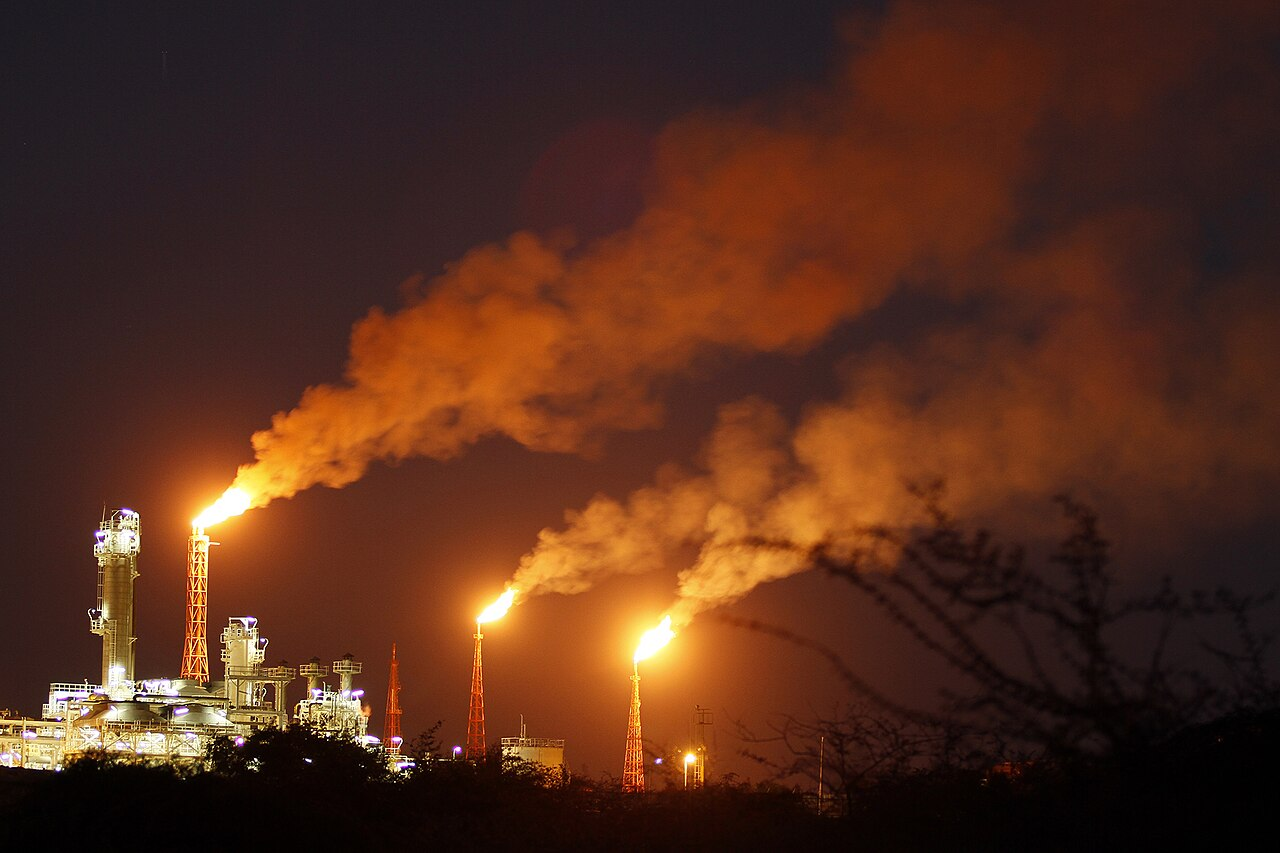
The Iranians have suggested that one of Trump’s possible aims behind his stance of successful peace negotiations is to buy himself enough time to move in enough troops to carry out a new operation. The Americans have a track record for this, it is not the first time that they have used negotiations as a ruse whilst preparing a military intervention. It is not ruled out that, before he cuts his losses and withdraws, Trump may pursue some kind of land incursion as a show of strength.
The bourgeois media in the US reports that Trump has been warned by military strategists that, whatever operation he may decide to pursue, they are in a very risky position. Their efforts in the past week to weaken Iranian control over the Strait of Hormuz by bombing facilities in the area have not worked; and an attempt to take over Kharg Island will not weaken Iran’s oil production as much as they predict, whilst being highly dangerous.
Another possible target of escalation would be the occupation of a series of small islands on the north side of the Strait of Hormuz. There is no doubt that the US has the ability to carry out such an operation, but once the troops are there, they would become sitting ducks for Iranian drones and other attacks. Direct control over these islands would not necessarily guarantee the safe reopening of the Strait.
Even more outlandish is the US’ proposal, which has been discussed openly, to drop special forces into the Iranian city of Isfahan to extract the enriched uranium that is stored underground in a facility there.
The fact that plans like this are extremely dangerous and fraught with potentially disastrous outcomes for the US, does not mean that Trump is not open to carrying them out in one form or another, as he may be calculating that he needs a high profile victory to save the situation for the US.
But as the Iranians have told him, a war involves two parties. A war does not end if one party is not interested in ending it, and the Iranians are not in the mood to finish this war without achieving their own war aims, now that they have control over the crucial Strait of Hormuz.
Iran holds all the cards
Trump’s ‘15 point Peace Plan’, offered to the Iranians, is essentially a demand for complete capitulation, when the US has failed to win it on the battlefield. It demands that Iran must dismantle its nuclear enrichment facilities; commit to never pursue nuclear weapons; hand over its stockpile of over 400kg of enriched uranium to the International Atomic Energy Agency, which will have full access to Iranian facilities; and decommission its Fordow, Isfahan and Natanz nuclear sites. It also demands that Iran abandons its regional proxies, ceasing to provide them with arms and funding; that it must reopen the Strait of Hormuz; and limit the range and quality of its missile programme.
In other words, Trump is attempting to achieve with a piece of paper all the aims that he has completely failed to achieve through war.
Unsurprisingly, the Iranians have rejected these demands outright, and now have a very strong position in future negotiations. They have responded with the following demands of their own: a complete halt to “aggression and assassinations” by the enemy; establishment of concrete mechanisms to ensure the war is not reimposed on Iran; guaranteed payment of war damages and reparations; conclusion of the war across all fronts and for all resistance groups throughout the region; recognition of Iran’s sovereignty over the Strait of Hormuz as its natural and legal right, serving as a guarantee for the other party’s commitments.
There are already reports that they are close to reaching a deal with several countries, with a few tankers safely passing through the Strait. It is said that in some cases there has been payment to Iran for permission to be granted. In peacetime, an average of 100 ships pass through the Strait of Hormuz every day, and so Iran stands to make a lot of money if it is able to impose a passage toll.
And so, whilst the problem is not solved, the Iranians hold some very strong cards. They have full control over the Strait, to the point where they are making demands for things in the negotiations that they de facto already possess.
As for the withdrawal of all US military bases, this has just partially happened in Iraq where NATO has withdrawn its remaining forces from Camp Victory, with US forces in the country now limited to reduced numbers in Erbil (in Iraqi Kurdistan) and on the Syrian border.
According to a New York Times investigation “many of the 13 military bases in the region used by American troops are all but uninhabitable” as a result of Iranian attacks, forcing troops to relocate to hotels and the US to launch attacks from further away, from Navy ships and bases in Europe.
At some point the Gulf countries will have to consider whether it is beneficial for them to maintain a US military presence on their soil. Right now they find themselves in a situation where their infrastructure is under attack by Iran as retaliation for a war that the US started, not themselves.
The Iranians are seemingly all too aware of their strong position in negotiations. In response to Trump’s claims that ‘friendly’ negotiations were taking place, Iran said that there weren’t any negotiations taking place to begin with. A representative of the IRGC recently stood at a conference and proclaimed that Iran is on the side of the truth, and that the US is on the side of lies, and that the lies in the US media are failing to convince anybody.
In further response to US claims of negotiations, that the Iranians deny, Iran stated that:
“Has the level of your inner struggle reached the stage of you negotiating with yourself?… Don’t call your failure an agreement.”
Iran is saying that the Americans are negotiating with themselves. Trump says that negotiations are happening, and the Iranians say that negotiations are not taking place; Trump says that the US has destroyed 100 percent of Iranian facilities, and the Iranians respond by pointing out that, despite allegedly lacking any facilities, they have successfully hit targets in Israel and elsewhere.
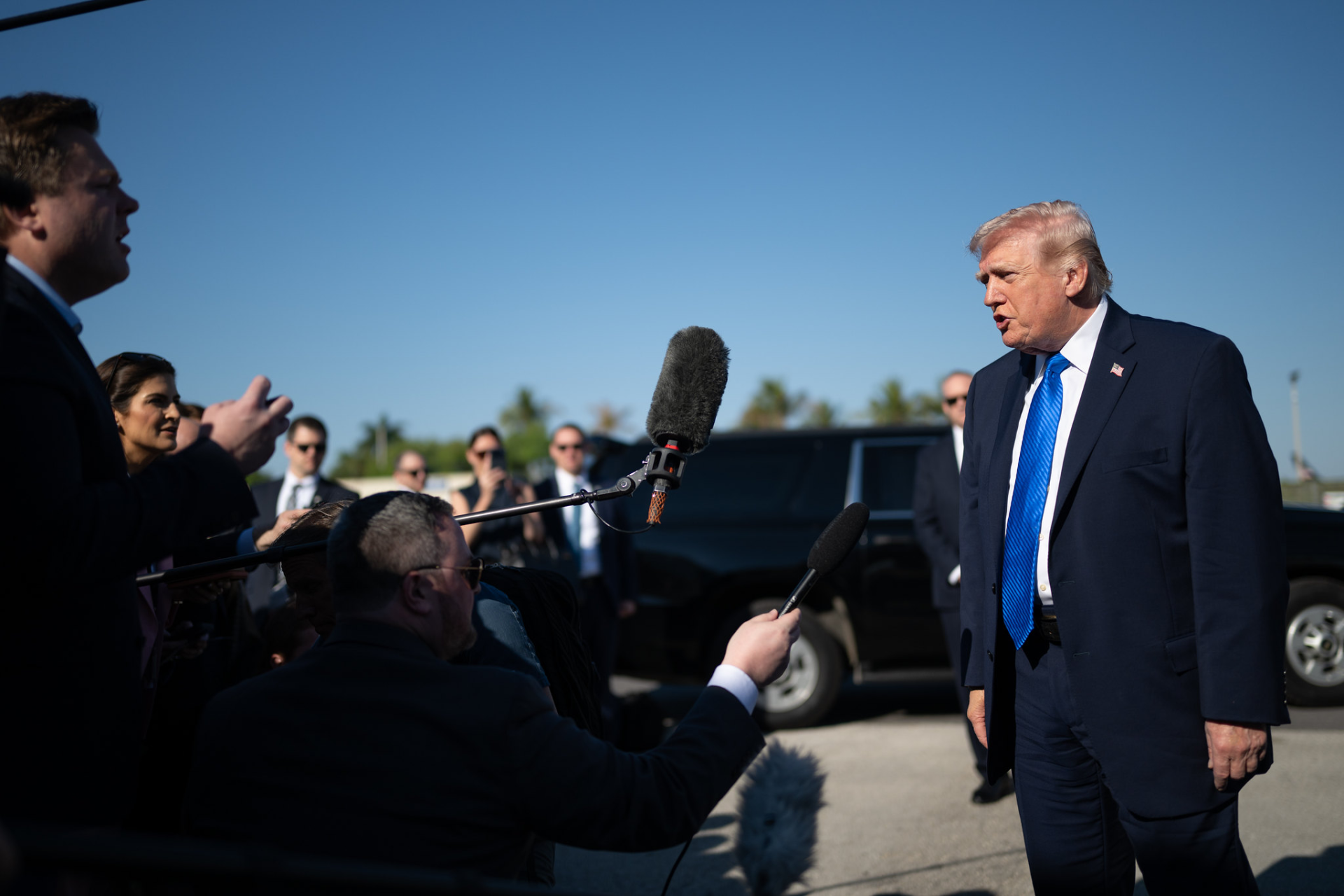
This is having a large political impact everywhere, but particularly in the countries dominated by imperialism, and in the Arab and Muslim world. People can see that the United States is being humiliated by a country that they were supposed to completely destroy in three days. This has potentially big political implications for the future.
There is also the question of Lebanon. Many are surprised that Hezbollah has managed to rebuild itself on a similar model to the Iranians. The Iranians have been caught out two or three times by Israeli intelligence, and now in Lebanon they have learned some lessons from this.
For one, they have completely ceased the use of digital communication devices, they are not talking to each other through digital means anymore. They have also adopted the same decentralised ‘mosaic’ defence model as the Iranians, and taken the time to rebuild their capacity. And so now, when the Israelis attempted a land incursion, they came out badly, and were forced to slow down and start bombing bridges and infrastructure. Israel has stated that their aim is to permanently invade the buffer zone, up to the Litani River, but this will not be easy for them.
Economic impact
And then there is the economic impact of this war. The price of oil is yo-yoing from $120 a barrel down to $87, and then back up again, generally hovering at around $100 a barrel. If the war drags on until April, this will become even more severe. In fact, it is already having an impact, driving up inflation. The price at the petrol pump has already gone up in a number of countries, but this is just the beginning.
Taiwan, the world’s largest producer of advanced microchips, for example, has been severely impacted by the war on Iran. They depend on Liquified Natural Gas (LNG) for 40 percent of their energy needs, and a third of this is imported from Qatar, which has halted production. Taiwan may have to call on its strategic reserves, of which it has just 11 days worth.
Then there is the question of helium, which is a crucial component for advanced microchips, among other things. Helium is a byproduct of natural gas extraction and most of it is extracted and exported by Qatar. Taiwan imports 69 percent of the helium it needs from Qatar.
In the Philippines, they have declared a one-year economic emergency, implemented a number of measures to attempt to deal with the issues of oil and gas supply, as well as rising prices. In Spain, the government has had to announce a €5 billion emergency programme to subsidise energy bills – and this is in a country which is generally less exposed to increased gas and oil prices.
As well as oil and gas, the Strait of Hormuz is a vital chokepoint for global fertiliser exports, including urea and ammonia. The region accounts for roughly 25 percent to 30 percent of the global ammonia trade, 46 percent of urea and 44 percent of the world’s seaborne sulfur trade. Qatar Fertiliser Company (QAFCO), considered the world’s largest urea supplier, alone supplies 14 percent of the world’s urea.
The closure of the Strait has already caused urea prices to spike by 35-40 percent in just a few weeks. Fertiliser traffic has now come to a halt, precisely at a crucial time for the planting season in the northern hemisphere, when fertilisers are needed. This will have a knock-on effect on food crops and their yields in countries like India, Bangladesh, Pakistan, but also in the United States itself. As much as 20 percent of imported fertiliser to the US comes specifically from Qatar.
Analysts at Goldman Sachs warn that the impact of higher fertiliser prices and a lack of supply will have a 6-to-12-month lag. The current fertiliser shortage will manifest as a “loss of crop production” later in 2026, with the most severe hunger risks and price spikes appearing in early 2027.
As well as higher inflation and instability in the stock markets, the economic fallout from the war in Iran is pushing up the price of borrowing and increasing the burden of the debt on advanced capitalist countries.
Taking into account an already fragile world economy, the Iran shock could very easily tip it into recession. We would not be talking then of stagflation (economic stagnation plus inflation) but of potentially slumpflation.
Rising inflation and further cuts in social spending as a result of higher borrowing costs for governments, are both a recipe for class struggle.
China and Russia
Meanwhile, the US’ main rivals are benefiting from its troubles. China has recently restated that they are not ruling out a military intervention in Taiwan, which does not mean that an invasion is imminent, but the message from China is clear: the Iran war has revealed the limits of US power, cannot achieve its military aims in Iran, it should not even try to take on China.
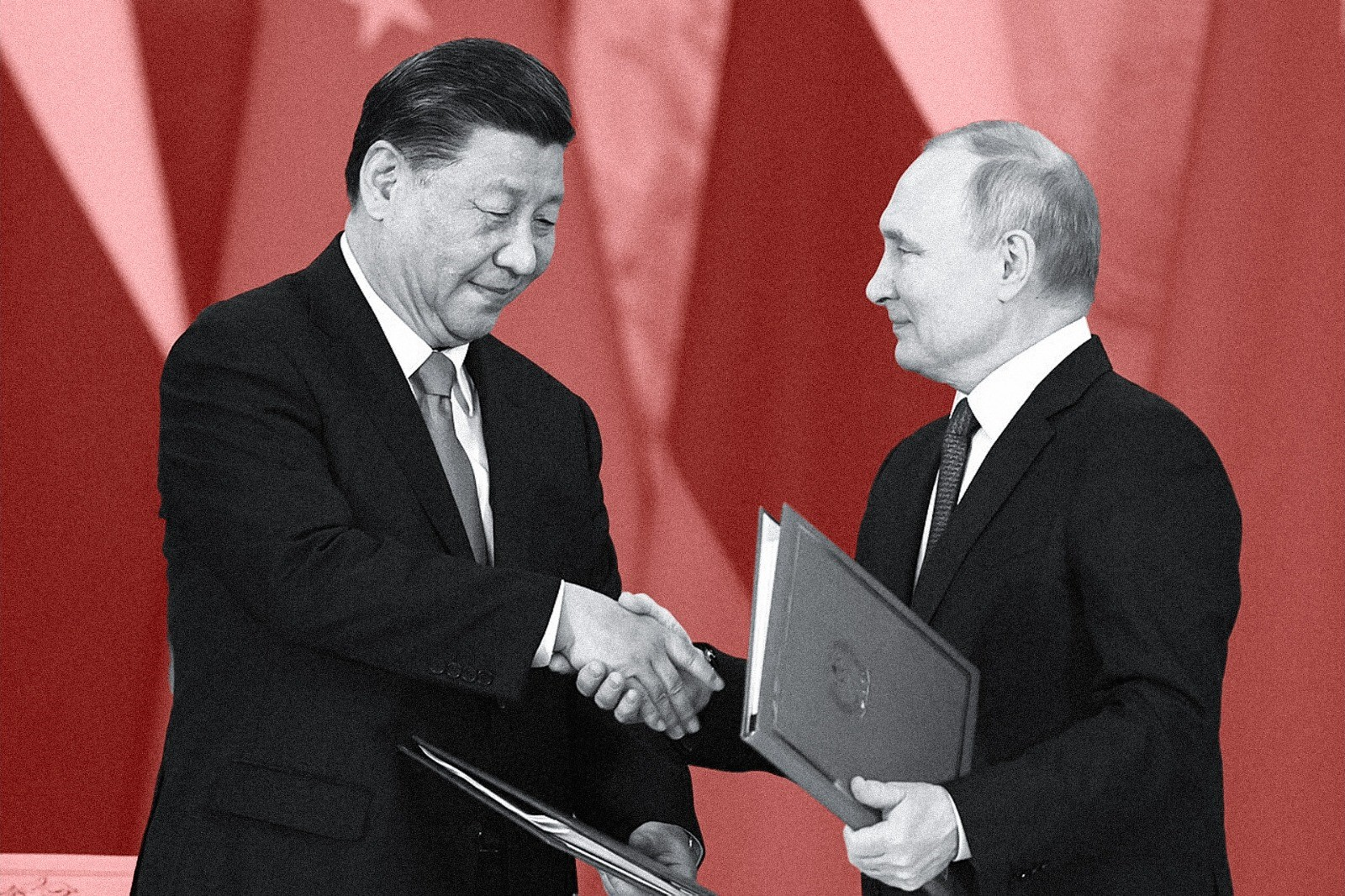
Russia is the country that has perhaps benefited the most from Trump’s disastrous gamble in Iran. Three months ago, Russia was having to offer heavy discounts on its oil to purchasers such as India, at one point selling oil at just $22 a barrel. Now, they are selling oil at around $100 a barrel. The Financial Times calculates that Russia is getting $150 million a day in extra revenue from surging oil prices. Additionally, Russia is a major exporter of fertiliser.
The US has now lifted sanctions imposed on Russian oil for 30 days. It is unknown how long these high prices will last, but they have provided Russia with an enormous economic boost, which has come at a time where the Russian economy was slowing down.
The other boost for Russia is that the USA is now scrambling all over the world for more Patriot missiles, THAAD missiles, interceptor batteries, and so on. With stockpiles being used up by the United States, this means that they are no longer being used by the Ukrainians, and so the Russians gain an advantageous position there too.
According to the Washington Post, “the Pentagon notified Congress on Monday that it intended to divert about $750 million in funding provided by NATO countries through the PURL program to restock the U.S. military’s own inventories, rather than to send additional assistance to Ukraine”. That is, the European NATO countries are paying the US to supply Ukraine, but the US will now use that very same money to restock its own inventories!
In a fit of madness, the USA has also lifted sanctions on Iranian oil! Explaining the rationale, Treasury Secretary Scott Bessent said that:
“In essence, we are jiujitsuing the Iranians, we are using their own oil against them.”
And so the logic is that the Iranians want to increase the price of oil, and so the Americans will not allow them to do this, by purchasing their oil at $100 a barrel. I am not in a position to judge Bessent’s martial arts skills, but the Iranians, who are now selling more oil at a higher price, are laughing all the way to the bank.
Trump’s popularity
Finally, there is the question of Donald Trump’s approval ratings. Some may remark that Trump still maintains a higher popularity than the European leaders, but the bar is very low. Trump’s popularity has been falling, gradually, over time, but in the last week it fell by four points suddenly, which is significant, with 36 percent approving and 62 percent disapproving of his presidency. According to an IPSOS Consumer Tracker poll, 92 percent of people in the United States say that they have noticed increased gas prices in their area, with 87 percent saying they expect the situation to get worse.
Trump is polling negatively on a large variety of different fields. A March 2026 YouGov poll found that 61 percent of US citizens oppose using military force to attack Cuba, while only 13 percent support it. The same poll indicated that more Americans disapprove than approve of the US embargo, and specifically the recent oil blockade initiated in early 2026. Roughly 46 percent disapprove of blocking oil shipments compared to 28 percent who approve.
As for the war on Iran, a Pew Research Center survey conducted between 16-22 March finds that 61 percent of Americans disapprove of Trump’s handling of the conflict with Iran, with 59 percent viewing the decision to use military force as wrong.
The fact that the Iran war is not going to plan is compounded by its economic impact, and is causing serious splits within the pro-Trump MAGA movement, which have led to some serious cracks within the administration itself. Joe Kent, the former director of the National Counterterrorism Center, recently resigned from his position, and has now gone on tour of various MAGA friendly YouTube channels and podcasts attacking Trump.
The Iranians have cleverly exploited these divisions in order to sow discord at the heart of the Trump administration. Recently, they stated that they do not want to negotiate with Steve Witkoff or Jared Kushner – who they have aptly painted as idiots – and that they instead want to negotiate with Vice President J.D.Vance, who is known to not be in favour of the war.
After the 48 hour deadline at the weekend, Trump then switched to a so-called five day delay in the implementation of his threats. After a short respite, the US stock exchange went into the red again, losing $1 trillion in one day on 26 March. As a result, Trump now says that he will give Iran another 10 days to comply with his demands.
This could be yet another ruse, to give himself more time to prepare some sort of land operation. In any case, the Iranians are not fooled and they know full well that Trump has previously used negotiations as a cover for military aggression.
No good options
In any case, US imperialism does not have any good options. To withdraw now without having achieved its war aims would be a massive humiliation. To maintain the campaign would not solve anything, but would aggravate its economic impact. If they escalate, they will make the situation worse from the point of view of risk of losses for the US army, without any guarantee that they will extract any concessions from Iran.
In an ironic remark on X, the Pakistani Defence Minister commented: “The goal of the war seems to have shifted to opening the Strait of Hormuz, which was open before the war.”
The consequences of Trump’s failed Iran gamble will be far reaching, politically, diplomatically, militarily and economically.

