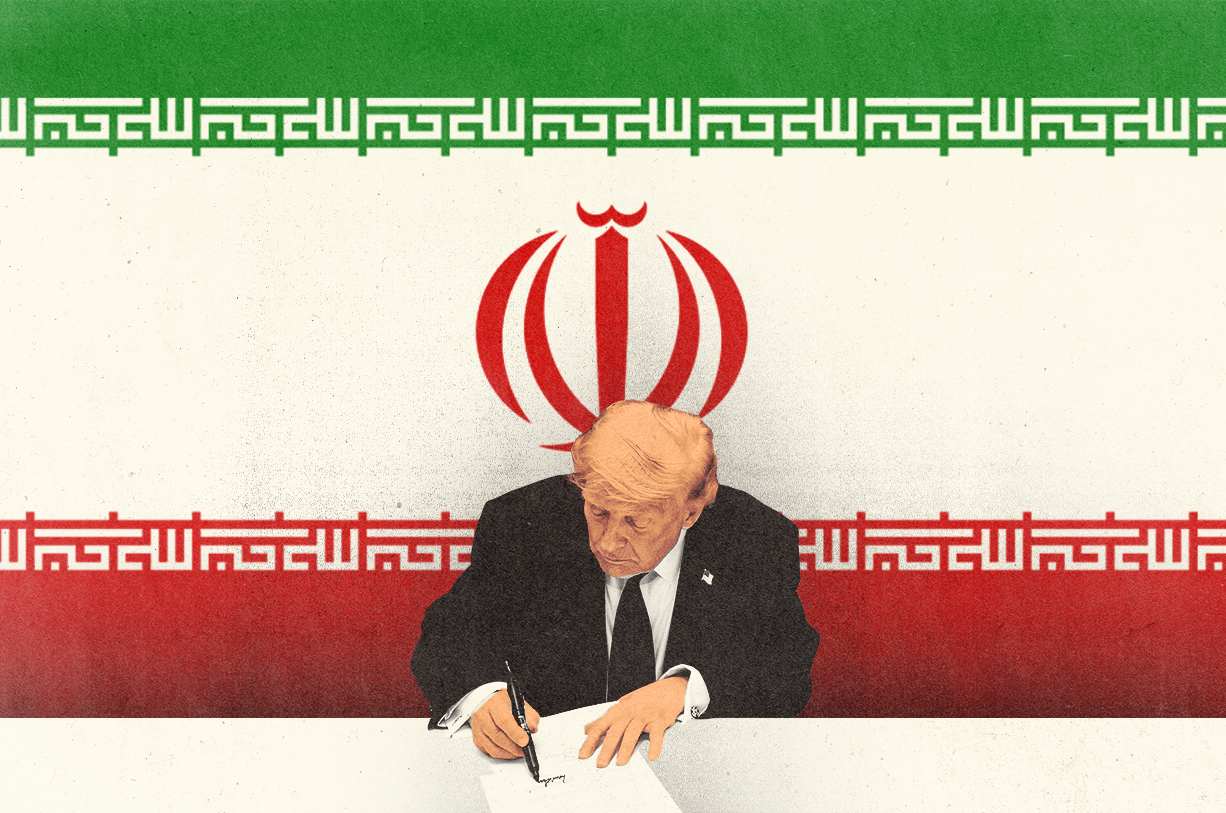
The Palace of Versailles was an interesting choice on Donald Trump’s part for the signing ceremony to end the war with Iran. But given that he was signing a de facto surrender document, the location wasn’t inappropriate.
This 14-point Memorandum of Understanding (MOU) between the U.S. and Iran represents a humiliation for Trump, a strategic defeat for U.S. imperialism, and a turning point in the world situation. For the Israelis—who were not consulted and are not signatories to an agreement that is, nevertheless, binding on them—the implications are potentially even graver.
Foreign Policy magazine describes it as “a bigger defeat than Vietnam”. Indeed, despite being a shorter and less gruelling war than Vietnam, the implications of Iran are in many ways more far reaching.
Control of the Strait of Hormuz has been handed to Iran. The oil-producing states in the region have been reduced to a position of rendering tribute and grovelling before the Iranians.
Russia and China emerge strengthened. They are the only ones with influence over Iran. It was China’s friend, Pakistan, that brokered much of the negotiating. Worldwide, a rebalancing will take place as allies and enemies of the U.S. alike take note of the weak cards the Americans are holding.
As for Israel, this news has fallen on that country like a bombshell. If it holds, it could be the end of Benjamin Netanyahu. It even places a question mark over the future of the U.S.-Israeli relationship itself. Or maybe Netanyahu has some new plan to save his skin, which can only mean new horrors for the region.
Desperate men are prone to desperate measures. As these lines are being written, Netanyahu is bombing Lebanon in a transparent attempt to collapse this agreement. There are those in the neocon establishment in the U.S. who would be egging him on.
The latest news is that Israel’s arm has been twisted into signing a ceasefire with Hezbollah. While things remain tentative, we can say this: there is no better deal out there for Trump. Although these are terms of surrender, they are the best U.S. imperialism can hope for!
What the Memorandum says
Let’s look at the terms.
The first point clearly states that the parties “declare the immediate and permanent termination of military operations on all fronts, including in Lebanon…” and furthermore guarantee “the territorial integrity” of Lebanon.
So, not only have the Iranians got peace from the Americans, but this agreement would bind the Israelis not just to a ceasefire but to withdrawal from Lebanon.
With the end of hostilities, a 60-day negotiating period for a final deal now begins, “extendable by mutual consent”. In that time, agreement is supposed to be reached on the sticky question of Iran’s enriched uranium. If that ever happens, the Iranians are promised $300 billion of investment, a permanent end to all sanctions, and a full U.S. naval withdrawal.
Although Trump has promised that the $300 billion won’t come from U.S. taxpayers, but from regional and other investors, let’s be clear: this is a defeated America paying war reparations.
Even pending this full agreement, the Memorandum puts into effect “waivers for the export of Iranian crude oil, petroleum products, and derivatives, and all associated services, including banking transactions, insurances, transportation, etc.”
That is to say, for all intents and purposes it effectively waives all sanctions from day one!
Irrespective of future negotiations, this Memorandum immediately guarantees:
- An end to Israeli aggression towards Lebanon;
- A de facto end to sanctions;
- Recognition of Iran’s right to control the Strait of Hormuz;
- The release of billions in frozen assets.
Just as significant is what the Memorandum does not mention.
There is no mention of regime change; no mention of Iran’s proxies; no mention of Iran not being allowed to levy tolls on maritime traffic through the Strait; no mention of Iran’s ballistic missiles. “If other countries have them,” said Trump of ballistic missiles, “it’s a little bit unfair for them not to have some”. He does have a point!
There is no mention, in fact, of any of the many and various war aims Trump laid out in the run up to and over the course of this war.
What do the Americans get in return?
A promise by the Iranians not to build nuclear weapons, a promise the Iranians have always given; a bit of saccharine wording; and one genuine concession: the reopening of the Strait of Hormuz, which was not even closed before the war began and will now be under Iranian control.
What this means for the U.S.
A child of six could see that this is surrender on the part of the Americans.

The reason is obvious. Despite massively depleting their missile stockpiles, they have failed to bring Iran to heel by military or economic means. Four months have passed since Iran closed the Strait. In that time, the U.S. has been draining its strategic reserves of oil to keep prices low. Now those reserves are running out and an economic cataclysm impends.
Trump frankly admitted as much: “I didn’t want to see economic catastrophe. If you kept this going, that could have happened.” With the opening of the Strait, oil fell back to $80 per barrel, and the stock market soared.
This Memorandum has many detractors, but that the stock market wasn’t one of them was a source of gladness to Trump. “The stock market is more brilliant than anybody there is, including the people on this stage. Other than me, of course,” he beamed, while the other “people on the stage”, including Marco Rubio, shuffled awkwardly.
Trump has a skip in his step now. He is breathing a sigh of relief. But the consequences of this war will be felt in America for years to come.
Immediately, it will incur the wrath of the Republican neocon establishment. They are furious. The U.S. establishment cannot psychologically come to terms with the idea that they—the all-powerful Americans—might have been defeated, and so thoroughly.
War will break out in MAGA. If the neocons cannot immediately end this peace, they will want revenge, perhaps after a period of rearmament.
But the results will be felt across American society. When Trump tries to spin this—going so far as to call this deal an “unconditional surrender” on the part of Tehran—what does he do except add comical farce to the fact of American humiliation?
This is no heroic defeat like the Alamo, which can make American chests swell with patriotic pride as they may have done in the past. Trump’s ridiculousness—like the ridiculousness of a UFC fight and dirt bike show on the White House lawn for the 250th anniversary of the American republic—just strips the state of what little gravitas it had. Trump’s whole comportment, which is about saving face for himself, only inspires contempt and hatred.
For declining imperialist powers, we’ve seen it before: defeat abroad sets the stage for class struggle at home. It was the defeat of France in Algeria that laid the basis for May ’68. In Portugal, it was costly war in Africa that laid the basis for the Carnation Revolution of 1974. This event will accelerate the trend towards class struggle at home in the U.S.
Regional implications
In Iran too, however, the deal has its critics. Funnily enough, these critics feel that Iran gave away its leverage too easily, and want to impose nothing short of absolute defeat on the Americans. That would mean full American withdrawal from the Middle East, and recognition of Iran’s right to its enriched uranium.
That the leadership of the Islamic Republic did not hold out for more points to the pressure they are under—especially from Russia and China, who would stand to lose if the whole world is plunged into a deep economic crisis.
But it wasn’t necessary for the Iranians to hold out for these things. Even without a formal withdrawal, the U.S. will be weaker than ever going forward.
Its bases are smoking ruins. Across the region, everyone has had a taste of American impotence and Iranian strength. The various Gulf states are now signing their own separate deals with Iran.
After suffering massive damage from Iranian bombardment in the first stage of the war, the UAE apparently agreed to pay Iran $10-20 billion—of which $3 billion has already been paid. The Qataris have cut a similar deal. The Saudis will have to come to one soon. This is payment of tribute.
Then there are the American alliances in the region, which were already fraying before this war. Since the war began, the UAE has withdrawn from OPEC, effectively killing the cartel and cementing the split between the Saudis and Emiratis. The frosty relations between Turkey and Israel have sunk even lower.
Then there is America’s number one ally, Israel itself. This is a nightmare scenario for the Israeli ruling class.
The biggest loser: Israel
Israel’s rulers have been itching for a showdown with Iran for decades. They weren’t just after regime change and denuclearization. They wanted the destruction of Iran as a nation state, as a step towards the complete redrawing of the map of the Middle East.
At the start of the war, they thought this was their chance. They imagined they could even destroy every nation state in the region except Israel itself, creating barbarism, with themselves ruling over the ruins.
In the middle of March, while the war with Iran was at its peak, Naftali Bennett, thinking ahead, was already calling Turkey “the new Iran”. This same Naftali Bennett is now the liberals’ favourite candidate to challenge Netanyahu in the upcoming election!
In February and March, the Israeli ruling class was euphoric, drunk on its own illusions.
But from those highs they have now crashed down to Earth with a mighty bang.
Right now, across the spectrum of the Zionist elite this is being called a “catastrophic capitulation”. They are lashing Netanyahu for having made the strategic blunder of allowing the question of Lebanon to be linked to the war with Iran.
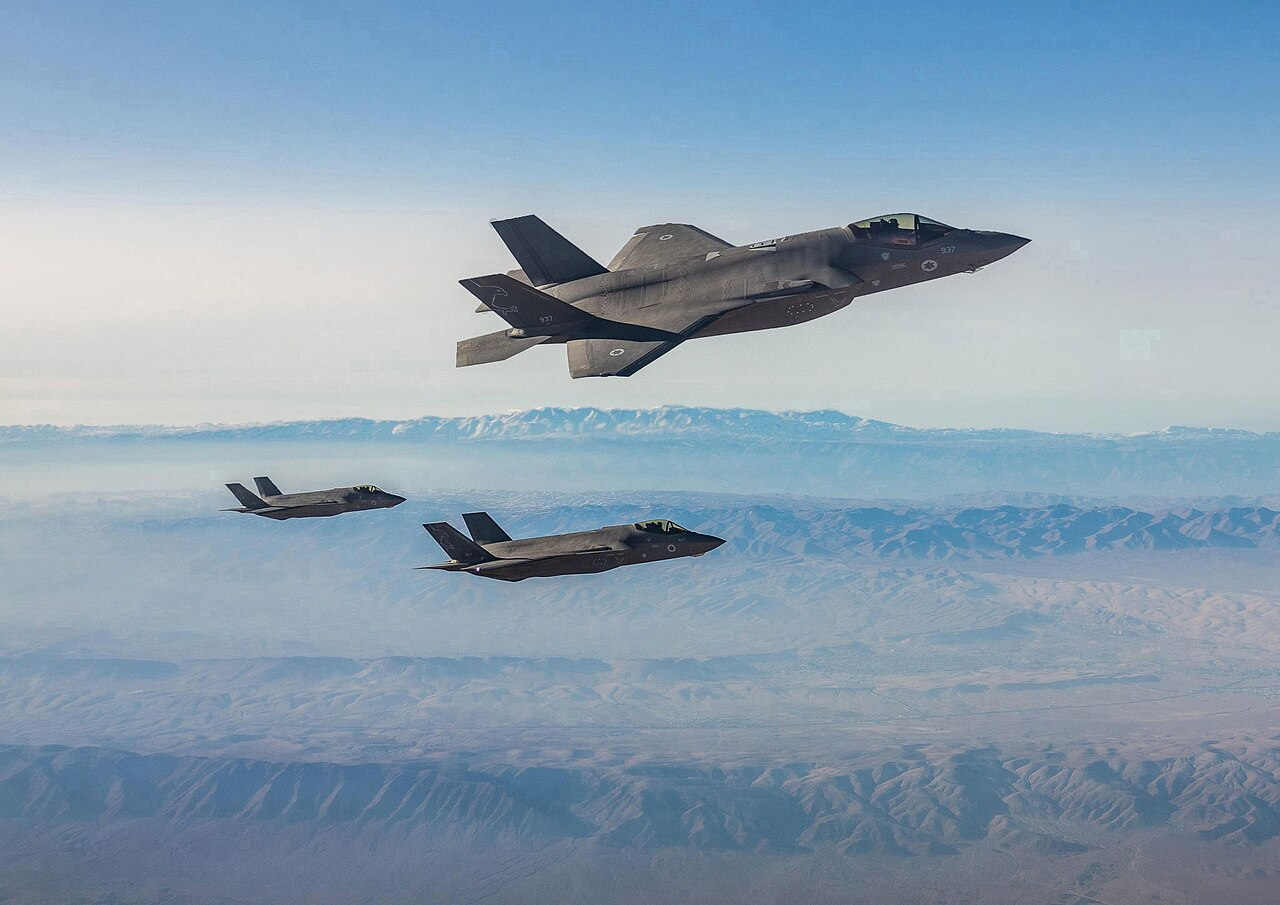
But that link was Netanyahu’s whole strategy! As we’ve explained elsewhere, the Israelis have become very used to strong-arming their American benefactors, leaving them no choice but to back Israel.
Netanyahu invaded Lebanon simultaneously with the onset of the Iran War, precisely in order to link the two. If the Americans tried to retreat, to do a deal with Iran, he could keep provoking the Iranians in Lebanon and keep the Americans in the war at any cost.
Here’s the problem: because Netanyahu has linked the two conflicts in this way, Trump has no choice but to end Israeli intervention in Lebanon in order to extricate himself from this war.
The Israeli ruling class are aghast and panicking. For Netanyahu this is even worse. Defeat in this war means the end of him, with ejection from office and maybe even jail awaiting.
Can Netanyahu stop this deal?
Some of Netanyahu’s allies are insisting they can go it alone. “Trump’s agreement does not bind us. Israel is not subordinate to the United States,” protested Ben Gvir. “We are an independent and sovereign country.”
Are you now? J.D. Vance reminded him:
“Number one, Donald J. Trump is the only head of state in the entire world who is sympathetic to the nation of Israel at this moment in time. And he happens to be the head of state of the world’s superpower. If I was in the cabinet of the Israeli government, I might not be attacking the only powerful ally that I have anywhere left in the entire world.
“The other thing that I would say is that over the last three months, two thirds of the defensive weapons that have protected your homeland, have been built by American hands and paid for by American tax dollars”.
A less-than-veiled threat: “Don’t jeopardise your relationship with us, Bibi! You will regret it!” But Netanyahu has wriggled his way out of difficult situations in the past. He will be scheming to get out of this one too. The question is, can he do it?
There are a lot of unknowns and unpredictable characters involved. But in the immediate term, one of the following looks set to break: the world economy; the Israel-U.S. relationship; Israeli society itself; or a combination of the three.
Scenario 1: The world economy breaks
If Netanyahu and the neocons succeed in getting Trump to restart this war though, the military balance will remain unchanged. Stocks of expensive ammunition are critically depleted. So, if the Iranians recommenced their bombardment of Israel, the Americans don’t have the air defence missiles to protect them even if they wanted to!
The best case scenario would be the closure of the Strait of Hormuz once more, and a catastrophe for the world economy. But the Iranians also have the ability to add to that the closure of the Bab el Mandeb Strait, and thus access to the Red Sea by activating their Houthi allies in Yemen. That would choke off the main route for trade between Europe and Asia.
At the moment, the world economy still remains on a knife edge. It is worth noting that even now, it could take many weeks, even months before shipping companies can resolve logistical knock-on effects and begin to feel confident enough to transit the Strait in quantity.
Many of the oil and gas facilities across the region will take years of repair before they can once more begin supplying the world market. Meanwhile, depletion of strategic reserves makes the whole world much more sensitive to new shocks, not to mention the fact that demand will now be higher simply to replenish those stocks.
All food for thought for Trump.
Scenario 2: The U.S.-Israel relationship breaks
This may not stop Netanyahu pushing things to their limit. Netanyahu is already attempting to provoke in Lebanon. He has had to sign a ceasefire, for now, but he will be looking for pretexts to break it. And on the day after the Memorandum was signed, he announced a “buffer zone” of permanent Israeli occupation in Lebanon, directly breaching the agreement.
But in doing so, Netanyahu may be playing with the U.S.-Israeli relationship itself.
For his part, Netanyahu himself has foreseen the logic contained in his policy of a split with the U.S. To some extent he has already tried to psychologically prepare Israeli society for it. Last year he talked about the need to wean Israeli society off American aid in the next decade, to turn Israel into a kind of “Super Sparta” that can fight its own battles.
Maybe he will try this. But a break with the U.S. would be existential for Israel, only to be followed by defeat anyway.
Scenario 3: Israel breaks
The final possibility is that Netanyahu is forced to submit. But then, all the contradictions in Israeli society, which we saw explode in the judicial reform protests in 2023, which we’ve seen periodically re-erupt as with the protests for the return of the hostages, would erupt once more.
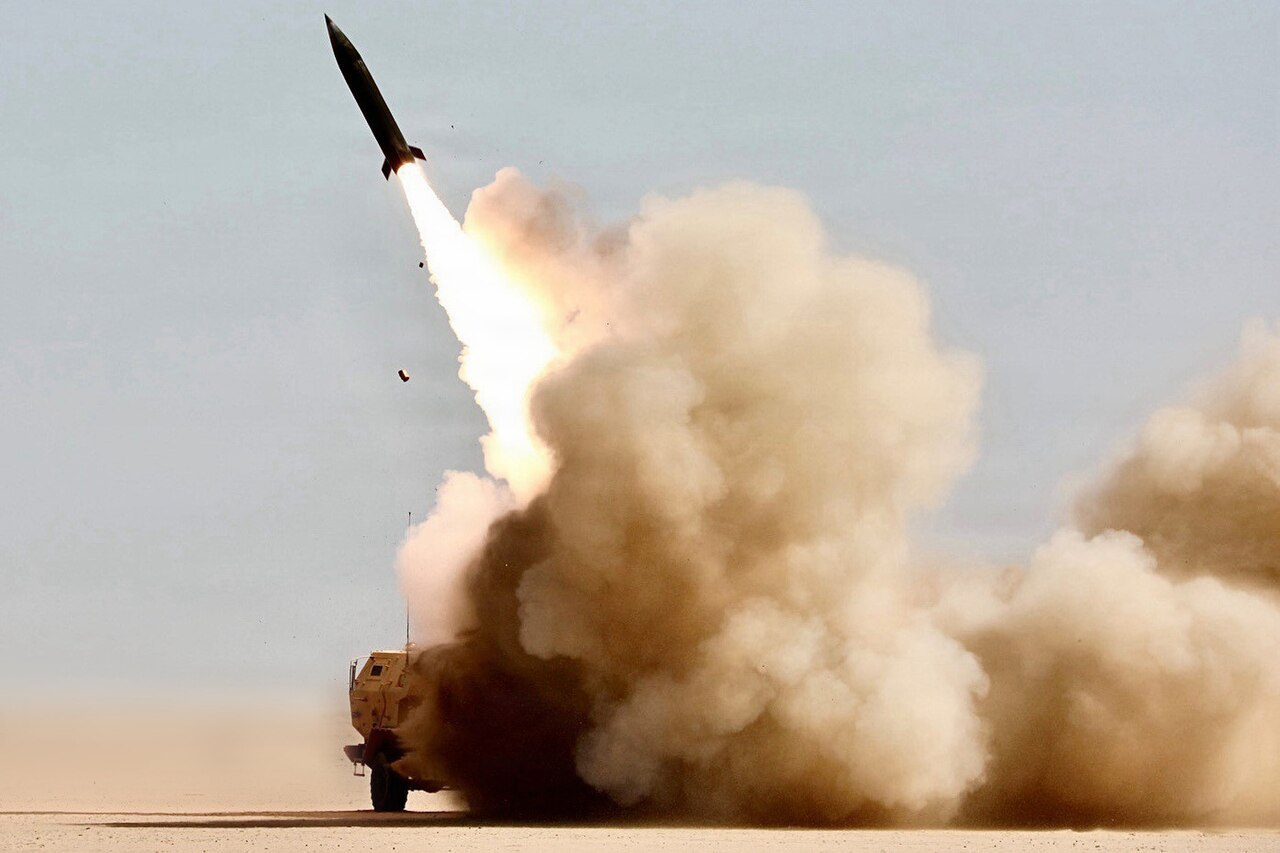
Netanyahu has attempted to direct the contradictions in Israeli society outwards since Oct. 7, 2023. They will once again be internalised.
Three years of war has left Israeli society in tatters. There has been a 240 per cent increase in mental health treatment since 2024. The youth are in the army and the tech investors have fled.
The army has ceased publishing figures of numbers discharged because of PTSD, precisely because of how high those figures are. “People have lost confidence in their society, government and institutions,” one veteran and mental health professional told Al Jazeera.
According to some estimates, more than half of reservists are not showing when called up.
All this threatens to erupt once more. Having rested on religious reactionary elements in Israeli society, right now Netanyahu is facing down massive protests by Ultra Orthodox Jews who refuse to serve in the IDF.
There have been massive protests, blockages of highways. There have been riots outside Supreme Justices’ homes, IDF commanders have even seen attempts to storm their homes. Shin Bet has begun producing an intelligence assessment of far-right Jewish terrorism.
The many contradictions inside Israel could explode unpredictably.
This is all the more reason for Netanyahu to direct the focus externally once more. If not in Lebanon, then where? We have seen an uptick of IDF attacks in Gaza. Smotrich has, over the past week, begun provocations in the West Bank city of Hebron. Could they accelerate the process of annexation of the West Bank?
Still others, like Likud minister Amichi Chikli, have promised that Israel will soon be at war with Syria, as part of what the Israeli ruling class is increasingly calling a Turkey-led “radical Sunni Axis of Evil”. Bound by the U.S. not to attack Iran or its allies, could Israel turn head-on against America’s own regional allies?
Outcome
Ironically, one of the outcomes of this war is precisely to make the U.S. more dependent upon Israel as its proxy by generally weakening the U.S. in the rest of the region! As Israel continues careening out of control, it may yet set new fires across the region and draw the U.S. in further.
But let us step back and underline the most important, general points.
Iran comes out of this strengthened: politically, militarily, and with the billions of dollars unlocked, quite possibly economically too in the not too distant future.
For America and its allies, this is a disaster, a complete and unmitigated disaster. It is going to bring out all the contradictions inside America, Israel and the whole West. It has decimated American influence in the region—and far beyond.
In South East Asia, Philippines, Australia, Vietnam, Cambodia, Laos, Thailand, Myanmar, Bangladesh, all these countries sent delegations to China during this war to beg for fertilizers, oil and other critical commodities. And so did the Europeans! And so did Trump! He was there not long ago, no doubt begging Xi to press the Iranians.
Let us not forget that since this war began, the Americans have been enraged by what they perceived as a lack of European support and have downgraded their military presence on the continent. It has been another nail in the coffin of the so-called “collective West”.
Meanwhile, the world economy emerges more fragile than ever. The Iranians are the recognized masters of the Strait of Hormuz, while the Europeans pygmies are committing piracy against the so-called Russian “shadow fleet”. This is another great tear in world trade, adding another impetus towards protectionism, and towards remilitarization.
On the other side, this is a great blow for the world’s foremost imperialist power. Even now, U.S. imperialism is continuing to bully and intimidate, especially in the Western Hemisphere. Previously, the masses may have accepted this, fatalistically. Who can possibly defeat the concentrated might of U.S. imperialism? Well, now it has been done!
In the grand scheme of things, this defeat will be seen as a key turning point in the decline of U.S. imperialism.

