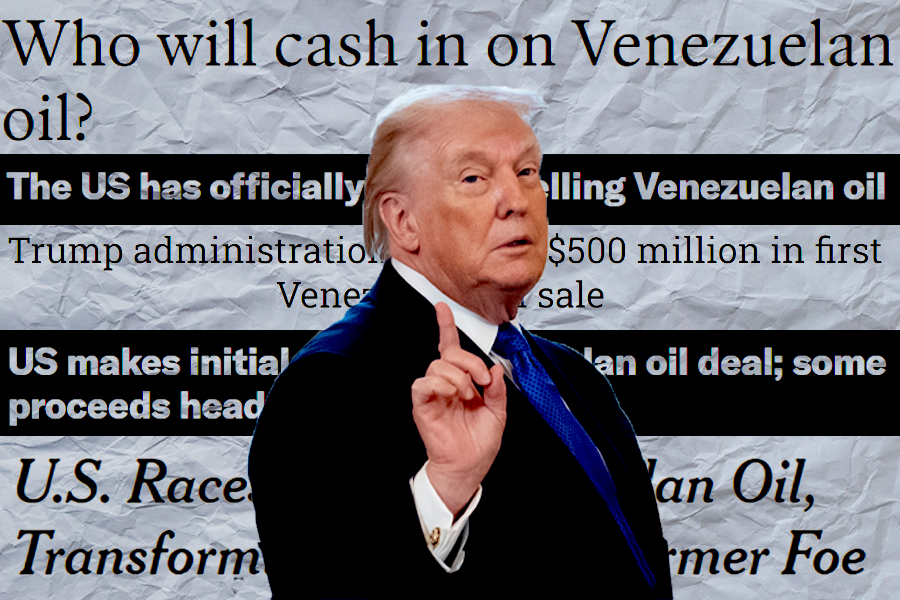
Press reports on January 14 revealed that the United States is already proceeding with the sale of Venezuelan oil and will control the money raised. This is an outrageous semi-colonial arrangement which gives Trump control over the resources of a formally sovereign country. What is the Venezuelan government’s response to this blackmail?
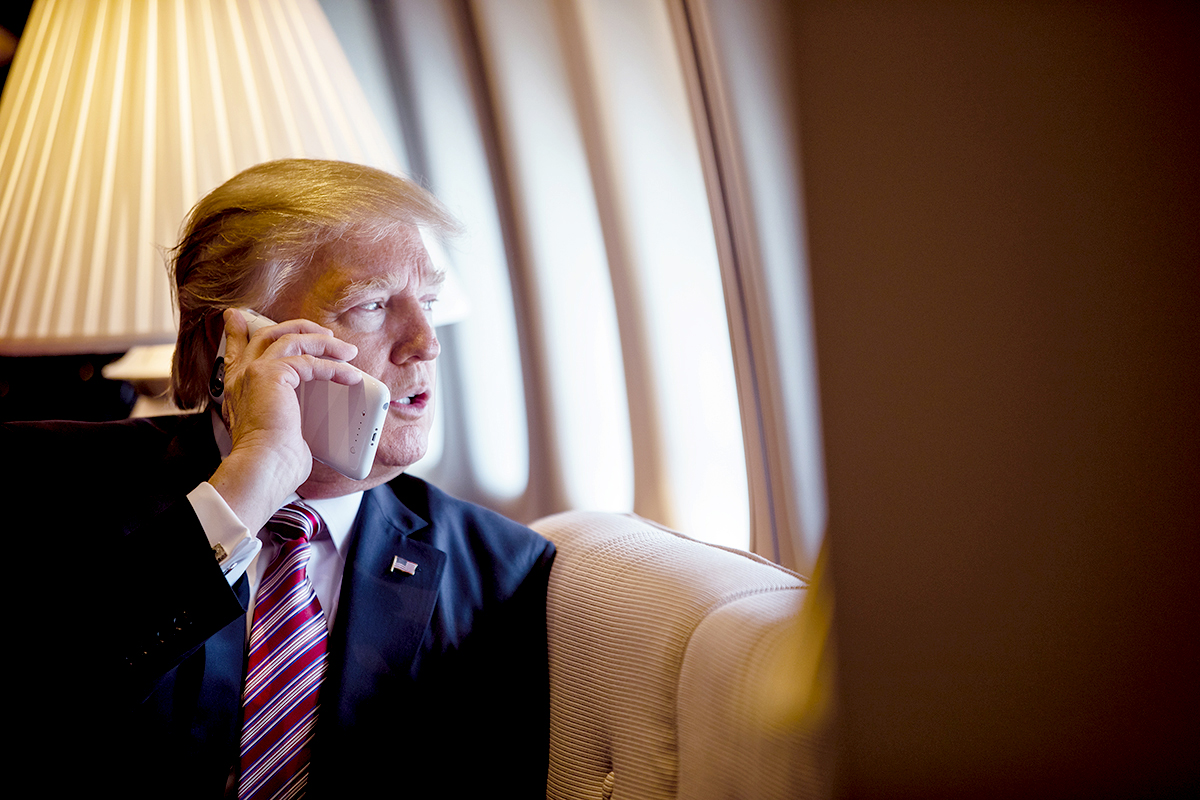
On 14 January, there was a telephone call between US President Trump and Venezuelan President Delcy Rodríguez. The tone of the call, as described by both parties, caused quite a stir and sparked comments on social media.
‘Mutual respect’
This is what Trump said about Delcy Rodríguez:
“We just had a great conversation today. She is a terrific person, she is someone we have worked with very well. Marco Rubio is dealing with her. I spoke with her this morning, we had a long call. We discussed many things and I think we are getting along very well with Venezuela.”
A short while later, he posted an even more complimentary note on social media:
“This morning I had a very good call with the Interim President of Venezuela, Delcy Rodríguez. We are making tremendous progress, as we help Venezuela stabilize and recover. Many topics were discussed, including Oil, Minerals, Trade and, of course, National Security. This partnership between the United States of America and Venezuela will be a spectacular one FOR ALL. Venezuela will soon be great and prosperous again, perhaps more so than ever before!”
Shortly afterwards, Delcy Rodríguez confirmed the call in this message:
“I had a long and courteous telephone conversation with the President of the United States, Donald Trump, conducted in a spirit of mutual respect, in which we discussed a bilateral working agenda for the benefit of our peoples, as well as pending issues between our governments.”
What many found scandalous, beyond Trump’s idiosyncrasies and his communication ‘style’, was Delcy’s statement. The US has just launched a military attack on Venezuela, killing more than 100 people in order to capture the head of state and his wife, imposed a suffocating naval blockade, and Trump said he will ‘run’ the country… How can it be said that the conversation took place in a spirit of ‘mutual respect’?
I also wonder, in this context, what is the “bilateral working agenda for the benefit of our peoples”, referred to by Delcy in her statement?
The most serious thing is that in Delcy’s description of the call, there is no mention of whether they discussed the kidnapping of president Maduro (!!!). Rather it is said, at the end and almost in passing, that they discussed “pending issues between our governments”, i.e. some ‘unimportant’ details on the agenda of the meeting.
On 12 January, at a meeting with Venezuelan journalists, Delcy stated that “sometimes tactical steps are taken, which on occasions may result in actions that are difficult to understand”, but that they should not worry because “we also have a strategy”.
Clearly, this must be one of those cases. These actions certainly are incomprehensible, although I am no longer so sure what “tactical steps” or “patience and strategic prudence” they reflect.
The facts
Many will rightly ask themselves: ‘what the heck does all of this mean?’. Hasn’t it been two weeks since the US carried out a brutal imperialist blow against Venezuela, and now we are all friends again?
Much is being made by commentators of whether the recent release of prisoners in Venezuela was ordered by Rubio, or was already Maduro’s policy, and whether the opening of the US embassy is necessary to provide consular assistance to President Maduro and the first combatant. But more than the public staging of relations between the two leaders, for me – as a materialist – the most important thing is the facts, not ‘the battle for the narrative’.
What are the most recent facts?
- Two international companies, Vitol and Trafigura, have been designated and authorised by the US (because the sanctions remain in place) to sell Venezuelan oil (the famous 30 or 50 million barrels that were stored on land or at sea due to the criminal blockade by the US). They have already signed contracts.
- Two tankers loaded with a total of 3.6 million barrels of Venezuelan oil have already left the coast of Venezuela for their buyers.
- Vitol has already sent a shipment of naphtha to Venezuela (the solvent needed to process Venezuelan oil).
- The US has stated that the value of this first sale’ is $500 million.
- The US has stated that the money from the sale will be deposited in bank accounts administered and controlled by the US.
- Official US sources told Semafor that these accounts already exist and that one of them is based in Qatar.
The Venezuelan government has said nothing about any of this. Nothing. All we know comes from a brief and sterile statement issued by PDVSA (the Venezuelan state oil company) on 7 January. It states that negotiations are underway with the US for the sale of Venezuelan oil and that the process is being carried out in a similar manner to the Chevron licence.
For those who don’t know, the multinational oil company Chevron has special permission to operate in Venezuela, despite the unilateral sanctions imposed by the US. It operates four joint ventures with PDVSA, in which it has a minority stake: Petroboscan, Petroindependiente, Petroiar, and Petroindependencia.
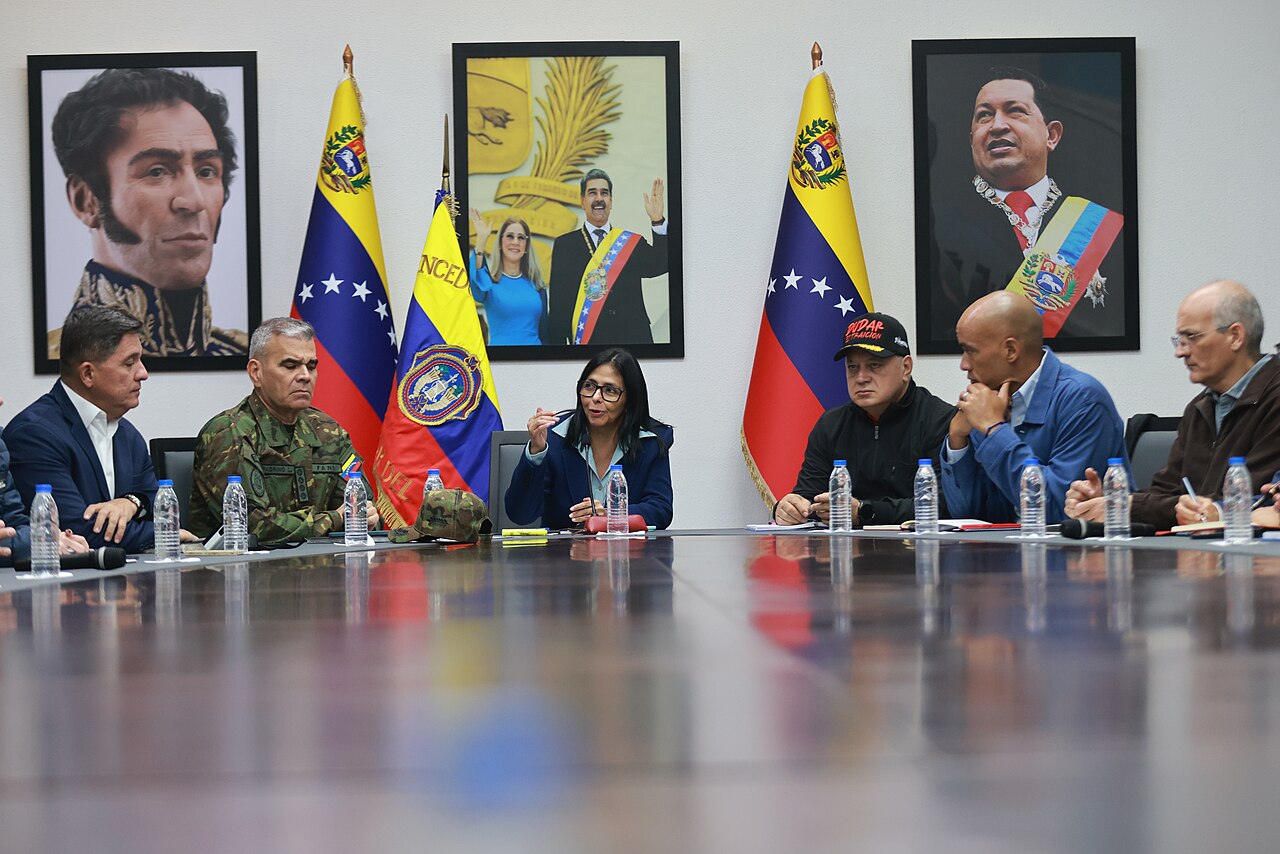
The Chevron licence works in such a way that the multinational sells the oil produced (around 240,000 barrels per day, 25 percent of Venezuela’s total production), but cannot increase its production, enter into new operations, or deliver any cash to the Venezuelan government.
Chevron sells the oil produced, pays the maintenance and operating costs of the operation, and uses the share of the profits that would correspond to PDVSA and the Venezuelan government (taxes and royalties) to pay off PDVSA’s debt to Chevron (about $3 billion). A portion of what would correspond to PDVSA is paid in crude oil, which PDVSA resells on the world market.
We do not know much about the details of this ‘energy agreement’ announced by Trump, beyond what is stated in the US Fact Sheet of 7 January, and President Trump’s Executive Order of 9 January on ‘Safeguarding Venezuelan Oil Revenue For The Good Of The American And Venezuelan People’, and some other statements to the press.
In summary: the US will sell Venezuelan oil, and the proceeds from the sale will go to bank accounts administered by the US, which will disburse the money at its discretion. Venezuela’s creditors will not receive any of this money. The US intends for this money to be used by Venezuela to purchase US products (possibly solvents for the oil industry, equipment for the oil industry, energy equipment, ‘humanitarian aid’, etc.). This money will only be released under US control and for specific purposes.
However you look at it, the US has, de facto, taken control of Venezuela’s most important resource (by means of military aggression and by enforcing a maritime oil blockade), and will use it as leverage to determine Venezuela’s budgetary policy.
A scandalous situation of semi-colonial subjugation. I can’t think of a better way to describe it.
“By their deeds ye shall know them”
Some have said, ‘well, don’t pay attention to Trump’s statements, we know what he’s like’. Fine, but now it’s not just statements, it’s facts. The oil is being sold by the US. All that remains is to confirm in practice where the money is going and who is administering it.
I have also been told, ‘only listen to what the Venezuelan government says’. But so far, the Venezuelan government has not explained anything about this agreement, which obviously exists since the oil is already flowing. It seems that what is being asked for is blind faith. ‘To doubt is to betray’, they say.
But I prefer to be guided by a biblical saying: “by their deeds ye shall know them”.
Faced with this unprecedented situation of colonial subjugation, other comrades have drawn comparisons with the Treaty of Brest-Litovsk – and what Lenin said at the time about it being justified to make deals with a highwayman who assaults you with a gun – in order to justify the ‘compromises’ made by the Venezuelan government.
But the difference is that neither Lenin nor Trotsky ever thought of telling the Russian workers and peasants, ‘we have had a courteous discussion with the Kaiser to discuss an agenda of mutual interest to the German and Russian people’, in addition to ‘some outstanding issues between the Soviet Republic and the German Empire’.
They never hid the content of the enormous territorial concessions they were forced to make. They clearly told the Russian people the real situation that forced them to give in. And on top of that, they continued to call for international revolution, and particularly for revolution in Germany (which was not long in coming).
Trotsky was probably courteous to his German counterpart in the negotiations (who sometimes put his military boot on the table), but he clearly used the negotiations as a platform for revolutionary agitation, to unmask the aggressive aims of the German government, and to call for revolution in Germany. And in the end, of course, the Soviets were forced to sign.
And certainly, no one thought to say, ‘blindly follow the leadership even if you don’t understand’, much less ‘to doubt is to betray’. There was a fierce public debate about the Brest-Litovsk negotiations with three different positions: Lenin, who wanted to sign the peace treaty immediately for fear of being forced to make even more onerous concessions; Bukharin, who advocated to launch a revolutionary war; and Trotsky, who put forth the slogan of ‘neither war nor peace’, to prolong the negotiations in order to achieve revolution in Germany; and there were several votes at different times. Until, in the end, reality and Lenin’s position prevailed.
Comrades, if Venezuela is forced to make concessions under the threat of military force (and I have no doubt that this is the real situation), the best thing from the point of view of strategy and morale in this struggle is to tell the truth openly and prepare the ground for resistance.
Disguising reality, trying to pass off colonial subjugation as sovereignty and dignity, not only deceives no one, but also leads directly to confusion, demoralisation, and the further weakening of Venezuela and the international solidarity movement in the face of imperialist aggression.

