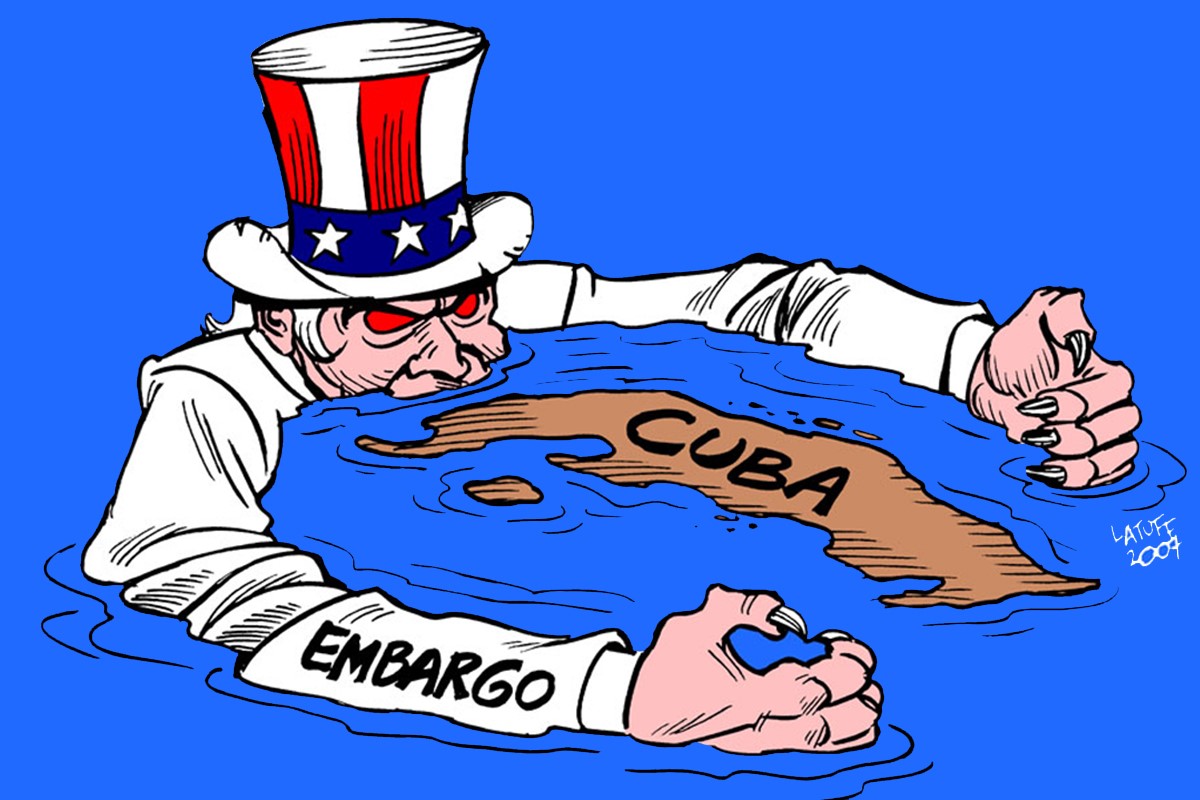
Cuba is now facing an almost complete blackout after Trump imposed an oil blockade on the island. The aim is clear. US imperialism sees an opportunity to finally crush the Cuban Revolution after 67 years of relentless assault. It is the duty of the world’s working-class movement to rally to the defence of the Cuban Revolution.
The US military assault on Venezuela on 3 January cut Cuba off from one of its most important energy suppliers. Sales of Venezuelan oil to the Caribbean island had already diminished over the last decade on account of the economic crisis in Venezuela. They have now stopped entirely, as the US controls the flow of Venezuelan oil and its commercialisation.
Then, on 29 January, Trump issued a scandalous Executive Order, describing Cuba as an “unusual and extraordinary threat” to US national security, and threatened to impose punitive tariffs on any country selling oil to the island. The main target of this outrageous piece of imperialist bullying was Mexico, which had already cancelled a shipment of oil to Cuba by state-owned company Pemex a few days earlier.
After the economic collapse of Venezuela, Mexico had become Cuba’s main supplier of oil.
The last shipment of oil to arrive in Cuba from Mexico reached the island on 9 January.
The country relies on imports of oil for about 60 to 70 percent of its energy needs, the rest coming from Cuban oil and other sources of energy, including solar panels. This means that, deprived of a vital lifeline, the country is slowly grinding to a halt, with the potential to cause a full-blown humanitarian crisis.
Humanitarian crisis
The Cuban government has had to take emergency measures to prioritise essential services and reduce consumption. State-owned companies have shifted to a four-day week, moving to working from home where possible. There have been significant cuts to public transport, including a reduction in the frequency of inter-city buses, trains and ferry services.
Major cultural events have been cancelled, including the Havana International Bookfair and the Cigar Fair. Fuel sales are limited and are taking place in US dollars only. School hours have been shortened, and universities have moved to remote learning.
Electricity blackouts, which were already plaguing Cuba’s towns and cities, have now become more protracted, reaching 16 hours in some provinces. This also affects the ability of Cubans to cook, preserve food in their fridges, operate fans or light their homes, workplaces or schools. Elective surgical procedures and non-emergency medical consultations have been postponed. Patients needing dialysis have now been forced to live full-time at medical facilities as the state is unable to transport them.
In some cases, the lack of electricity has led to water cut-offs. It is becoming increasingly difficult to transport food from producers to the markets in the cities, and imported products cannot be taken from the harbours to the distributors.
The sale of aviation fuel has been suspended. As a result, all three Canadian airlines flying to the island have cancelled all their services and will only work to repatriate Canadian tourists already on the island. Spanish airlines have announced they will refuel in the Dominican Republic. Russian airlines have also cancelled flights and announced the repatriation of Russian tourists. Of course, fuel shortages are having a massive negative impact on tourism, one of the country’s main sources of income.
What does Trump want?
Trump is tightening the noose around the neck of the Cuban people to the point of asphyxiation. On 30 January, the Financial Times calculated that Cuba had oil supplies to last only for another 15 to 20 days.
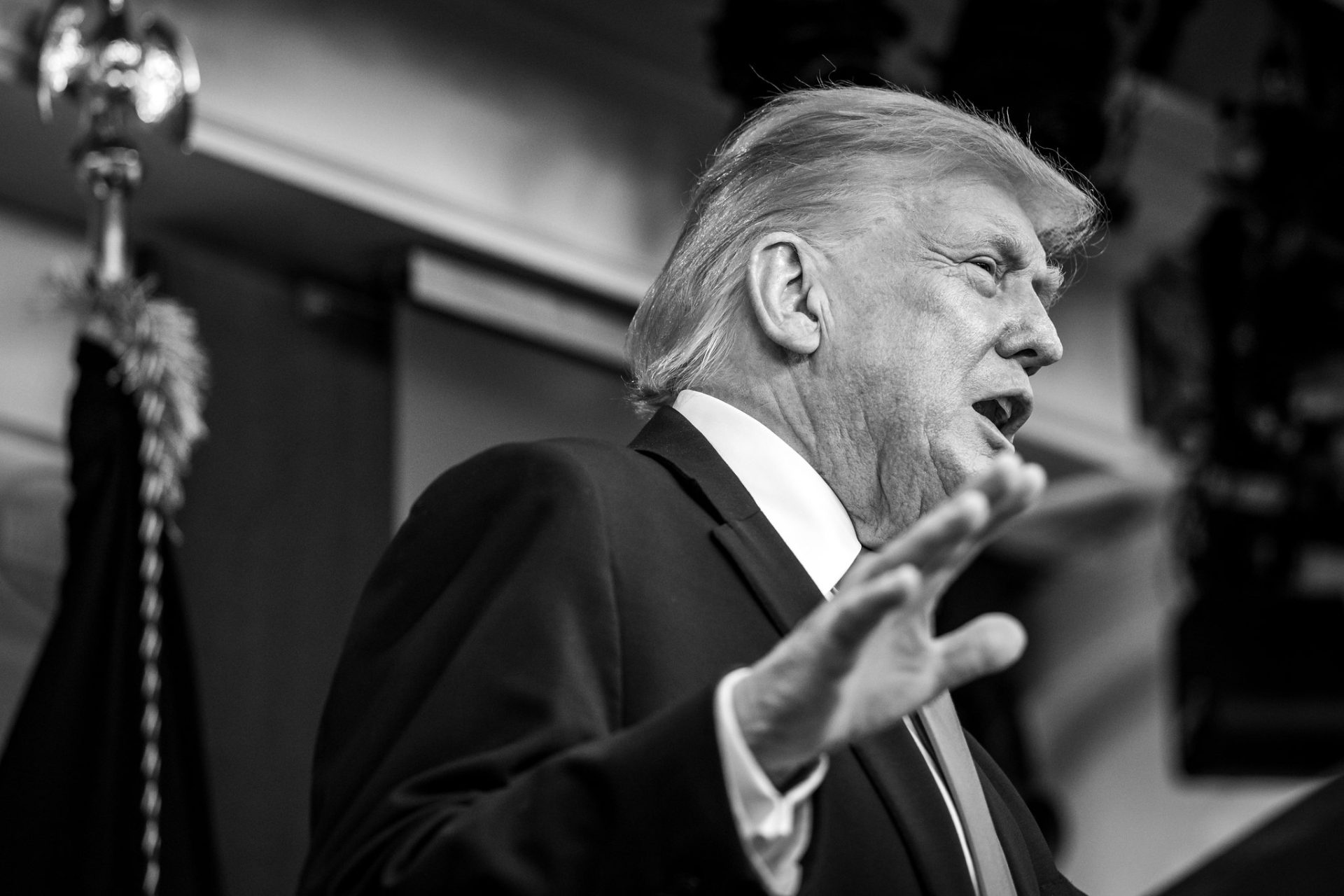
When asked to respond to the warning by Mexican President Sheinbaum that the oil blockade would lead to a humanitarian crisis, Trump responded in a flippant way:
“Maybe it will, maybe it won’t. I think before it reaches a humanitarian crisis they will want to talk, they will want to make a deal”.
Trump has also declared that Cuba “is already talking” to the US, though Cuban officials have denied that any formal negotiations are taking place.
Of course, if someone is strangling you and then you relinquish your valuables so that he lets go, that can hardly be called ‘a deal’. But what is it that the man in the White House is demanding from Cuba?
It is clear that one angle of Trump’s latest assault on Cuba is that outlined in the US National Security Strategy document, which aims to remove America’s adversaries from the hemisphere. The Executive Order from 29 January specifically mentions a Russian intelligence facility on the island. Washington wants Cuba to be under the full domination of US imperialism and for it to cut economic, political and military ties with Russia and China.
In his recent statements about Cuba, Trump has mentioned that there are many Cuban Americans in the US who were “very badly treated”. This is a reference to the Helms-Burton Act, which talks about those individuals and companies who had their property expropriated by the revolution, a long-standing excuse for US imperialist attacks against Cuba.
Clearly, the Miami gusano mafia plays an outsized role in US politics (Democrat and Republican alike). They are represented in the Trump administration primarily by Marco Rubio himself.
In reality, what we are seeing is the continuation, on a massively increased scale, of the decades-long blockade of Cuba imposed by US imperialism, which was formalised by President Kennedy on 3 February 1962.
In providing a ‘rationale’ for the blockade, Deputy Secretary of State Mallory wrote in 1960 that the Cuban revolution was so popular that “the only foreseeable means of alienating internal support is through disenchantment and disaffection based on economic dissatisfaction and hardship.” To achieve that, he proposed “a line of action which… makes the greatest inroads in denying money and supplies to Cuba, to decrease monetary and real wages, to bring about hunger, desperation, and overthrow of government.” (My emphasis).
The aim is clear: to overthrow the Cuban Revolution. The means are clear too: to bring about hunger and desperation so as to provoke social unrest, leading to the overthrow of the government, or to force the Cuban government to negotiate away the revolution.
Will there be a ‘Delcy Rodríguez of Havana’?
The capitalist media internationally is playing the role it’s meant to play by spreading all sorts of rumours. The right-wing reactionary rag ABC in Madrid alleged that high-level contacts between Cuba and the US were already taking place in Mexico, through Alejandro Castro Espín, who played a role in the secret talks leading to Obama’s thaw in 2014.
The ‘liberal’ paper El País, also in Madrid, is busy looking for a person in the Cuban government who could be “the Delcy Rodríguez of Havana” on the island. That is, someone the US “can do business with”. They honed in on Óscar Pérez-Oliva Fraga, the great-nephew of Fidel and Raúl Castro:
“According to several analysts, he could play the same role in Cuba as Delcy Rodríguez did in Venezuela. He’s a technocrat who has the qualifications to become president of Cuba in the event of negotiations with Washington.”
It does not seem to occur to the ‘liberals’ in El País that the US has no right whatsoever to decide who the president of Cuba is, and that Delcy Rodríguez only became the acting president of Venezuela after a brutal military attack by Washington in which the country’s head of state was kidnapped!!
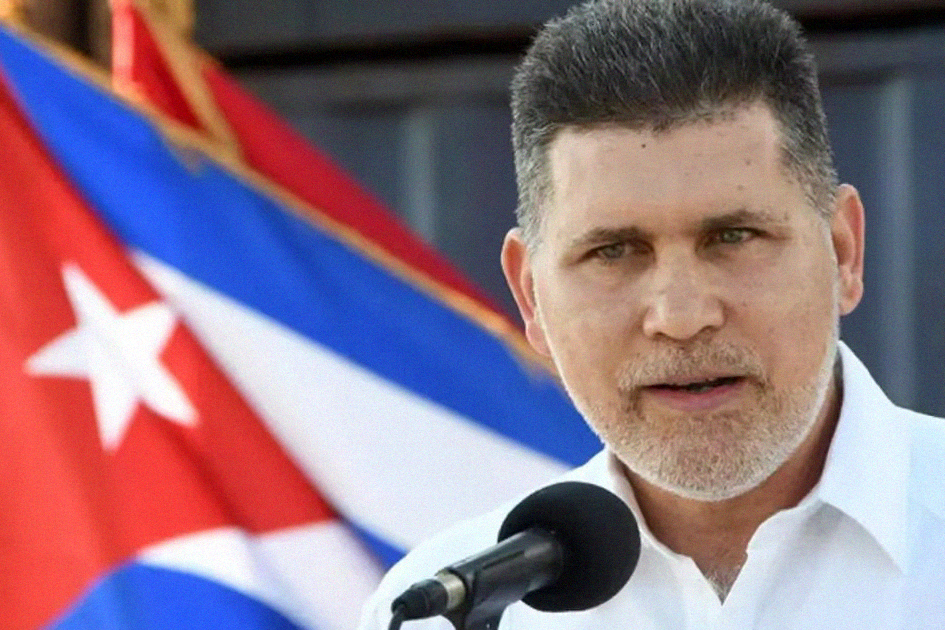
The officially stated position of the Cuban government is that they are open to dialogue with the US, as long as these take place without “pressure or preconditions”, on “equal footing”, with full respect for Cuban sovereignty and without “interference in internal affairs”.
That is clearly not what Washington wants. They are demanding submission, and they are prepared to get it by means of a total oil blockade, regardless of its impact on the lives of the Cuban people. The implication is that if they cannot get submission through these means, US imperialism is also prepared to use direct military aggression. US Navy ships are loitering near Cuba’s northern coast, and electronic surveillance military aircraft are circling the Caribbean island.
In the course of the current escalation of military bullying, US spokespersons, including Rubio and Trump, have said that what they want is for Cuba to “open up” its economy, to carry out “economic reforms” which would allow US companies to invest in sectors like tourism, banking and telecommunications.
By ‘opening up’ they don’t mean merely allowing US investment. If US companies are not investing in Cuba – as companies from Europe, Canada and other countries do – that is because of the decades-old US blockade laws!!
What they really mean by ‘reforms’ and ‘opening up’ is nothing more than the dismantling of the planned economy on which the gains of the revolution are based.
Cuba abandoned by its bourgeois ‘allies’
Faced with such an imminent threat, the question must be answered: how can the Cuban Revolution be defended?
From an institutional point of view, Cuba has never been as isolated as it is now. An editorial in the revolutionary left Cuban publication La Tizza describes the situation as one:
“When almost all the ‘non-aligned’ governments, or those with ‘progressive’ rhetoric, look the other way; when the blocs of supposed integration, alliances, forums, joint commissions and congresses evade practical and material commitment to Cuba and offer, at most, declarations of their dismay and impotence.”
This is a precise description of the current predicament of the Cuban revolution. The Venezuelan government of Delcy Rodríguez, despite protestations of sovereignty, is in a position of semi-colonial subordination to Washington. This is shown clearly in the fact that it has completely cut off its supply of oil to Cuba, which represented about 34 percent of the island’s energy imports. Caracas has not even acknowledged that it has ceased this supply, and it has not given any public explanation of it.
In Mexico, the Claudia Sheinbaum government has complied with Trump’s instructions and threats by also cutting off the supply of oil to Cuba, which represented another 44 percent of its crude imports. Her government has sent much-needed humanitarian aid (mainly food), but it has publicly stated that it cannot put “Mexico’s interests at risk” by continuing oil supplies.
Right now, what Cuba needs more than anything else is precisely oil. Food is certainly much welcomed, but food cannot be transported without fuel, and cannot be preserved without electricity. On this crucial issue, Sheinbaum is not prepared to assert Mexico’s sovereign right to trade with another sovereign country. The limits of bourgeois nationalism are cruelly exposed.
Other Latin American countries have offered words of support and publicly criticised Trump’s oil blockade, but none of them have taken any concrete steps to break it. China and Russia have also protested, but so far these are just words. The much vaunted multipolar world, which was supposed to ensure better conditions for the sovereignty of small nations, has been shown to be just so much empty rhetoric when faced with the might of the US Southern Command’s forces gathered in the Caribbean.
According to a report in Izvestia, sources in the Russian embassy in Havana told it that, “In the near future, Russia is expected to deliver oil and petroleum products to Cuba as humanitarian aid”.
Russia is already subject to draconian US sanctions, so Trump’s threat of punitive tariffs has less of an impact, but the question remains of how the oil would be transported at a time when the Russian fleet is under US sanctions and when Russian-linked tankers are being seized in the Caribbean, the Indian Ocean, the North Atlantic and the Mediterranean.
As La Tizza explains:
“China and Russia express support and condemnation through rhetoric, but neither has shown any willingness to share the Cuban people’s fate in the face of direct aggression. Symbolic support, strategic calculation, and an island forced to confront the carefully provoked escalation of war almost alone. We expect nothing from external powers. As Antonio Maceo said, ‘It is better to rise or fall without help than to incur debts of gratitude to such powerful neighbours.’ We had already learned long ago that in decisive moments, Cuba can only count on its own people.”
Only the workers of the world can save Cuba!
Who else can the Cuban Revolution count on for help in this hour of need? The La Tizza editorial points in the right direction: “Peoples of the world – rise up with Cuba!”, it proclaims in the headline. “Who else should we turn to if not the peoples, to confront this imperialist siege that intensifies the more alone and abandoned Cuba finds itself?”
They correctly make an appeal to the people of the United States:
“Committed to confronting the plan to turn Cuba into the Gaza of the Caribbean, we speak first to you, the people of the United States, in all your infinite diversity. To every citizen who can no longer endure the dictatorial madness that governs the White House. To you, who live besieged by the countless problems of a society far from being ‘great again.’ We speak to you, who remember each of the wars in which the rich grew richer and the poor, poorer, and in which the only thing that returned home – when anything did – were the lifeless bodies of your children. Wars that were not yours, decided in offices, fought by young men who, to earn a living, were forced to destroy others.”
There is a lot of truth in these words. The fate of the Cuban Revolution will be decided in the last instance in the arena of the international class struggle. It is worth pointing out that the current situation is a confirmation that you cannot build socialism in one country, and even less so in a small Caribbean island 90 miles away from the most powerful imperialist power in the world. For nearly three decades after 1959, the Cuban Revolution could count on a very favourable economic relationship with the USSR. Yes, that relationship came with a series of political trade-offs and led to serious distortions in the Cuban economy. But, nevertheless, it allowed the revolution a breathing space.
When the Soviet Union collapsed, as a result of its own bureaucratic Stalinist deformations, the Cuban Revolution stood alone through the extremely harsh conditions of the special period. The onset of the Venezuelan Revolution provided it with another lifeline, both economic and political. In turn, when the Venezuelan Revolution entered into crisis as a result of having failed to expropriate the ruling class, Cuba became more isolated again. The pressure towards capitalist restoration increased.
These two instances underline the fact that a revolution which abolishes capitalism cannot survive in the long term in isolation.
Now, again, Cuba can only count on its own people, but also on the peoples of the world; that is, the working class, the poor peasantry and the revolutionary youth of the world. This is not an abstract figure of speech, but a concrete question.
The only thing that can force the Mexican government to break its submission to the imperialist dictats of its powerful northern neighbour would be a massive movement of the Mexican people, its trade unions and mass organisations, its youth, and its peasantry. The same applies to Colombia and Brazil, two oil producing countries with governments which were elected by the workers and the poor. The powerful Federation of Oil Workers in Brazil has demanded that the Lula government send oil to Cuba. The Brazilian section of the RCI has launched a campaign with the same slogan.
Of course, Trump has threatened punitive tariffs on any country selling oil to Cuba, but if countries like Mexico, Colombia, and Brazil were to defy such a threat, and if they did it on the back of a powerful mass movement against imperialism, that would put US imperialism in a difficult position. Such a movement would find an echo inside the United States itself, amongst tens of thousands of youths who have mobilised against the genocide in Gaza, amongst the millions who have come to oppose the brutal ICE raids against migrants, amongst millions of workers who voted Trump when he promised to put an end to ‘forever wars’ and foreign military adventures and have grown disappointed.
The alternative to this, a powerful mobilisation of the working class masses across the continent and beyond, is the destruction of the Cuban Revolution and all its gains.
We are not just talking about the material gains, particularly in the fields of housing, education and healthcare – now severely undermined by decades of blockade, by the isolation of the revolution and by the creeping capitalist counter-reforms. We are also talking about national sovereignty, the country’s independence from imperialist domination.
As the comrades of La Tizza put it: “The revolution had to be socialist in order to be a national liberation revolution.” The only way in which Cuba could free itself from the United States was through the expropriation of the capitalists and landlords. The restoration of capitalism in Cuba would mean turning the island into a semi-colony of the US again, as it was prior to 1959.
A victory of the US in Cuba would also mean the further advance of the so-called Donroe Doctrine, the re-establishment of the US’s semi-colonial domination over the whole continent. What is at stake is not just the Cuban Revolution, as important as that is from the point of view of the world working class movement, but also the current onslaught of US imperialism to subjugate what they consider to be nothing more than their own backyard.
For this reason, we join our voices to those of our Cuban comrades: rise up working-class movement of the world, rise up with the Cuban Revolution.

