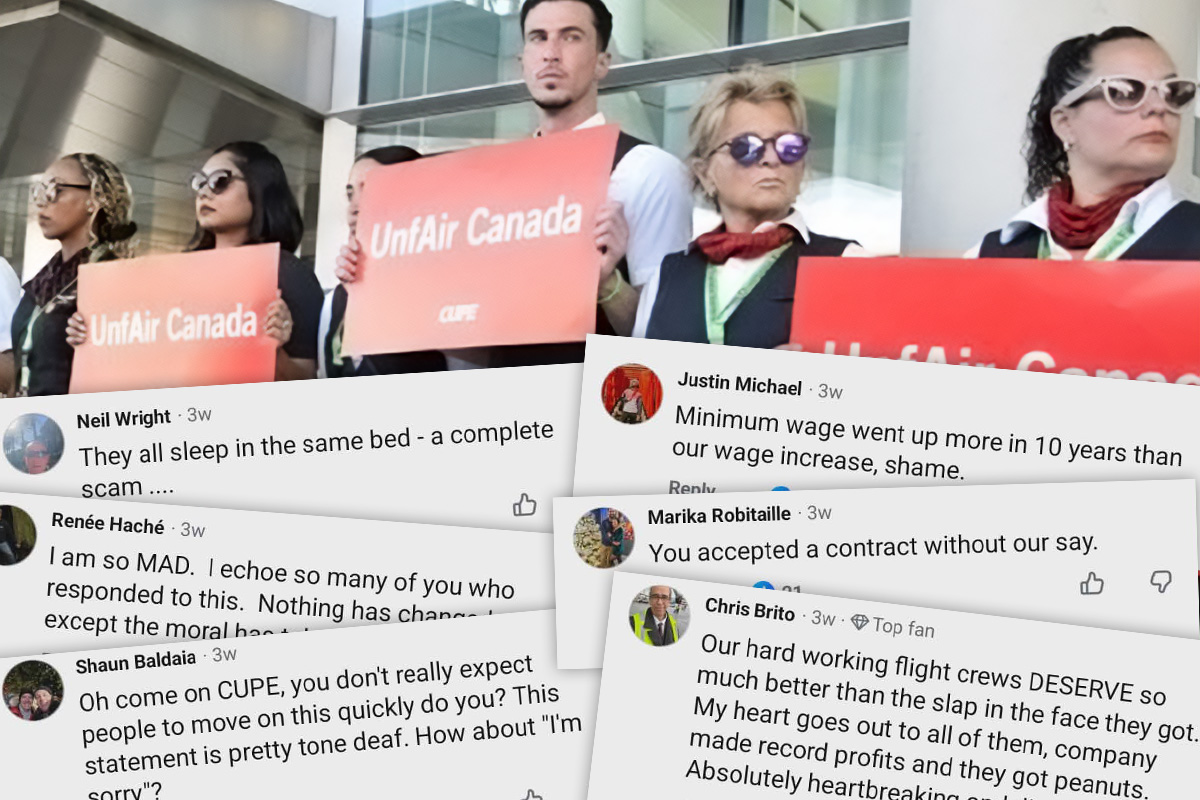
Last summer, Air Canada flight attendants waged a courageous struggle, defying the Liberals’ back-to-work order. But for all their efforts they got a raw deal, signed against their will. Now workers are demanding answers from the leaders who steered the strike to defeat.
Betrayed by the leadership
The Air Canada strike was historic—it proved that back-to-work orders can be defied, and defeated.
However, the union leadership was not willing to see the strike through to the finish. They triumphantly announced a deal had been reached, sending the workers home after just a few days. The deal was a sell-out: it did not put an end to unpaid work, and it left junior attendants still making less than federal minimum wage.
Worse still, the deal was decided completely undemocratically. Workers were only allowed to vote on the wages portion of the contract, and even when they voted overwhelmingly—99.1 per cent—to reject it, the leaders sent the issue to arbitration. Unsurprisingly, the arbitrator ruled in favour of the bosses’ offer.
Anger in the ranks
In mid-February, the Air Canada Component of CUPE made a couple of Facebook posts where they explained the result of arbitration. Many members took to the comments to voice their disapproval of the deal.
“Minimum wage went up more in 10 years than our wage increase, shame,” said Justin Michael.
But workers are not just upset with the contract itself. They are upset with their leaders, as well, and the fact that they were given no voice in the process.
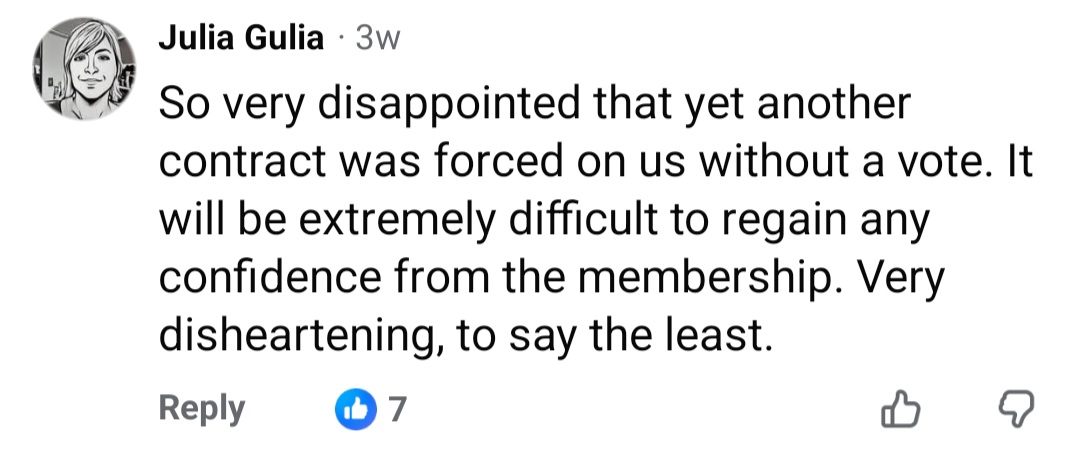



The illegal strike showed them they had the power to beat the bosses and the government, but their own leaders conducted backroom negotiations which resulted in handing off the final decision to a pro-corporate arbitrator.
This has led to massive discontent within the union. Many workers are furious at their union leaders and some are beginning to draw conclusions:
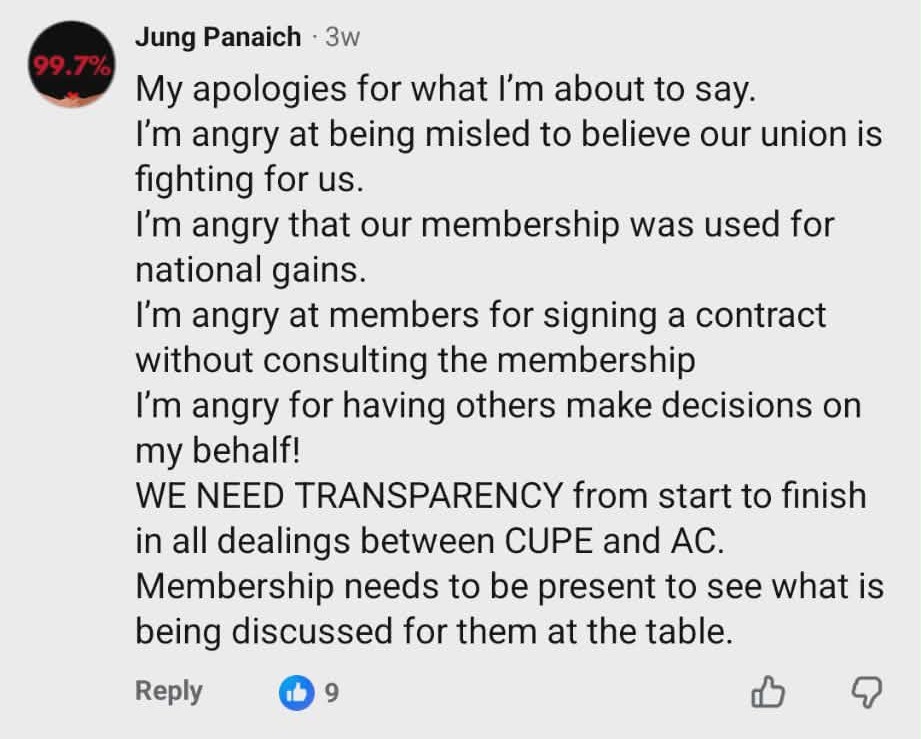
“WE NEED TRANSPARENCY from start to finish in all dealings between CUPE and AC. Membership needs to be present to see what is being discussed for them at the table”, writes Jung Panaich in the comments of the aforementioned post. We wholeheartedly agree.
The union should be in the hands of the rank-and-file and there should be no secret negotiations or decisions made behind the backs of the members. Open bargaining should be implemented where all major developments are reported to members. Rank-and-file committees should be elected to be present at every bargaining meeting to make sure the leadership is representing the members properly.
While many union bureaucrats would be uncomfortable with this, the fact is that this would massively strengthen the position of the union as it would create a huge sense of ownership among all of the members and increase their desire to fight for their interests.
Time for new methods
The crisis of Canadian capitalism means that across the board, wages are being eroded, thousands are being laid off, and benefits are being slashed. Workers have had enough of this and are taking to the picket lines to defend themselves. But governments also cannot afford to have the workers paralyze the economy. This is why back-to-work orders are now a common occurrence.
The Air Canada strike showed the way forward. If the workers move into action, these unjust laws won’t stand. But this strike also showed the limitations of the current trade union leaders. The trade union leaders in Canada grew up in an era of class peace and are therefore far more comfortable in meeting rooms than on the picket lines. But the methods that may have gotten something for workers in the past no longer work.
Reviving the labour movement in Canada will mean abandoning these losing methods. Instead, we must go back to the methods the labour movement was built on: workers’ democracy, class struggle and socialism.

