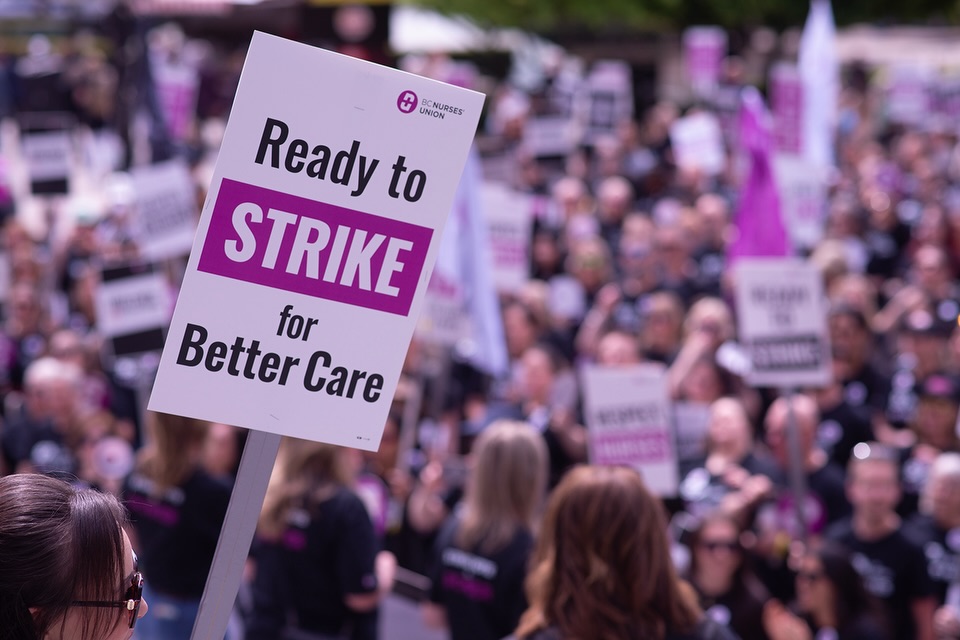
For the first time in 25 years, the B.C. Nurses’ Union has voted to strike. With 98.2 per cent of the union’s more than 50,000 members coming out in favor of strike action, this was the strongest mandate in its history and a sharp condemnation of the state of B.C.’s healthcare system.
The situation in B.C. is one of the worst in the country. One in four British Columbians don’t have access to primary care, ERs are shutting down at an alarming rate, 4,500 nursing positions remain empty, patients often have to be treated in hallways, but in spite of all this, the B.C. NDP’s most recent budget included no increased funding for healthcare.
For months, the union has been in negotiation with the Health Employers Association of B.C. (HEABC) over better wages, health benefits, improved nurse-to-patient ratios, high turnover, and workplace violence. The HEABC had rejected nearly 140 proposals, but a match was lit when the employers tried to force a concession on benefits through arbitration.
As the head of the bargaining team put it, “Nurses are a critical part of the healthcare system. Why should we accept less?” This sentiment is absolutely correct! Not a wheel turns, not a phone rings, not a lightbulb shines without the kind permission of the working class.
Vote down the deal
But unfortunately, the most recent tentative agreement put forward by the bargaining team is asking the nurses to do exactly that: accept less than they deserve. The proposed terms, including wages increases that barely keep up with inflation and a reduction in paramedical benefits, have only fanned the flames burning within the rank-and-file.
Comments from nurses denouncing the deal flooded the BCNU’s post announcing the deal:
“This ain’t it. The fire has been lit and it seems nurses are more a united front than ever. Let’s get a wage increase in line with COL (Cost-of-Living), we deserve that and we won’t stop at nothing to get it. NO to this deal. ”
“Unacceptable. I will NOT be voting for this agreement. We deserve better and BCNU should be fighting harder for us.”
“So tired of getting crumbs when we have the ability to leverage for more.”
At BCNU town halls, the bargaining team parroted the employers, stating, “if there was more money, we wouldn’t be presenting this agreement.” Nurses were quick to fire back, questioning how the province has hundreds of millions to spend on private nursing services and hosting the FIFA World Cup, but not on vital services like healthcare.
Strike to win
At the Vancouver town hall, a 35-year nursing veteran was met with applause as she recounted the success of the previous two strikes during her career, urging the nurses that they can win again!
The nurses are ready for a fight, and they’re not alone. Emergency operators in Vancouver are also armed with an overwhelming strike mandate, public opinion toward the nurses is high, and the largest unions in the province are behind them. Looming ahead is the FIFA World Cup. If the nurses reject the current tentative agreement, a strike in these conditions would be immensely powerful. As the head of bargaining put it, “the whole world is watching.”
With Canada now in a technical recession, the B.C. ruling class is also watching. B.C. has the largest deficit per capita of any province and has already had its credit rating downgraded. The pressure from the ruling class to get public finances in order is immense and the delicate steps taken in this direction by the NDP government are not enough. This makes significant concessions by the NDP government unlikely.
The only way to win is therefore to prepare for strike action.
The last time the nurses went on strike in 2001, the B.C. Liberals legislated them back to work—but the nurses heroically defied, going on a wildcat strike. The same situation isn’t off the table with the B.C. NDP, who have already shown they are prepared to bend to the wishes of the ruling class.
The last B.C. nurses strike shows the way forward. Today, the mood of the nurses is massively in favour of a strike. But in order to win, the BCNU must prepare to defy any attempt to force them back to work. The rest of the B.C. labour movement should throw its weight behind the nurses, because a victory for them is a victory for the whole working class of B.C.

