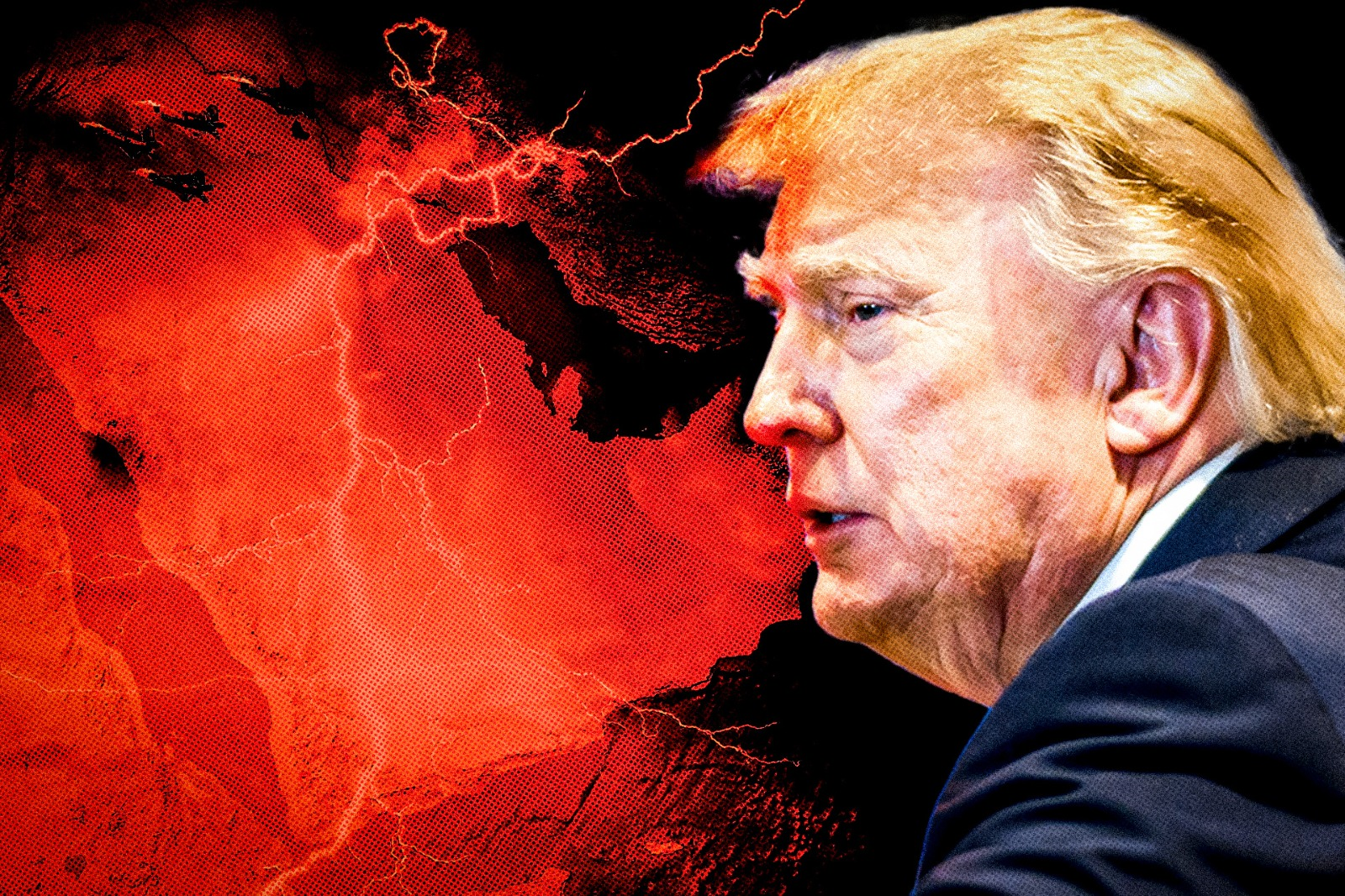
Every day the persistent beat of war drums in the Middle East gets ever louder and more threatening. Recent weeks have seen what appears to be an irresistible drift in the direction of a renewal of armed conflict between the United States and Iran.
New elements are entering into the complex equation, as the opposing sides move new pieces onto the bloody chessboard of violence and mayhem, producing a deadly spiral of escalation.
Yet the whole picture presents itself as an incomprehensible tangle of confusion in which one astonishing declaration by the President of the United States is immediately contradicted by something entirely different.
According to the oft-repeated mantra of the man in the White House, the military strength of Iran has been thoroughly and completely eradicated on at least a dozen occasions by the superior airpower of the United States.
Donald Trump had threatened that, should Iran not agree to a deal, he would wipe out civilisation in the country. “Had Iran refused our terms, the next targets would have been their power plants, their bridges and oil and energy infrastructure,” Hegseth said.
Yet there is absolutely no evidence that Iran has agreed to any American deal. Indeed, Tehran has publicly stated that no negotiations whatsoever with the Americans have taken place.
And for some peculiar reason, which is yet to be explained by the man in the White House, it continues to launch barrages of ballistic missiles against targets in the Middle East, notably recently against an American base in Jordan.
The actual level of destruction caused by these attacks has never been clearly explained. But it must have been considerable, causing the Americans to pull back their forces from bases in the region.
Theodore Roosevelt had an interesting motto: “speak softly, and carry a big stick.” Donald J. Trump says the precise opposite: shout and bawl at the top of your voice, utter the most bloodcurdling threats, and brandish a cardboard sword in the air.
The only result of this absurd policy, which passes nowadays for diplomacy in the United States, is to discredit the Americans in the eyes of the world.
How many times has the American president threatened to unleash a terrible bombing attack that would reduce Iran to a heap of smoking rubble? How many deadlines has he set for this apocalyptic development?
We have lost count. But Mr Trump’s deadlines come, and Mr Trump’s deadlines go. And invariably, at the eleventh hour he does an about-turn and forgets all about it.
Unfortunately for him, his enemies do not forget, or forgive. They correctly interpret these constant U-turns as a clear sign of weakness, and act accordingly.
The US war against Iran has “completely” destroyed the country’s ability to build missiles and other sophisticated weaponry, Defense Secretary Pete Hegseth boasted back in April.
“We finished completely destroying Iran’s defence industrial base, a core pillar of our mission,” Hegseth told reporters.
“They can no longer build missiles, build rockets, build launchers or build [drones] – their factories have been razed to the ground, set back in historic fashion,” he said.
But the absurd bragging and boasting statements by Trump and Hegseth are contradicted by the facts.
Already at the time, Israeli military sources were claiming that the Iranians possessed a very large stockpile of missiles – probably over a thousand, and are constantly increasing production.
Sensing the hesitations and vacillations in the White House, the Iranians have grown even more confident and aggressive.
Far from opening the Strait of Hormuz, the Revolutionary Guard, which, in effect, are the most powerful force in Iran today, responded by stating that they are going to tighten control of Hormuz by expanding the zone of control west of the Strait.
Unlike the American president, the Revolutionary Guard always follows up its threats with action. Any tankers that try to approach the Strait of Hormuz can be attacked by the Iranians at a distance unless they obtain Iran’s permission to pass.
To add insult to injury, the Iranians, as we have said, launched a barrage of missiles and drones against American bases in Jordan and other parts of the region.
The rationale behind these Iranian attacks is quite obvious. It was not so much to inflict material damage as to provoke a response from the Americans, who would thus use up valuable and ever more depleted stocks of expensive air defence missiles.
This aim appears to have been successfully accomplished by the recent attacks, which the United States launched 60 Patriot PAC 3 missile interceptors to repel.
Since it was estimated about a month ago that the total stockpile of these missiles was about 640, this represents a significant reduction of the already limited American inventory of Patriot missiles.
These enormously expensive missiles are extremely complex and many key parts are apparently largely handmade. It takes two years for the United States to produce one of these missiles. This means that, even if the Americans have plans to increase production of Patriot PAC 3 interceptor missiles, it will not be possible to produce them quickly enough to replace this rate of loss.
An even more alarming development for the Americans is the fact that the accuracy and range of the Iranian missiles have enormously increased.
They have regularly been hitting targets, including American bases, with pinpoint accuracy and a very precise understanding of the weakest points in America’s defences, which can only come from direct assistance from Russia, and possibly also from China.
This development set all the alarm bells ringing in the Pentagon, which fears, quite correctly, that this technology makes the Iranian missiles far more dangerous to American warships and bases in the region.
According to The Wall Street Journal, there was a meeting in the White House in which, despite various brave words that President Trump continues to make about how the war with Iran is being won or has been won or will be won after the midterms, Trump was apparently informed privately that the war with Iran could continue for the remainder of his term.
It is this fact, and not any desire for peace, that is the explanation for the failure of Trump – at least for the time being – to carry out his bloodcurdling threats of a devastating attack against Iran.
The Houthis go on the offensive
All this was bad enough. But to add to Mr Trump’s woes, news suddenly reached his ears of an extremely alarming development from yet another key part of the region.
Even as this conflict between Iran and the United States continues, and even as the Strait of Hormuz remains closed, a renewed conflict has suddenly flared up between the Saudis and the Houthi movement in Yemen.
These advances made by the Iran-backed Houthis are part of their ongoing civil war in Yemen with the Saudi-backed Presidential Leadership Council.
From 2015 until the signing of an uneasy truce in 2022, Saudi Arabia was the principal force behind a brutal combined air and ground campaign against the Houthis. The fragile truce has held until this year.
But it was broken by an unprovoked attack by Saudi bombers against the airport of Sanaa, the Houthi capital. And the truce has now been completely shattered by the swift and seemingly unstoppable offensive by the Houthis.
It is difficult to get a clear picture of this war, but it seems clear that the Houthis have advanced with lightning speed, seizing a large chunk of territory and, above all, occupying an extensive area, sweeping aside ineffectual resistance from government forces and pushing south. They have now reached the southernmost tip of Yemen along the Red Sea.
Yemen’s Saudi-backed government has been left trying to claw back territory captured by the Houthi militants’ rapid advance in recent days.
Some reports suggest that some opponents of the Houthis are launching counterattacks in other places. But despite this, the Houthis seem to be by far the most powerful military force in Yemen today.
Actually, if there is a disorganised rabble in Yemen, it is not the Houthis. It is the anti-Houthi factions (some of them backed by Saudi Arabia, others by the UAE) who, in the middle of the war, are far too busy fighting and killing each other in order to grab more loot to pay attention to the Houthis.
The Houthi advance puts them in control of the entire Red Sea coast of Yemen. They are now just 32 kilometres from a US military base in Djibouti, the tiny country on the Horn of Africa, on the other side of the Bab el-Mandeb strait, the southern part of the Red Sea.
On 15 September, The Guardian expressed the growing fears of western governments about the consequences of these actions:
“Yemen’s Houthi militants have seized two strategic islands in the Red Sea, reinforcing the Iran-backed group’s ability to control a key shipping route, as concerns mount that the world is facing a new oil supply crisis.
“The seizure of the islands of Greater and Lesser Hanish is the latest in the militant group’s swift advance across Yemen’s Red Sea coast, after the capture of the port of Mokha and Perim island in the Bab-al-Mandeb strait.
“The islands lie 160km north of the strait, which is a chokepoint that connects the Red Sea to the open ocean and Saudi Arabia’s key Asian markets.”
This strait is an important chokepoint along the sea route that connects the Mediterranean Sea with the Indian Ocean. With the de facto closure of the Gulf of Hormuz, it provided the only viable alternative for the movement of oil, liquefied natural gas, and other goods leaving or transiting the region.
Saudi Arabia, in particular, has diverted about 64 percent of its oil exports via an overland east-west pipeline, transporting oil to its Yanbu Port and shipping it out through the Bab el-Mandeb strait.
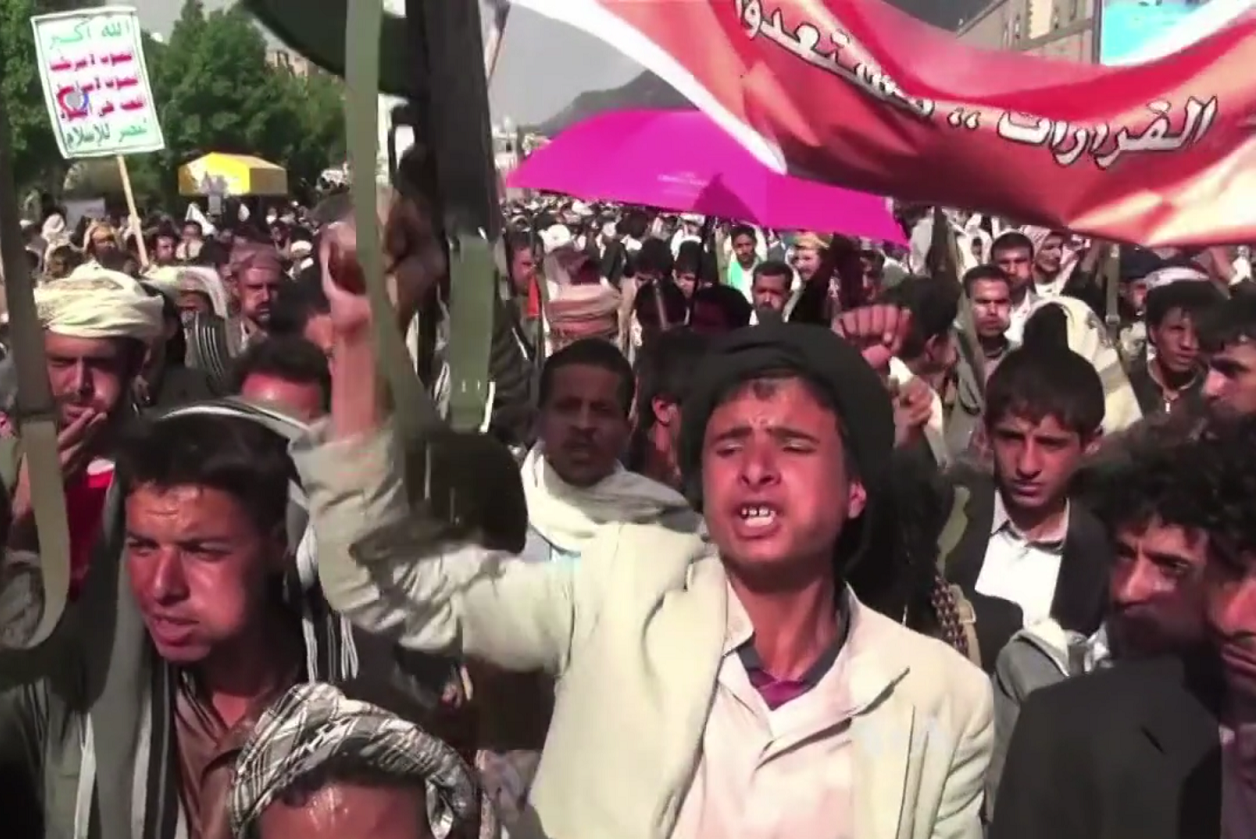
The pipeline in question is of critical importance, because the Saudis were using it to transport oil away from the Strait of Hormuz towards the Red Sea ports. But it was attacked by missiles, apparently launched by a pro-Iranian militant group in Iraq, who have been using ballistic missiles and drones to strike at key military and economic targets.
Serious damage inflicted on it has in effect paralysed Saudi oil exports to Asia. The Saudi authorities have in effect confirmed that damage has been extensive because they have now shut down the entire pipeline. And this damage will take many weeks to repair – if it is not damaged in the meantime by further attacks.
The advance has enormously increased the Houthis’ potential control of the exit of tankers through the Bab el-Mandeb strait.
The Houthis have said their targets are Saudi Arabian vessels and Saudi oil – they have launched attacks on trucks and oil installations within Saudi Arabia.
But countries across Europe, Asia and Africa rely on goods moving out of the Bab el-Mandeb Strait. Supplies from Saudi Arabia, the world’s biggest exporter of oil, are particularly vital to economies in Africa and Asia, which rely on oil imports from the Middle East.
But this poses a threat to the broader world economy and trade. Houthi rebels are now in a position to disrupt and effectively control global shipping in and out of the strait. Using light, asymmetric means such as drones, anti-ship missiles, and fast attack boats, maritime traffic can be quickly ground to a halt.
MbS in a state of panic
This is the biggest crisis that Saudi Arabia has faced since the foundation of the kingdom in the 1930s. It is producing alarm in the ruling circles of Saudi Arabia, particularly its Crown Prince and de facto ruler, Mohammed bin Salman Al Saud, also known as MbS.
The Saudi strongman turns out to have feet of clay. In fact, he shows every sign of panicking. It is not hard to see the reason for this.
It is now an open secret that before the Americans launched their attack on Iran on 28 February, MbS and other Arab Persian Gulf leaders had been urging Trump to take this action. That was one of the factors that influenced Donald Trump to proceed. MbS clearly assumed that an American attack would end in a quick victory and the collapse of the Iranian regime.
But things turned out very differently. The Iranian regime was not overthrown, but actually strengthened. The Strait of Hormuz was closed and Saudi oil installations were attacked. Now the crisis has spread to Yemen, and access to the Red Sea from the south is being threatened by the Houthis. A vital pipeline upon which Saudi Arabia depends has been put out of action.
The Houthis are increasingly striking at Saudi oil facilities, which the Saudis will find more difficult to protect, given the shortage of Patriot PAC-3 missile interceptors..
In desperation, MbS “has personally pressed President Trump to take military action against the Iran-backed Houthis as Houthi forces have advanced rapidly along Yemen’s Red Sea coast, […] adding that Mr Trump and the crown prince have spoken multiple times in recent days about the escalating situation.”
But all this desperate pleading fell on deaf ears, the article continues:
“Despite bin Salman’s urging, Mr. Trump has so far declined to involve the U.S. military directly, offering instead to assist with intelligence and targeting support, according to the sources, who were granted anonymity to discuss the sensitive talks.”
The biggest mistake that one can make in war is to underestimate one’s enemy. And the Americans have been guilty of this mistake on many occasions.
They underestimated the Russians when they deliberately provoked a senseless war, using the Ukrainian people as cannon fodder. The result of this is now plain to see.
They have consistently tried to downplay the power and the economic achievements of China, which is now the most industrially powerful nation on earth, with a technological level that is at least the equal – and probably the superior – of that of the United States.
They also underestimated the Taliban in Afghanistan, where they suffered a humiliating defeat, and up to now they had been underestimating the Houthis. The western media persists in portraying the Houthis as a disorganised ragtag and bobtail force with no military skills or ability to withstand the overwhelming might and sophisticated weaponry of a country like the United States.
But experience shows this picture to be entirely false – the product of imperialist arrogance and a misplaced sense of innate superiority over ‘backward’ people. This absurd and malicious caricature presented by the media stands in flagrant contradiction to the known facts.
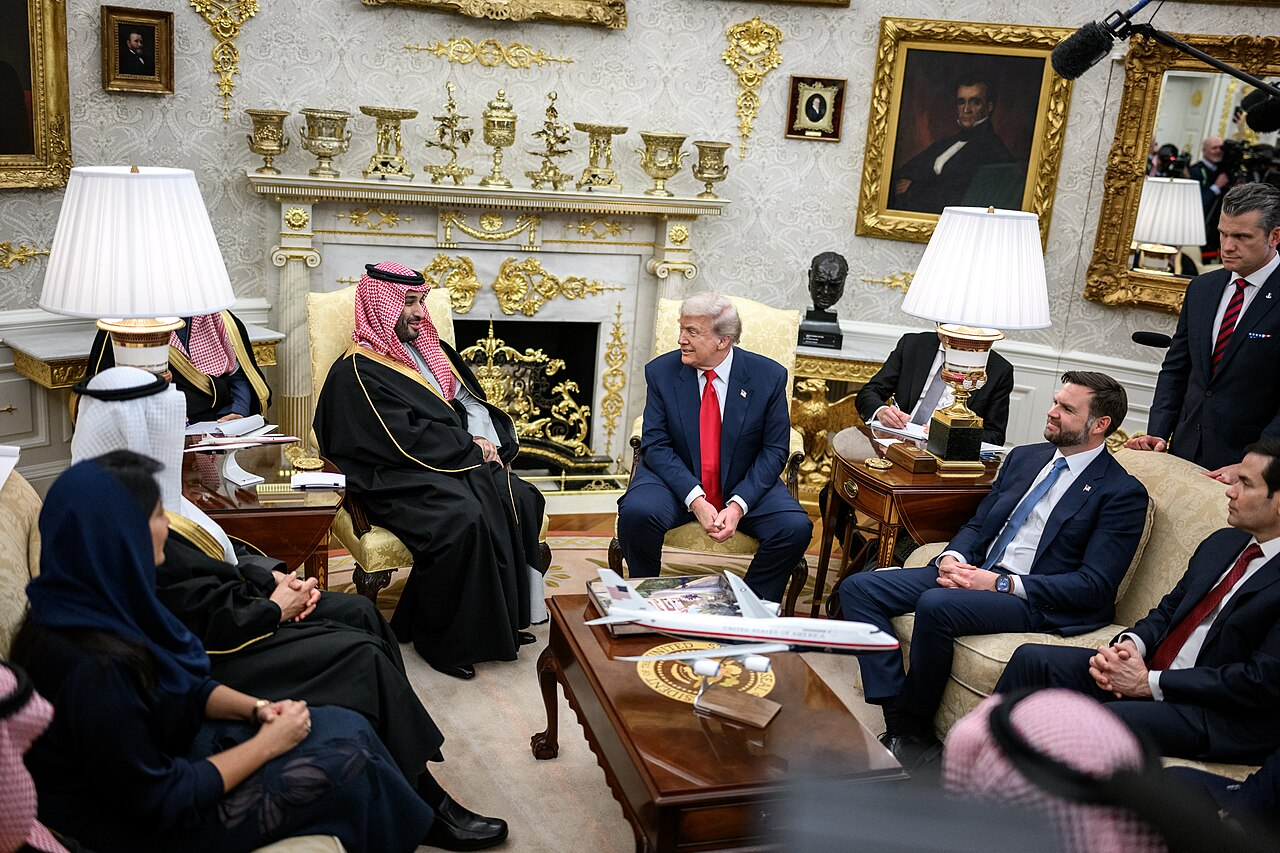
The Houthis are in fact a highly disciplined military force, composed of tough and relentless warriors. In addition to fanaticism and resilience, they have displayed an admirable grasp of military tactics and strategy. They have always continued to fight, irrespective of any bombardment from the air, sea or land. Years of hard struggle have turned them into a formidable military force.
Moreover, with the aid of Iran (and doubtless Russia and China) they now possess a functioning air defence system of their own, so that any aerial attack will now come with a very high price tag.
These facts have been belatedly grasped by the Masters of the Pentagon, who have at last begun to understand the virtues of caution in warfare. They have conveyed their misgivings, no doubt in a forcible way, to the president himself.
Donald Trump took one look at the situation and said: ‘Thanks, but no thanks!’ The Americans already have their hands full with one war (in reality, two) and have no wish to be dragged into yet another armed conflict, which they are by no means certain to win. That is certainly the position of the Pentagon, if not of Donald Trump himself.
This refusal must have hit MbS like a punch in the solar plexus. He must now be a very frightened man, abandoned by his supposed ally in the White House, and forced to face a ruthless and implacable enemy without any realistic prospect of aid.
What MbS most urgently needs is to strengthen his defences. Like Zelensky, he is pleading for the delivery of more Patriot missiles. But, as we have seen, these are in very short supply. His demands are highly unlikely to be met, and certainly not in the quantities that he requires.
Unfinished business
The seizure of a vital shipping route in the Red Sea by the Houthis marks a turning point in the unfinished war between the United States and Iran.
Although Iran has never admitted any involvement, it seems unthinkable that the Houthis would have acted without the explicit agreement of Tehran.
Both Iran and the Houthis now have a stranglehold over two vital waterways for global shipping. This provides them with very powerful leverage over their enemies by exerting pressure on the global economy, and the US in particular.
This fact shows a high degree of confidence on the part of both the Iranians and the Houthis: all this has shown that they will not shy away from a long war with the US.
Trump has expressed reluctance to further engage the US military ‘unless necessary’. But what does he mean by the word ‘necessary’?
Having refused the requests of the Saudi Crown Prince to join Saudi strikes on Houthi targets in Yemen, Trump reported that the Houthis had asked the US not to intervene.
Does this mean that finally the voice of sweetness and reason has prevailed in the Oval Office? Are we entitled to conclude that the man in the White House has ruled out the possibility of a new war?
While it would be very pleasant to think so, past experience has taught us to be highly cautious of any conclusions concerning the future conduct of the man in the White House.
Is it not possible that, despite all the evidence, fearing the consequences of a Saudi collapse, Trump might finally decide to intervene directly, irrespective of the consequences?
The statements coming out of Washington are as oblique and obscure as the mysterious utterances of the Delphic Oracle. Secretary of State Marco Rubio said the US was monitoring the situation in Yemen “very closely.” But the State Department remained tight-lipped about what these statements implied.
Admiral Bradley Cooper, the commander of US Central Command, was in Saudi Arabia for coordination talks last week. What were these talks about? No one seems to know. At any rate, there have been no public statements about them.
A senior administration official said the US is “focused on protecting our core national security interests – such as ensuring freedom of navigation in the Red Sea – while empowering our regional partners to take the lead in managing and resolving regional security challenges.”
The official said the US is in “continuous dialogue with Saudi Arabia and the Republic of Yemen Government regarding regional stability.” But what does this mean in practice?
It is known that the Saudis are frantically striving to build a coalition against the Houthis and protect the kingdom against Iranian retaliation if the Houthis are attacked.
However tempted Trump may have been to avoid being embroiled in a further conflict, he must understand that such an action would be seen as a betrayal, not only by the Saudis but by every single one of the Gulf states who have traditionally backed the United States.
A Saudi defeat at the hands of the Houthis and Iranians is something that Trump and the United States simply cannot accept.
For that reason, Trump will probably have no choice but to throw his military might on the side of Saudi Arabia. In a recent speech at the Republican midterm convention, Trump said:
“We built the strongest military in the world. We use it a little more than I thought. But we cannot let Iran have a nuclear weapon, and they will never have a nuclear weapon.”
These words strongly suggest that Donald J. Trump thinks that the US still has unfinished business in the Middle East that remains to be settled.
Despite all advice from the Pentagon, the man in the White House has by no means given up on his plans to renew his assault on Iran, to compel Tehran to bow to his will.
The routine mention of nuclear weapons is merely a diversion to conceal the real aim – which is, of course, the reopening of the Strait of Hormuz and, if possible, regime change in Iran.
One of the definitions of madness is to continue to repeat the same mistake that has repeatedly failed, in the confident expectation that it will eventually succeed. From this point of view, the behaviour of Donald Trump is, quite literally, insane.
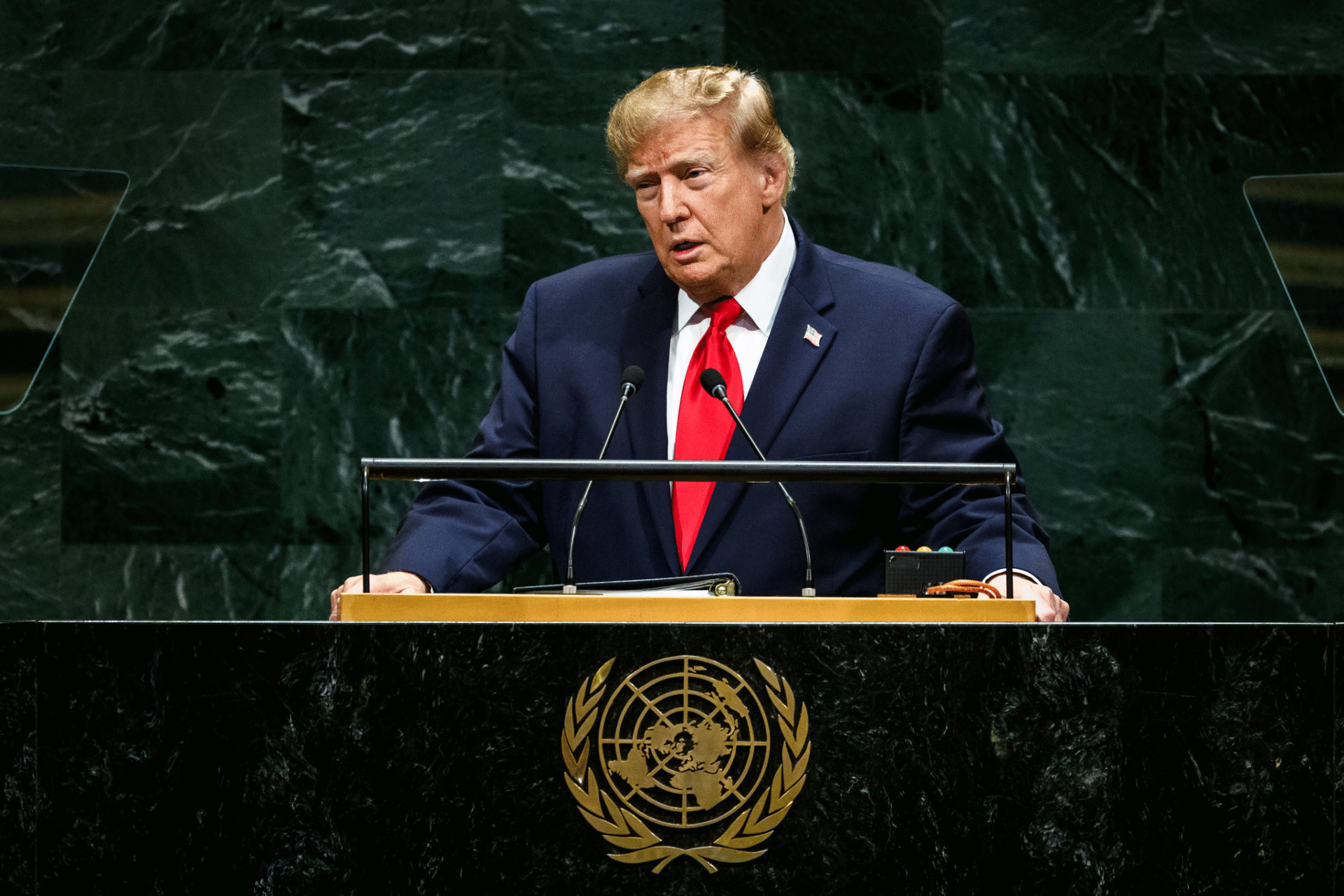
But that has never stopped him before. And there is no reason to suppose that it will stop him now from pursuing the line of action which he regards as ‘necessary’, once the midterm elections are safely out of the way.
Whatever plans might be buzzing around the President’s convoluted and hyperactive brain, it is quite clear that he will never achieve his objectives by military means. If that were possible, he would have achieved them long ago.
The Saudis and their allies have bombed the Houthis mercilessly many times. The Americans used up a lot of valuable ordnance against the Houthis in the spring of 2025 with little to show for it.
That did not break their spirit in the slightest. It is therefore foolish to imagine that renewed bombing is going to alter the course of the war in Yemen.
It is now public knowledge that the United States is running low on key weapons, such as Patriot interceptors, THAAD missiles, and cruise missiles, which would be of vital importance in any lengthy conflict.
In any case, all history shows that wars can never be won by the use of air power alone. Any serious military campaign against the Houthis would inevitably involve the employment of troops on the ground – a very risky strategy indeed.
The prestigious US Council on Foreign Relations published an article on 22 September which points out correctly that:
“The air campaigns against the Houthis and Iran have demonstrated that there are limits to this type of warfare. If Trump and the Saudis want to solve the Houthi problem, it will require much more than air strikes.”
And it adds:
“Any U.S. military effort would have to include a significant and coordinated ground operation to dislodge the Houthis from areas where they control the Bab el-Mandeb Strait. That is a tall order given the Yemeni government forces’ weakness and Saudi Arabia’s reluctance to throw its own military into the fight.”
In the short run, air strikes against the Houthis in Yemen may possibly save the Saudis from imminent defeat. But it will have other, far more serious consequences.
The consequences
It becomes increasingly clear that the actions that Donald Trump proposes have consequences which he is either unable or unwilling to see.
Any attack will drive both the Iranians and the Houthis and their regional allies – the Shia militias in Iraq, the Hezbollah movement in Lebanon – towards even more drastic retaliation.
In requesting the Americans to stay out of the conflict, the Houthi leadership has gone out of its way to assure Washington that it doesn’t seek to block all commercial shipping in the Red Sea, only Saudi-linked ships.
If the Houthis are attacked by the US, most likely the Iranians will decide that they too will have to retaliate because not to do so would be seen as a betrayal of the Houthis, something they cannot afford. That is even more the case, of course, in the event of a direct attack on Iran.
At that point, the gloves will be off. The Houthis will not hesitate to close the Red Sea to American and other western shipping, thus carrying the crisis of the world economy to an altogether new level.
The Iranians might respond, not only by attacks against Saudi oil facilities (storage tanks, ports, tankers and vulnerable pipelines), but also – far more seriously – against critical facilities such as desalination plants. This would have catastrophic consequences for Saudi Arabia and every single one of its Gulf allies.
Will this be a short war?
One thing is certain. Once the war spreads, there will be no end to it. The idea of some kind of short and successful military campaign is a foolish mirage, which conflicts with all the known facts.
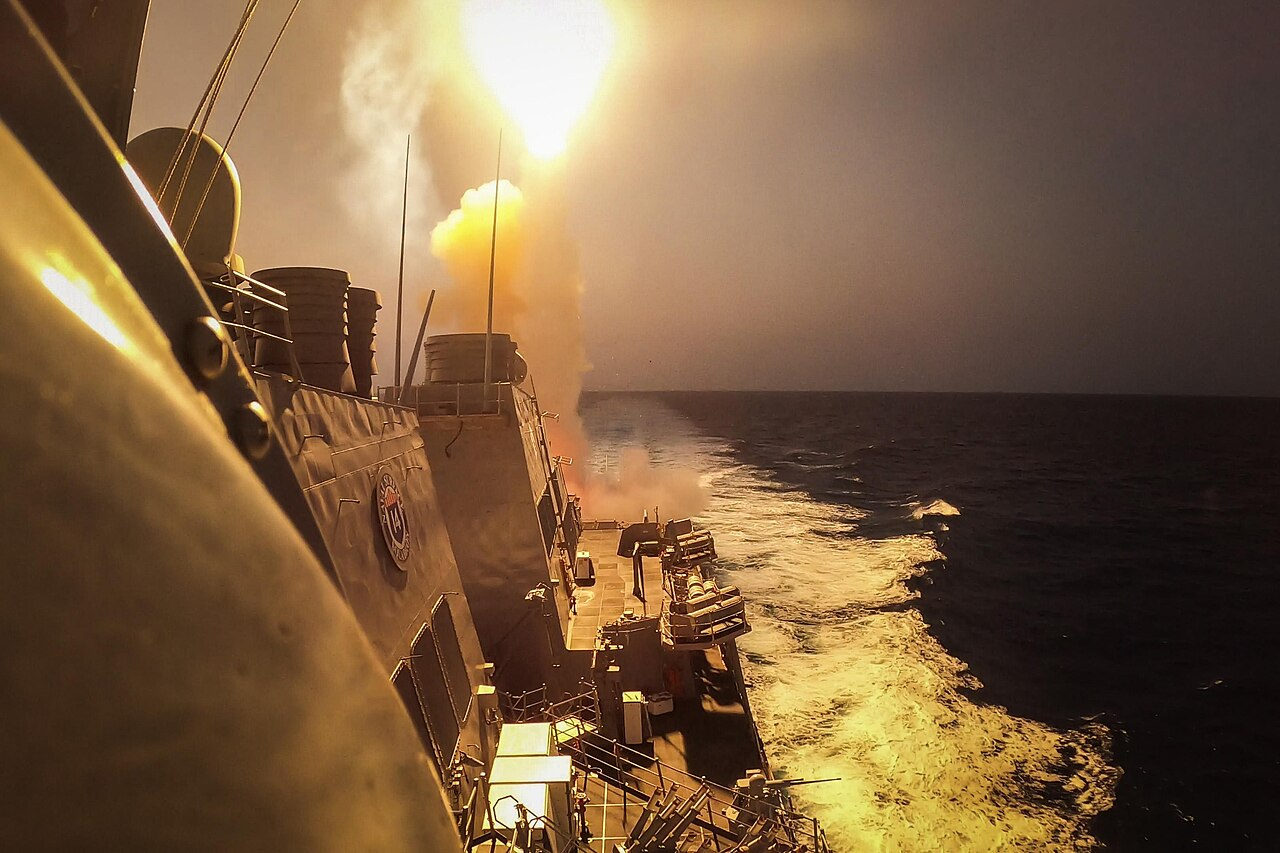
Both the Iranians and the Houthis have demonstrated their ability to resist even the most brutal wars. They lack neither the will nor the ability, in terms of military capacity, to wage a prolonged war.
By contrast, the USA possesses neither of these two things. From a military point of view, such a war would be a catastrophe for the United States. Pentagon leaders have repeatedly warned against it.
The Washington Post reported that senior commanders in the US military have warned Defense Secretary Pete Hegseth that large-scale operations against Iran cannot be sustained indefinitely, and that continuing to concentrate forces in the Middle East could undermine the US military’s ability to respond to threats elsewhere in the world, including defending the United States itself.
The fears of the Pentagon are fully justified. But the most serious repercussions will be felt in the sphere of politics and in the consciousness of millions of people.
The Iran War has no support in public opinion in the USA. Around 60 percent of Americans oppose the military action, making it one of the most unpopular major conflicts in recent history.
This opposition is also widespread in Trump’s electoral base, which has not forgotten his promise to put an end to ‘forever wars’, particularly in the Middle East.
Everything points to a major cycle of escalation in the Middle East, in which cause becomes effect, and effect becomes cause in an infernal downward spiral of violence and mayhem. Who can say where this may lead?
Convulsions in the world economy
Meanwhile, the global economy is faced with an uncontrollable increase in fuel prices and soaring inflation.
The headline price of crude oil has again gone over $100 a barrel. And this is only the beginning. The Guardian, on 15 September, stated:
“Research company Rystad Energy said on Monday that since late August, an average 2.6m to 4m barrels of oil a day moved through the pipeline and out of the port of Yanbu – a volume it said was now at risk of ‘disappearing from the market’.
“On Tuesday morning, Brent crude oil rose 1.17 percent to $106.92 a barrel. The average price of diesel in the US hit $6 per gallon for the first time last week.”
So even before the November midterm elections, prices of gasoline and diesel at American filling stations are at historic high nominal levels.
And the global oil shortage is going to get worse. The Bank of America is predicting $150 per barrel of oil. In retrospect, this prediction may turn out to be excessively optimistic. If things go on deteriorating, the price of oil could well pass $200 a barrel.
The crisis in the Middle East, the rising prices of energy, and the problems in the bond markets mean that every government (except Russia and China) will be confronted with a serious and growing crisis. A renewal of war in the region, and the resultant collapse in oil production and deliveries will enormously exacerbate all these problems.
Central banks will be forced to resort to increasing interest rates. This, in turn, will cause a sharp contraction in demand, provoking an unstoppable drift in the direction of a recession, falling profits, a collapse of investor confidence and a stock-market crisis.
Factory closures, sharp increases in unemployment, and falling living standards and tax revenues will be accompanied by deep cuts in public spending on education, health and other social benefits.
Sharp shifts in consciousness
That is particularly true of Europe, where the reserves of natural gas are alarmingly low. Already there is increasing panic about the gas shortage in Europe which European governments have avoided mentioning, for fear of provoking public alarm.
The people of Europe can expect a very hard winter indeed. The storm clouds are gathering and becoming ever darker.
It is possible, of course, that the European leaders might attempt to divert attention from the economic crisis at home by involving themselves in the war in the Middle East, under the pretext of ‘defending freedom of the seas’.
This brings to mind the well-known proverb that fools rush in where angels fear to tread. Having made every imaginable mistake in foreign policy – and quite a few that are frankly unimaginable – these blockheads would be quite capable of launching themselves into a military adventure at a time when their own armies are in a lamentable state, their treasuries are empty, and the electorate is hardly in a mood to support such escapades.
Then again, it would appear that the stupidity of these people really knows no bounds.
But such a military adventure would inevitably have the most serious political consequences for every country in Europe.
Sharp and sudden turns like this are implicit in the whole situation. They are the clearest manifestations of the inherent instability of a socio-economic system that has outlived its usefulness and entered into contradiction with the necessities of human progress.
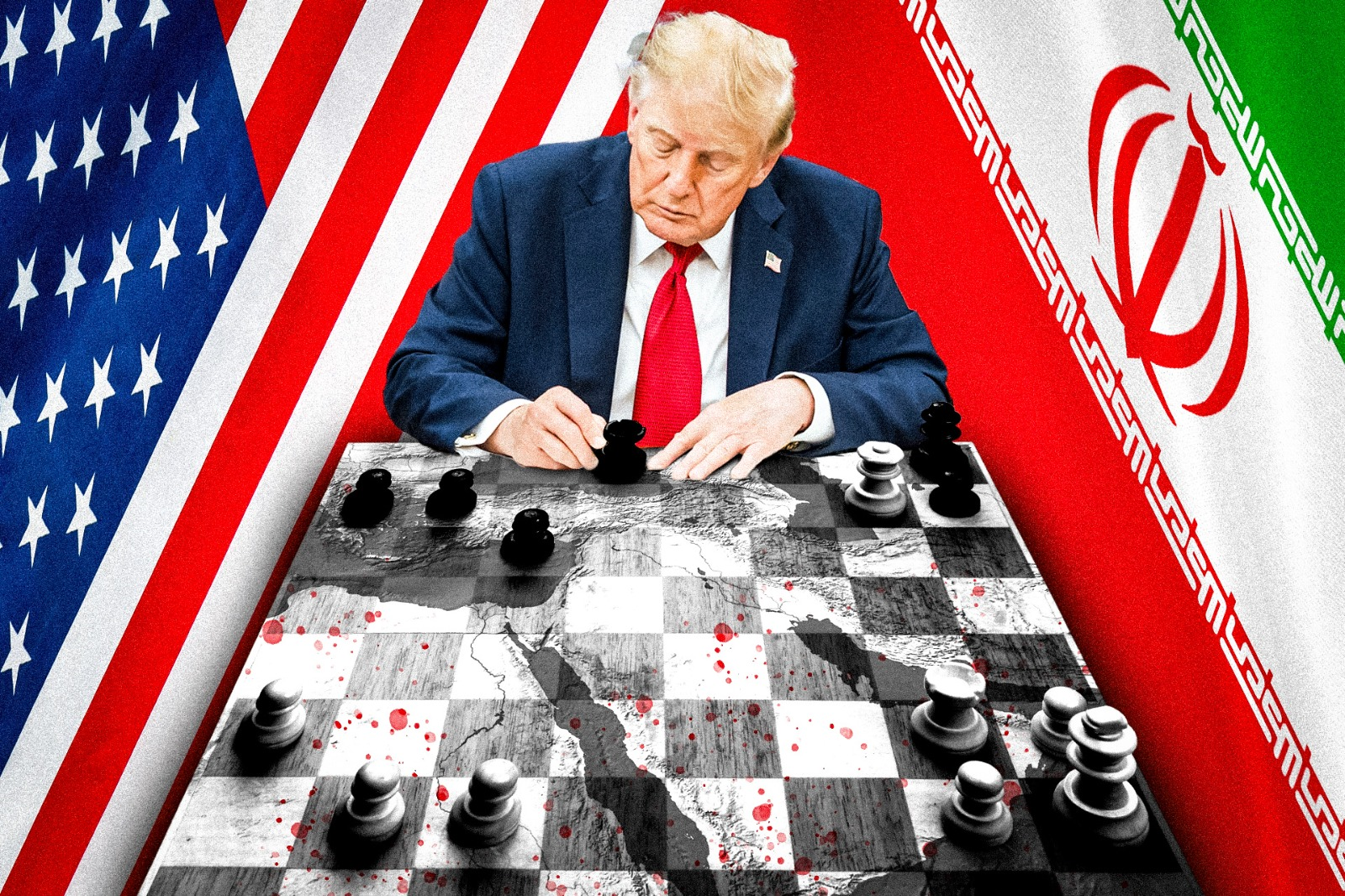
But this will also bring about equally sudden and sharp changes in consciousness. In the absence of a viable left-wing alternative, the road is open for right-wing demagogues like Trump or the AfD in Germany.
These right-wing demagogues can arise suddenly and achieve some success for a time. But inevitably they will come up against the contradictions of capitalism for which they have no answer. They will collapse as quickly as they arose.
We can now see how quickly the illusions in Trump (which were considerable) are beginning to evaporate and give way to moods of angry recrimination, particularly over the war against Iran.
A war, with no clear aims and no end in sight, accompanied by high rates of American losses, would provoke a level of popular outrage and mass demonstrations not seen since the Vietnam War. It would mark the final shipwreck of Trump’s political career.
As in elementary mechanics, so in politics, every action has an equal and opposite reaction. Once the spell of Trumpism is broken, the floodgates will be open, creating a torrent of radicalism that will shake American society to its very foundations, opening the way for a sharp swing of the pendulum from right to left.
Trump’s apocalyptic predictions of the rise of communism in the USA will cease to be what they have been up to now – the delirious rantings of a bankrupt politician, desperate to find a way of distracting the public’s attention from the real problems facing people in the United States.
Instead, they will be seen as an accurate anticipation of the growing radicalisation to the left among broad sections of the youth, and a growing interest in the ideas of communism and revolution.
The same phenomenon will be observed in one country after another. The recent elections in Germany were a clear warning sign that the mood of the people is becoming ever more discontented; the disenchantment with the existing parties, leaders and governments is growing; and the old complacency is being replaced by a new, belligerent mood of rebellion.
In a word, present conditions are becoming a finished recipe for an explosion of the class struggle on an unprecedented scale.

