As Alberta prepares for a referendum (on whether to hold a referendum) on seceding from Canada, the infamous Clarity Act is back in the spotlight.
The federal government has so far rejected the possibility of applying it to the Alberta referendum. Nevertheless, the referendum has brought renewed attention to the fundamentally anti-democratic nature of the law, while exposing the untenable contradictions within the Canadian federal system.
The Clarity Act: An anti-democratic weapon
Following a heated debate with the Bloc Québécois over whether a simple majority (50 per cent plus one vote) would be sufficient for the federal government to recognize a referendum in favor of secession in Alberta, Mark Carney stated that such a percentage would be “absolutely insufficient.” The Prime Minister justified his position by referring to the Clarity Act. Ironically, this anything-but-clear law does not specify any required percentage.
Carney’s statement served to clarify once and for all the Liberals’ position on the issue, after one of their MPs, Patricia Lattanzio, had been rebuked by her superiors earlier this month for saying that a simple majority would be sufficient to validate a referendum in Alberta.
The prime minister’s remarks immediately sparked unanimous outrage in the Quebec National Assembly, from the PQ to the Liberals. Even for Quebec federalists, it would be politically indefensible to accept such restrictions on a referendum.
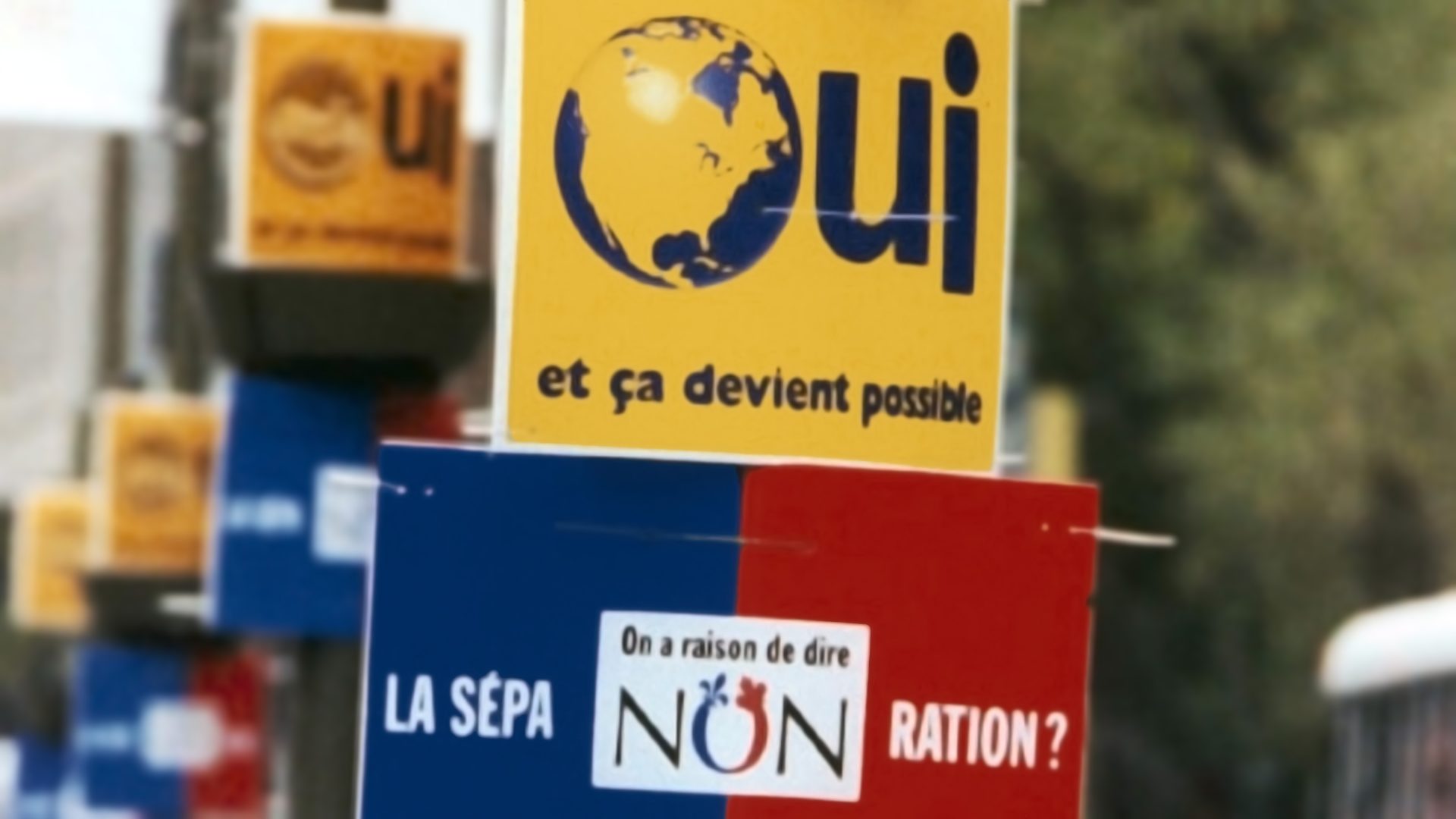
After narrowly escaping defeat in the 1995 referendum on Quebec sovereignty, the federal government enacted the Clarity Act in 2000, which essentially gives the Canadian Parliament the power to veto the results of any referendum. To do so, Parliament need only invoke, based on its own criteria, the lack of “clarity” in the question posed. It can also set, at its discretion, the percentage that constitutes a “clear” majority, meaning it can require more than a simple majority.
Furthermore, even if these steps were to be successfully completed, the province’s independence would still have to be approved—through a constitutional amendment—by the House of Commons, the Senate, and at least seven other provinces representing half of Canada’s population!
The Clarity Act is clearly an anti-democratic weapon designed to block Quebec’s right to self-determination (and now, possibly that of other provinces as well), in the most arbitrary manner possible. The Quebec government responded by passing Bill 99 in 2001, which, among other things, reaffirmed the simple majority threshold as sufficient proof of success of a referendum.
As a result, Quebec and the federal government are at loggerheads over their respective legislative frameworks. And given the prospect of a new referendum should the Parti Québécois come to power this fall, an open confrontation could very well erupt. The crisis of the federation is only just beginning.
Carney’s democratic credentials
Adding insult to injury, Carney also lectured Alberta Premier Danielle Smith about the “dangerous bluff” she is supposedly putting up with this referendum. “[The promise of a referendum] wasn’t on the ballot, it wasn’t in the mandate or the platforms of the governing party or the Official Opposition, ” he argued.
It is the height of irony to hear Carney say these words. Was the austerity that Carney began to implement on the ballot last year? And what about the massive increase in military spending to five per cent of GDP—a policy that was not part of his campaign platform?
Did he bother with democratic niceties when it came time to secure his parliamentary majority thanks to opposition lawmakers switching sides?
All this posturing has nothing to do with democracy. The Canadian federation is a parliamentary monarchy where every bill must be ratified by an unelected Senate. What really matters to Carney is the stability of the country’s capitalist system, which is reeling from the current upheavals in Canadian unity.
A rotten federation: Let’s throw it in the trash
In Canada, the right to self-determination is clearly a fiction. Even if the pro-independence option were to win in a referendum in Alberta or Quebec, Ottawa would have every opportunity to set the rules to overturn the results. Whether directly through the provisions of the Clarity Act or through the intervention of the Senate, the Canadian ruling class would do everything in its power to prevent secession.
This exposes the fragility of this Canadian unity, imposed by force, where the provinces must be pressured to remain part of it. This is the true face of bourgeois democracy: if your plans threaten its interests, the ruling class perched at the top of the state will immediately bring you back into line, mobilizing all the countless means at its disposal.
Carney glibly repeats that Canada is “stronger together.” But the federal government he wants us to unite behind is one of environmental destruction in the service of oil companies, oppression of First Nations, militarization, and massive austerity. Instead of this forced unity behind the federal government’s reactionary banner—and against it—we need the unity of the working class. All workers—Canadians, Albertans, Quebecers, Indigenous peoples—share the same interests. We must be united in a struggle to overthrow our common enemy, the capitalist class, and for socialism.
Canada’s legislative and constitutional framework is systematically designed to undermine the right to self-determination. This means that the only way to guarantee the right to self-determination is through revolutionary means—by overthrowing the reactionary and anti-democratic machinery of the Canadian federal state and replacing it with a voluntary socialist union of peoples.

