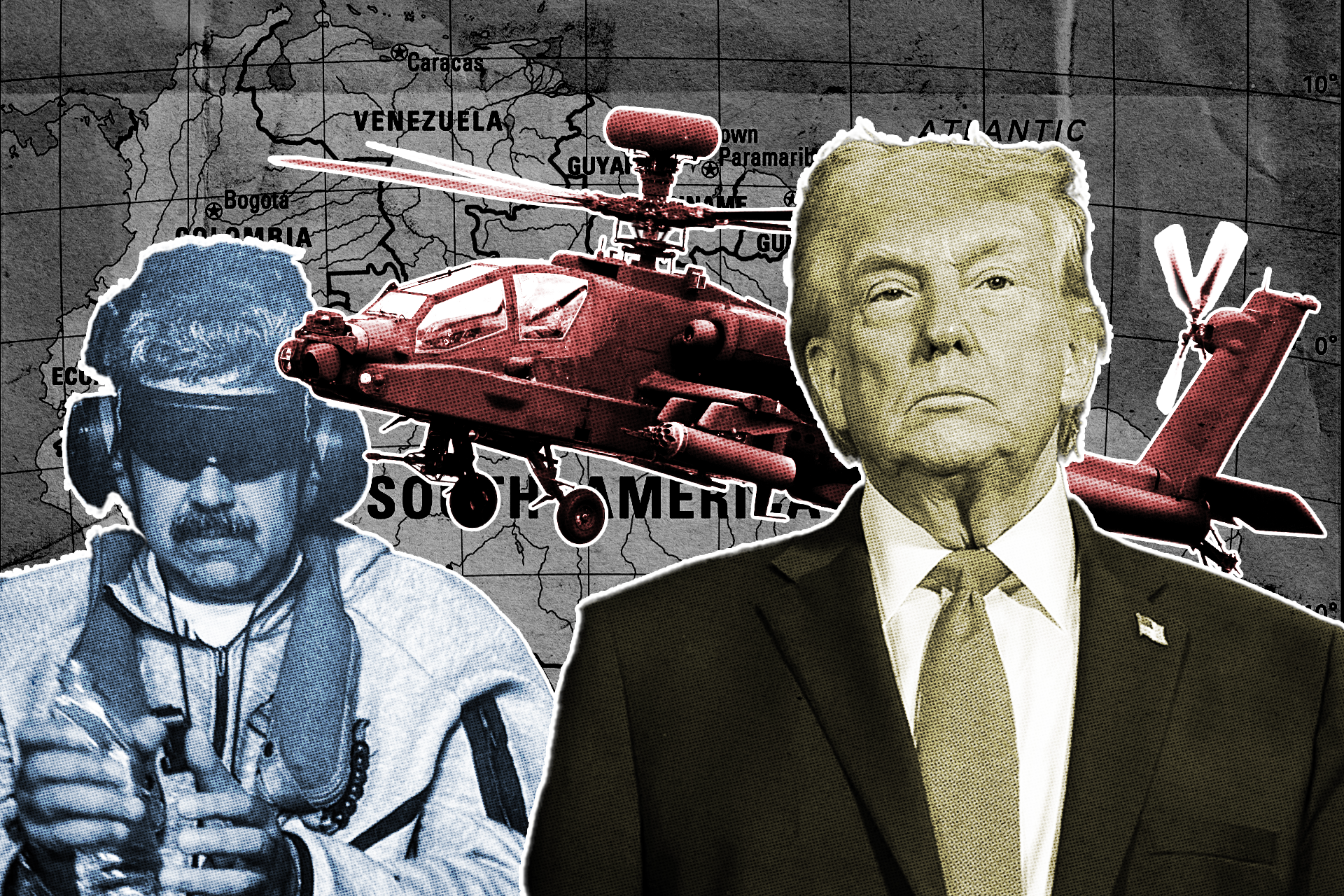
The criminal US military incursion into Venezuela and the kidnapping of a sitting foreign head of state is the first practical manifestation of Trump’s new National Security Strategy. Washington is determined to establish its domination over the Western Hemisphere, which it considers its backyard, and to kick any “non-hemispheric actors”, mainly China, out of the region.
The military operation in Venezuela was then followed by a delirious press conference in which Trump and Marco Rubio gloated about the extent of US power and proceeded to issue threats against Colombia, Mexico and Cuba. In the last few hours, Trump has reiterated his earlier statements about Greenland, which he said the US needs “for reasons of national security”, promising to deal with it “in two months time”. These are not idle threats.
Narcotrafficking – a false pretext
Let us be clear. This act of brazen military imperialist aggression against a sovereign country had nothing whatsoever to do with narcotrafficking, which was Trump’s original justification. Everyone – above all US intelligence services – knows that fentanyl does not come from Venezuela, and that the country is not a producer of cocaine and plays only a very small role in trafficking it. The so-called Cartel de los Soles does not exist, and if it ever did it was in connection with a CIA entrapment operation run jointly with Venezuelan army officers back in the 1990s, well before Chavez came to power.
The air strikes against small speedboats in the Caribbean and the Pacific over the last five months had nothing to do with the drug epidemic hitting the US, and everything to do with imperialist bullying designed to submit Venezuela to the dictats of Washington.
In the aftermath of the US invasion and the kidnapping of Maduro, liberals in the US and elsewhere have complained bitterly about this being an illegal action – a breach of the so-called rules based order – and have demanded that the UN and the OAS intervene.
Even The New York Times published an editorial opposing Trump’s actions on the grounds that they were “illegal”. The New York Times is particularly cynical in this, as it has been revealed that its journalists learnt of the attack in advance, but kept quiet so as not to interfere, such is the extent of their ‘opposition’ to Trump’s criminal and illegal actions.
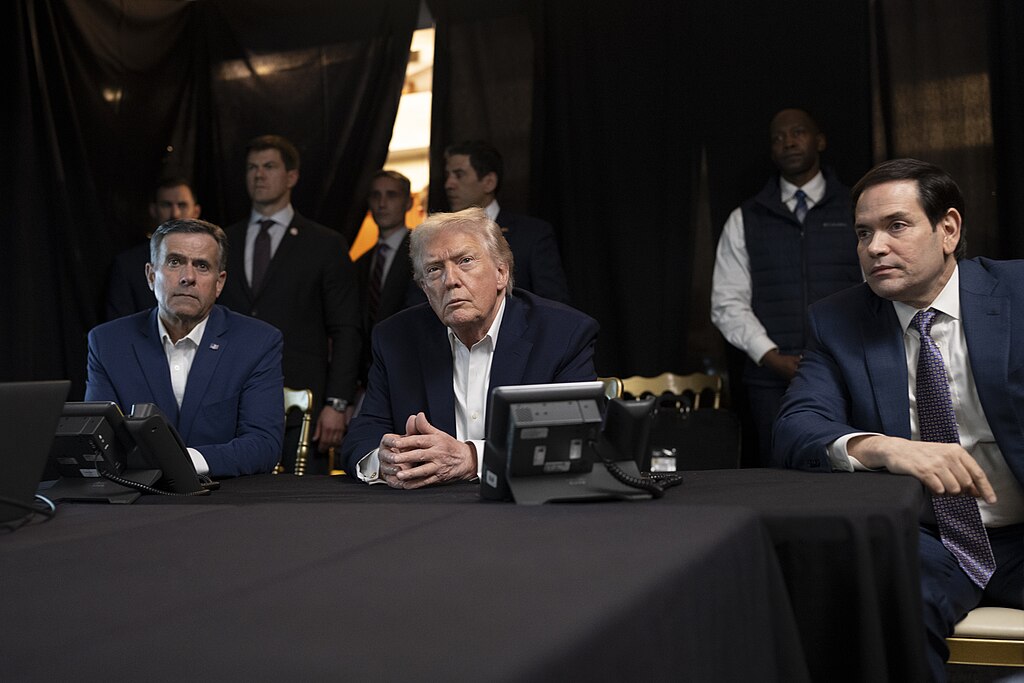
This is so much hypocrisy. In fact, ‘international legality’ is just a fig leaf for the rule of the mighty. US presidents never cared for legal niceties and plenty of them (Republicans and Democrats alike) have broken the law (US and international), in order to carry out military aggression abroad. When they can get cover from the UN to carry out their imperialist designs, that’s of course convenient. When they cannot, they go ahead regardless.
We oppose the brutal US assault on Venezuela and the kidnapping of Maduro, not from a legalistic point of view (would it have been OK if it had had the seal of approval of the US Congress?). Rather, we oppose it because this is fundamentally an act of imperialist aggression, which serves the interests of the ruling class in the United States and goes against the interests of working people across the globe.
Nor is the kidnapping of Maduro a departure from past behaviour on the part of US imperialism. The killing of foreign heads of state (Lumumba, Allende, Gaddafi to mention just a few) and the removal of governments through military coups (Cuba, Guatemala, Brazil, the Dominican Republic, Iran, Chile, Argentina, Paraguay, Bolivia, Venezuela, Grenada, and many more), are both normal tools of the trade for US imperialism and the CIA. The president of Panama, Noriega, and the president of Haiti, Aristide, were both kidnapped and taken out of their countries by US military interventions in 1989 and 2004 respectively.
If anything, the difference is that the current occupant of the White House does not seem concerned about providing nice-sounding excuses for US imperialist aggression. There’s no talk of human rights, the rights of women, the violation of international law or international borders to cover up the real aims of Yankee imperialism. Trump is not shy to say the quiet part aloud. In his delirious press conference on the afternoon of Saturday 3 January, he made it clear that the US was going to run Venezuela directly, and that Venezuela’s oil was going to be handed over to US oil multinationals.
Restoring democracy?
As for democracy, it is already stated in the National Security Strategy that the US will not impose democratic rule on other countries, but will only care about whether they are led by friendly governments (read: subservient lackeys). The kidnapping of Maduro has nothing to do with whether he had stolen the 2024 election or not. There is no contention that Petro in Colombia and Sheinbaum in Mexico did win free and fair elections, and still Trump is openly threatening them, baselessly accusing them of being drug traffickers or in the pocket of drug cartels.
President Chavez won no less than 19 democratic elections and referenda between 1998 and 2013. This did not stop US imperialism from attempting to overthrow him several times, starting with the short-lived April 2002 coup.
Trump (like his predecessors) has no problem hobnobbing with Prince bin Salman of Saudi Arabia, who has never submitted himself to an election, free or otherwise. Netanyahu – a war criminal who has committed the worst human rights abuses and is carrying out a genocidal campaign against the Palestinians – was wined and dined in Mar-a-Lago over the New Year celebrations as Trump gave the order to attack Venezuela.

The US claims that it was Edmundo Gonzalez – the reactionary Venezuelan opposition candidate who stood in for María Corina Machado – who won the 2024 presidential election and that therefore he is the legitimate president of the country. However, at the 3 January press conference Trump threw the Nobel Prize winner under the bus, saying Machado was “a nice lady”, but did not have the support to take over in Venezuela. Trump then stated that Rubio had had a long phone conversation with Delcy Rodríguez (then the Venezuelan vice president) and that she had agreed to do everything the US wanted.
In this it would seem that US imperialism is attempting to draw some lessons from previous military interventions abroad. In Iraq and Libya, imperialism destroyed and beheaded the state apparatus, and was then faced with the complete collapse of bourgeois authority, insurgency in the case of Iraq, and the breakdown of the country into warring factions in the case of Libya. None of this creates a ‘business friendly environment’ for the operation of US multinationals, nor the necessary stability which US imperialism requires.
In ditching Machado and choosing to deal with Rodríguez instead, Trump seems to have chosen the option of working through the actor that he thinks guarantees control of the armed forces, and the security and state apparatuses, in order to prevent a descent into civil war and insurgency.
Venezuela’s response
Delcy Rodríguez has now taken over as acting president in Venezuela and has been told, in no uncertain terms, that either she complies with US designs, or she will meet a similar fate to that of Maduro. Washington acts like a mafia protection racket in its backyard. Pay for protection, in oil and resources, or else. That is the clear message of the Trump administration, one which is aimed not only at Venezuela but at the whole continent.
For months, there have been articles in the US capitalist media presenting Rodríguez as a moderate and reasonable figure, friendly to national and international business sectors, someone the US could talk to. The Miami Herald published a report in October, alleging that Delcy Rodríguez had travelled to Qatar and offered a deal to the United States, in which Maduro would step down and she would lead a negotiated transition.

Today, many in Venezuela are asking themselves how it was possible for the US operation, which lasted for several hours, to be carried out with minimal resistance on the part of the Venezuelan army. Air defences were taken out or deactivated, the Russian Igla MANPAD systems (surface-to-air missiles), which the government had boasted about, seem to not have been used. Dozens of soldiers among Maduro’s security detail were killed by US forces, including 32 Cubans, but otherwise resistance seems to have been minimal. No US soldiers were killed and US helicopters could roam, practically undisturbed, over Caracas, for a lengthy period of time. At the time of writing, no one in the Venezuelan leadership, neither civilian nor military, has explained what happened nor how.
This has led to intense speculation in pro-Maduro circles in Venezuela as to whether he was betrayed. Rubio said in the press conference that the CIA had an asset within Maduro’s inner circle, providing detailed information about his whereabouts and movements. Others go further than that and allege that Delcy Rodríguez might have cut a deal with the United States.
There is no hard evidence for that theory, but that the question is asked is the result of the circumstances in which the operation against Maduro was carried out: the seemingly minimal resistance, the silence of the Venezuelan authorities for several hours, as well as the fact that all messages coming from the leadership were calling for calm and not for mobilisation or resistance.
After the first Council of Ministers meeting on 4 January, Delcy Rodríguez issued a “message from Venezuela to the world, and to the United States” in which she says:
“We invite the US government to collaborate with us on an agenda of cooperation oriented towards shared development within the framework of international law to strengthen lasting community coexistence.”
This is a message of conciliation in the face of brutal aggression, not the one of resistance which she seemed to have adopted the day before. The message does not even demand or ask for the release of President Maduro, who is sitting in US custody in New York. According to reports in the US media, Venezuela has also asked the US to reopen its embassy in Caracas.
Venezuela has only two options. Either resist the onslaught of US imperialism through the mobilisation of the masses of workers, peasants and the poor, and make an appeal to the masses of Latin America and the world, or else submit completely to the diktats of Washington and hand over its natural resources wholesale to US exploitation.
Maduro’s Thermidor
The first course of action would be that of a genuine revolutionary leadership. The problem is that since Maduro took over 12 years ago, what we have seen in Venezuela has been a step-by-step, protracted process of Thermidorean counter-revolution. Where Chavez encouraged the direct participation of the masses in politics, Maduro bureaucratically stifled it.
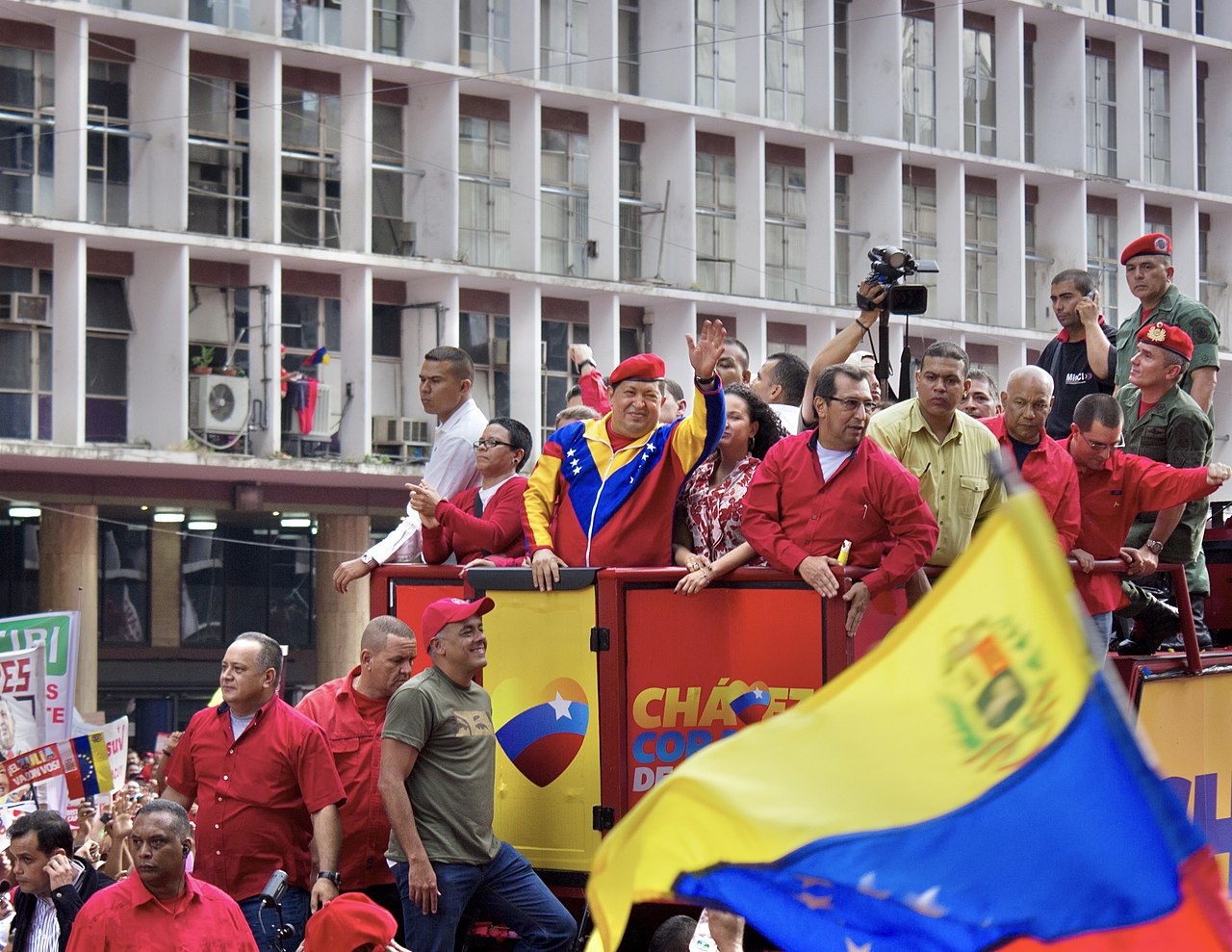
Workers’ control has been crushed, companies which were nationalised have been privatised, peasants have been removed from land which was expropriated under Chavez. At the same time, collective bargaining and workers’ rights have been destroyed, militant trade unionists have been jailed, left-wing parties (including the Communist Party) have seen their electoral registration taken away… very little is left of the Bolivarian Revolution.
The fact that this Thermidorean counter-revolution has cynically been carried out by the Maduro bureaucracy using the banner of ‘socialism’, ‘Bolivarianism’ and ‘Chavismo’, has caused the widespread discrediting of these ideas and a process of deep political demoralisation amongst the masses of workers and poor.
In April 2002, tens of thousands came out against the US-sponsored coup against President Chavez. This time, about 100 people gathered outside the Miraflores Palace.
US imperialism feels strong, having achieved what was potentially a complicated operation, and they are now drunk with victory. But, if kidnapping Maduro was accomplished with no loss of life to the US military (about 80 people were killed on the Venezuelan side, both civilians and military personnel), the idea that Venezuela is going to be run directly by the United States and that the US will be able to remove China from Latin America, is likely to prove more fraught and difficult.
Any government in Caracas which attempts to carry out Trump’s demands for a wholesale hand over of natural resources will eventually be faced with opposition by the Venezuelan people. There are profound reserves of a very healthy, proud, anti-imperialist feeling amongst the masses in Venezuela and across Latin America. The idea of US oil companies dismantling PDVSA – the state-owned oil company – and syphoning profits out of the country, will be abhorrent to millions, including many who did not support Maduro.
A ‘Donroe Doctrine’?
As for the struggle against the presence of China in Latin America, Trump will be faced with the fact that the Asian power is now the first trading partner for the whole of South America, and has established close economic ties with Brazil, Chile, Argentina, Ecuador, Peru, Colombia, etc. Trump has moved decisively to remove Chinese interests from the Panama canal, but will face an uphill struggle to do the same thing in South America, where China has opened the major port of Chancay in Peru, and is engaged in a project for a bi-oceanic transport route linking it with Brazil.
Even countries which are now politically aligned with Trump – like Argentina, Bolivia, Peru, Ecuador and Chile – cannot afford to cut economic links with China. Will the United States be able to purchase the large amounts of copper, soy beans and meat that these countries sell to China?
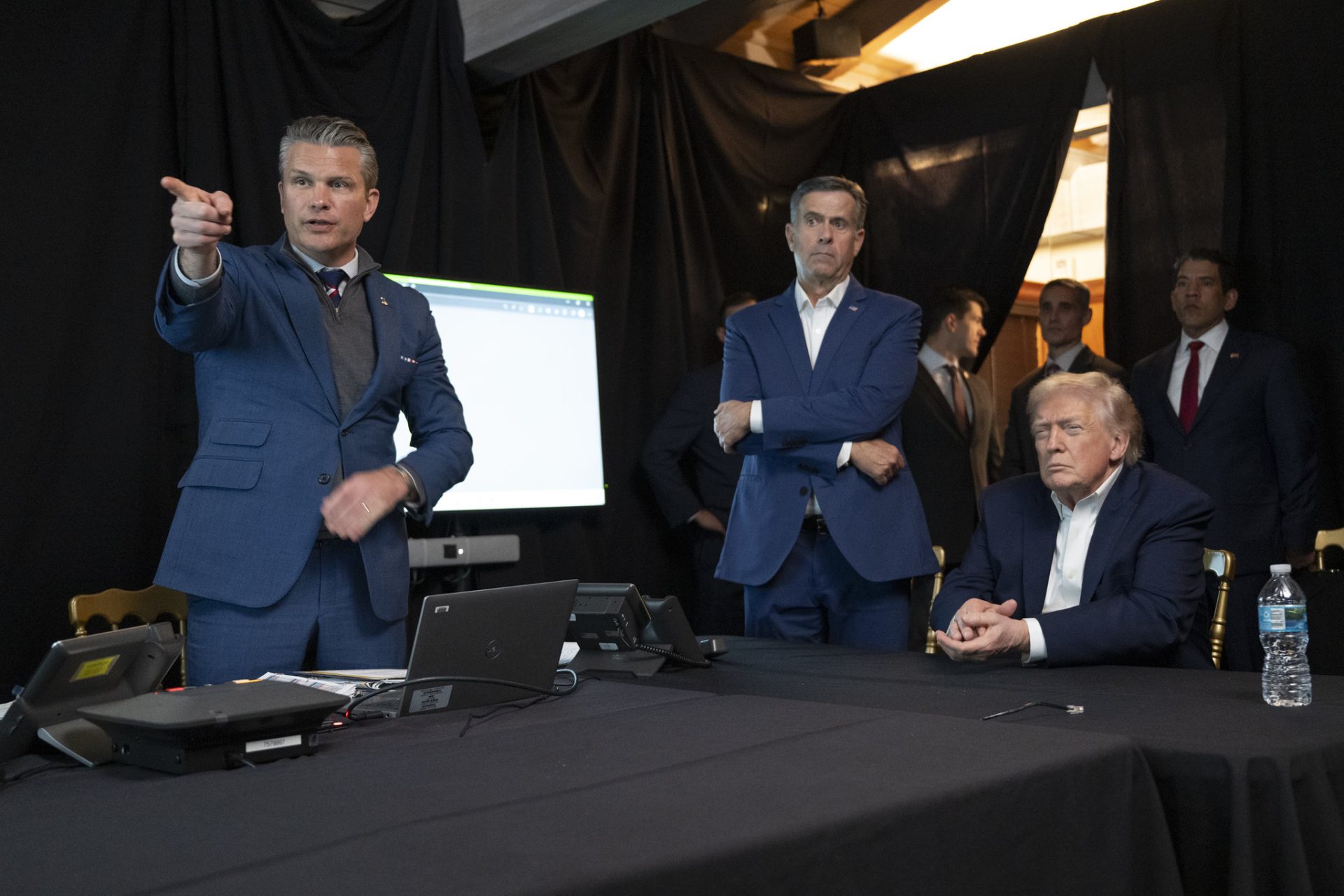
In the press conference, Trump talked about bringing back the Monroe Doctrine, a project which some have described as the ‘Donroe’ Doctrine. The National Security Strategy talks of a “Trump Corollary” to the 1823 doctrine. “America for the Americans” was, at that time, an attempt to keep other (European) imperialist powers out of the continent, though US imperialism did not yet have the means to enforce it. What we are really seeing, more precisely, is an attempt to go back to the Roosevelt Corollary, introduced after the naval blockade of Venezuela in 1902-03, when the US arrogated to itself the right to intervene militarily in Latin American countries.
This is a recipe for clashes and conflicts, not only with Chinese interests, but eventually with the masses of Latin America, who are not likely to accept direct US imperialist bullying without fighting back. If anyone thought that a ‘multipolar world’, with the rise of China and Russia, meant that the exploitation of the peoples of the continent would be lessened, they will now have their illusions dispelled. The only road to genuine liberation from imperialism is that of struggle for the abolition of capitalism worldwide, not that of geopolitical calculations.
Internationally, the actions of Trump in Venezuela will be seen as a green light for other powers – China and Russia – to do the same in their own spheres of influence. In effect, he is admitting that the US cannot defeat Russia in Ukraine, but it should at least be able to impose its domination on its own continent. Xi Jinping will also be taking note. The day before the attack on Venezuela, a Chinese delegation was in Caracas, signing economic cooperation agreements. In response to the US delivery of weapons to Taiwan, China has stepped up military exercises around the island.
As communists, we reject this latest act of US imperialist aggression. We stand unconditionally for the defence of Venezuela. The only effective way to fight imperialism is through the struggle of the masses of working people, across Latin America, around the world and also in the United States itself. Capitalism in its imperialist stage is a system in crisis and a system of war, violence and oppression. Only by abolishing the capitalist system can we guarantee a world of peace and prosperity for the many.

