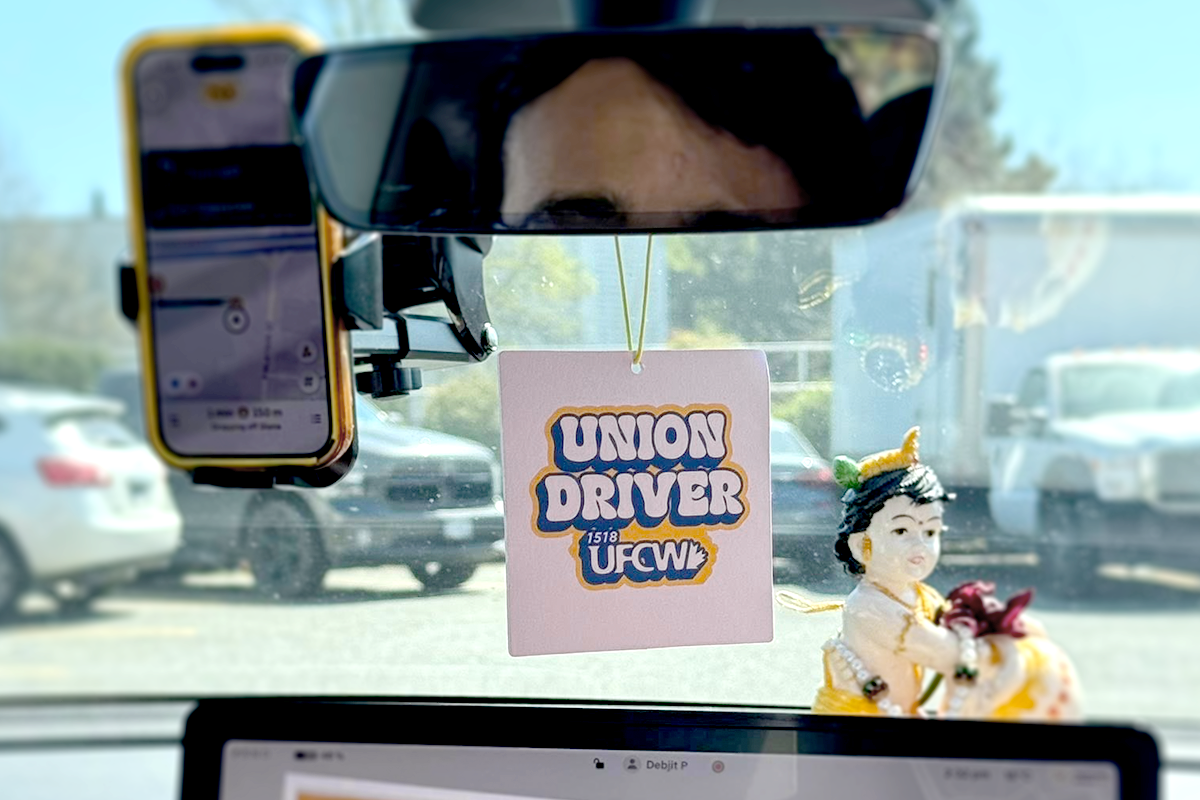
Uber drivers in Greater Victoria ratified Canada’s first legally binding union contract for app-based drivers, with 99 per cent voting in favour on April 28, 2026. The contract includes over 1,000 workers represented by UFCW Local 1518.
For years, ridesharing giants like Uber claimed to offer workers freedom and flexibility while classifying them as “independent contractors” to avoid complying with employment laws. However, in Sept. 2024, B.C. officially recognized app-based gig workers as employees under the Employment Standards Act (ESA). This act guarantees an hourly minimum wage, 100 per cent of tips, and workers’ compensation through WorkSafeBC.
But these basic legal protections were not enough. Full-time drivers were still excluded from vacation, holiday, and sick pay, as well as most overtime laws. Additionally, minimum wage protections only applied to “engaged time”—time when drivers had an active ride request. Sussanne Skidmore, president of the B.C. Federation of Labour, estimated that roughly 60 per cent of drivers’ time on the app is unpaid, with many workers spending over 10 hours a day on the road while waiting for assignments.
The four-year collective agreement now offers signing and quarterly bonuses, annual fee increases, sick pay, and a formalized dispute-resolution process, giving drivers the right to challenge decisions on pay, suspensions, ratings, and deactivations.
“This agreement is irrefutable proof that when workers unite in solidarity with a common goal, great results can be achieved,” said bargaining committee member Gilberto Talero Almanza. Victoria’s drivers have shown that even the most atomized workers can organize and win. But the fight cannot stop here. Food delivery couriers, Lyft drivers, and every other platform worker in the region remains unorganized. All gig workers must be mobilized and brought into the class struggle.

