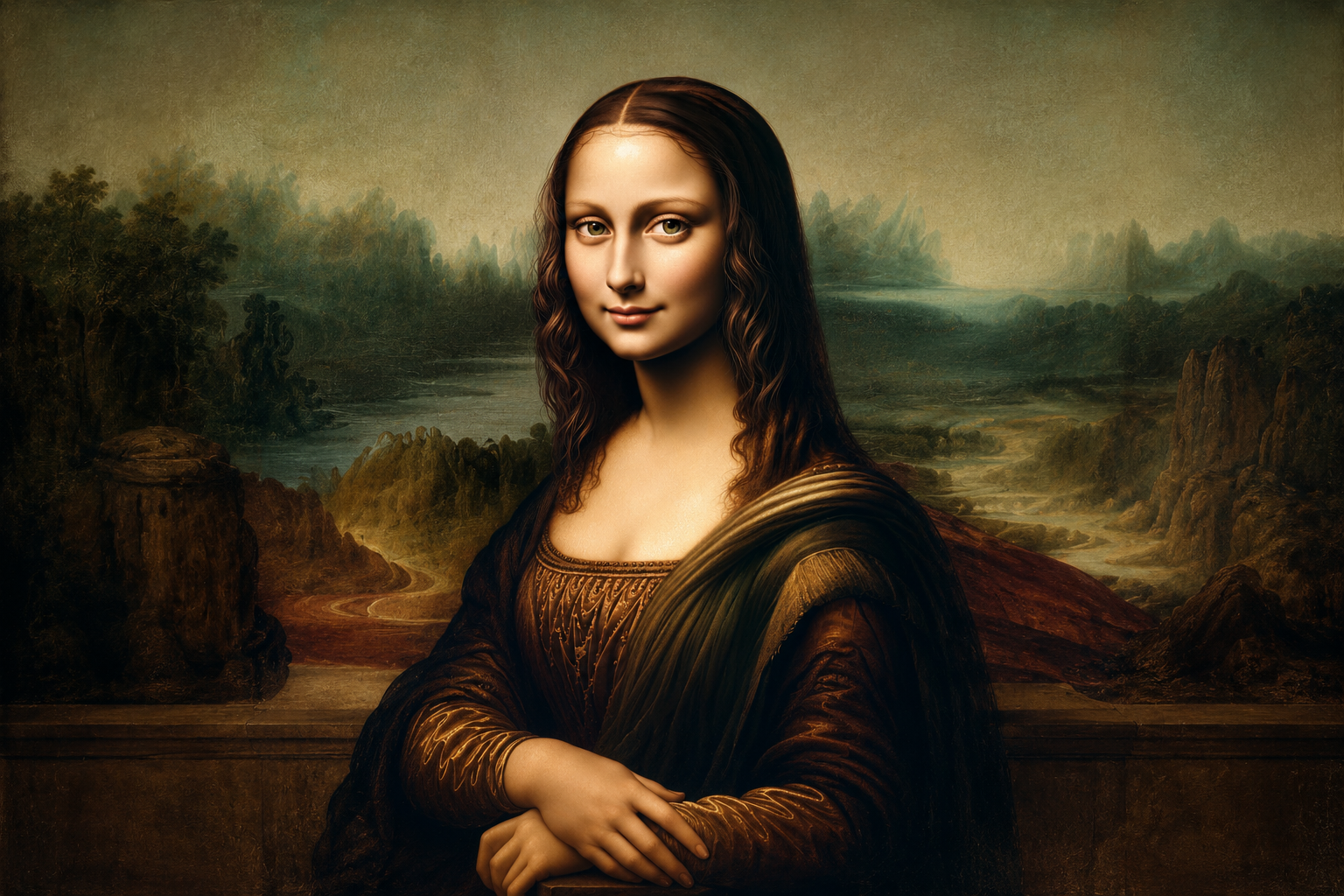
Among the many social upheavals caused by AI, one of the most heatedly debated issues is that of AI art. In left-wing circles in particular, there has been an outcry against this phenomenon.
It’s easy to see why. The development of AI tools has resulted in a flood of audiovisual sludge—what the youth took to calling “AI slop.”
The central argument against AI in art is that the large language models (LLMs) that underpin AI were trained by plundering humanity’s cultural heritage—a massive act of theft for which the tech giants have never paid.
Many artists are speaking out against the fact that their own works have been used to train LLMs without their consent. Generative AI tools, which can create songs, videos or images, are then capable of reproducing works similar to those of artists who have never consented to such use, with no regard for intellectual property rights—as was the case when ChatGPT allowed users to generate drawings and animations “in the style of Studio Ghibli.”
AI is then used in the culture industry to replace workers, which threatens the livelihoods of many artists and workers in the cultural sector. In the field of animation, for example, it’s a veritable bloodbath. Hollywood has been laying off thousands of animators to replace them with machines.
Furthermore, opponents of AI in art often also criticize the problems associated with AI beyond its impact on the art world—such as its environmental impact or the fact that the tech giants behind AI use it to develop tools for surveillance, repression and warfare.
Thus, particularly in left-wing circles—including among people who identify as socialists—AI is portrayed as an evil in and of itself. The mere mention of AI’s use in a movie or on an album is enough to trigger a wave of calls for a boycott.
We, too, believe that we must fight the tech giants who use AI to impoverish culture, make everything uglier, destroy the livelihoods of thousands of artists and culture workers and facilitate repression and surveillance.
But what is the solution? Should we boycott AI and artworks that use it? In this article, we propose a Marxist approach to the question.
Putting the toothpaste back in the tube
It goes without saying that we defend artists’ right to refuse to allow their works to be used to train LLMs and that the existence of AI should not magically grant anyone the right to shamelessly plagiarize. In the struggle of artists against tech giants to have their intellectual property recognized, we stand with the artists.
But we must point out to those who claim to be socialists that this struggle is neither revolutionary nor even reformist. This struggle, which is taking place within the framework of bourgeois democratic rights, is a purely defensive one, aimed solely at returning to the conditions of capitalism prior to the advent of AI.
And capitalism before AI wasn’t exactly glorious. The conditions for artists under capitalism have never been good. Making a living from one’s art has always been the privilege of a small, select few. The dilemma for artists is whether to choose poverty and precariousness or to sell out and sacrifice artistic integrity.
And we have to say, this defensive struggle—relying on boycotts and moral condemnation—is a rearguard action that’s doomed to fail from the start. No boycott is going to make AI disappear. It’s a tool that already exists. The toothpaste is out of the tube.
35 mm and LLMs
We live under capitalism, and no moral judgment or consumer boycott can stand up to capitalism’s cardinal law: the pursuit of maximum profit.
The culture industry is “big business,” and it does not produce artworks to enrich humanity’s collective heritage or for any other lofty moral principle. It churns out movies, TV series and songs like a factory chain to make money. And it sees AI as a way to drastically cut its workforce and thereby massively increase its profits.
In fact, this is far from the first time this has happened in the culture industry. To give just one example, the advent of digital cameras and the decline of 35-mm film led to the loss of thousands of lab technician, colourist and projectionist jobs in the 2000s.
Under capitalism, competition and the pursuit of profit drive companies to increasingly automate and streamline production—in other words, to reduce the amount of human labour required.
Thus, since the advent of capitalism, we have seen a succession of new technologies that have made it possible for machines to perform the same work more quickly. These transformations have led to profound upheavals in the labour market, causing significant job losses on a cyclical basis. AI is one such transformation.
The situation is no different for the culture industry—which is, after all, an industry. And as is always the case under capitalism, it is the workers who lose out while the capitalists grow even richer. The petty bourgeoisie—which includes artists pursuing independent careers—also finds itself crushed by the gears of capitalism.
How the sausage is made
So if the boycott cannot stop the machine, the only justification left is a form of moralizing: AI should be boycotted because it is the product of theft.
Works are thus judged not on the basis of their intrinsic artistic qualities, but according to moral criteria that must be sought in the way the work was created. This is a form of ethical consumption, in which people refuse to use a product because, at some point during its production, some immoral act was committed.
This kind of approach is aimed more at the salvation of the soul of the person who adopts it than at bringing about real political change. It won’t help any artists.
There is no doubt that the AI industry is sinister, environmentally destructive and harmful. But this is true of virtually all industries under capitalism, a system based on the extreme exploitation of humans and nature. In this sense, AI is not qualitatively different from the rest of capitalist production.
Anyone who uses ethical arguments to justify a boycott of AI must explain why they don’t also boycott airplanes (which are polluting and energy-intensive), almond milk (a water-intensive industry that contributes to droughts in California) or the internet in general (tech giants didn’t start spying on us with AI). Before people started worrying about AI’s water consumption, some were concerned about the water consumption of social media in general.
Once you open the door to this argument, there’s no end to it. No matter which industry you choose, if you look at “how the sausage is made,” you won’t want to eat it anymore. There’s no such thing as ethical consumption under capitalism. The problem isn’t AI—it’s capitalism.
AI as a tool, not as an artist
As for us, our opposition to AI in art is based on artistic, not moral, criteria. The works generated by AI are generally of poor quality—that’s all.
This can be explained by the way AI works. AI doesn’t invent anything; it takes everything it has been fed and regurgitates it. It therefore cannot create anything new—it can only imitate, rehash and piece together elements from works created by humans.
Advocates of AI art will argue that all art works this way, that there is no such thing as original art, and that all artists imitate and reinterpret what came before them. As the saying goes, “Good artists copy, great artists steal.”
That’s partly true, but there’s one thing missing.
The historical development of art is precisely composed of the dialectical interplay between preservation and creation—between imitation and originality. Every time an artist creates a work, they draw a little from what came before. But good artists also add their own personality, ideas and innovations. Thus, art is both a product of all past human culture and of the artist’s own individuality.
Bad artists, on the other hand, simply regurgitate what came before them without inventing anything. In other words, they don’t bring anything of themselves to the table—or they’re uninteresting as individuals, and what they do have to offer is shallow. That’s why the “Top 40” hits in pop music have a “generic” sound and all end up sounding the same.
AI is exactly like a bad artist. It merely reproduces what has already been done before, perhaps in a new combination, but without adding anything new. AI-generated art cannot be good because, by definition, it cannot add anything new. It can only serve up regurgitated material—the infamous “slop”.
But that means our opposition isn’t to AI as an artistic tool, but to AI as a so-called artist. AI-generated music or films are just rubbish. But in the hands of an artist who controls the final result, AI can be a powerful tool.
For example, director Martin Scorsese recently had to defend his use of AI for storyboarding—the process that helps a director visualize their film, but the results of which do not appear in the final version of the film. “For 70 years, I’ve been creating my own storyboards,” he explains. “There’s always been this problem of how do you communicate what you see in your head to your cast and crew. There are some things you have to see and feel. Now with this tool, I can share what I’m visualising more clearly and efficiently to my creative team.”
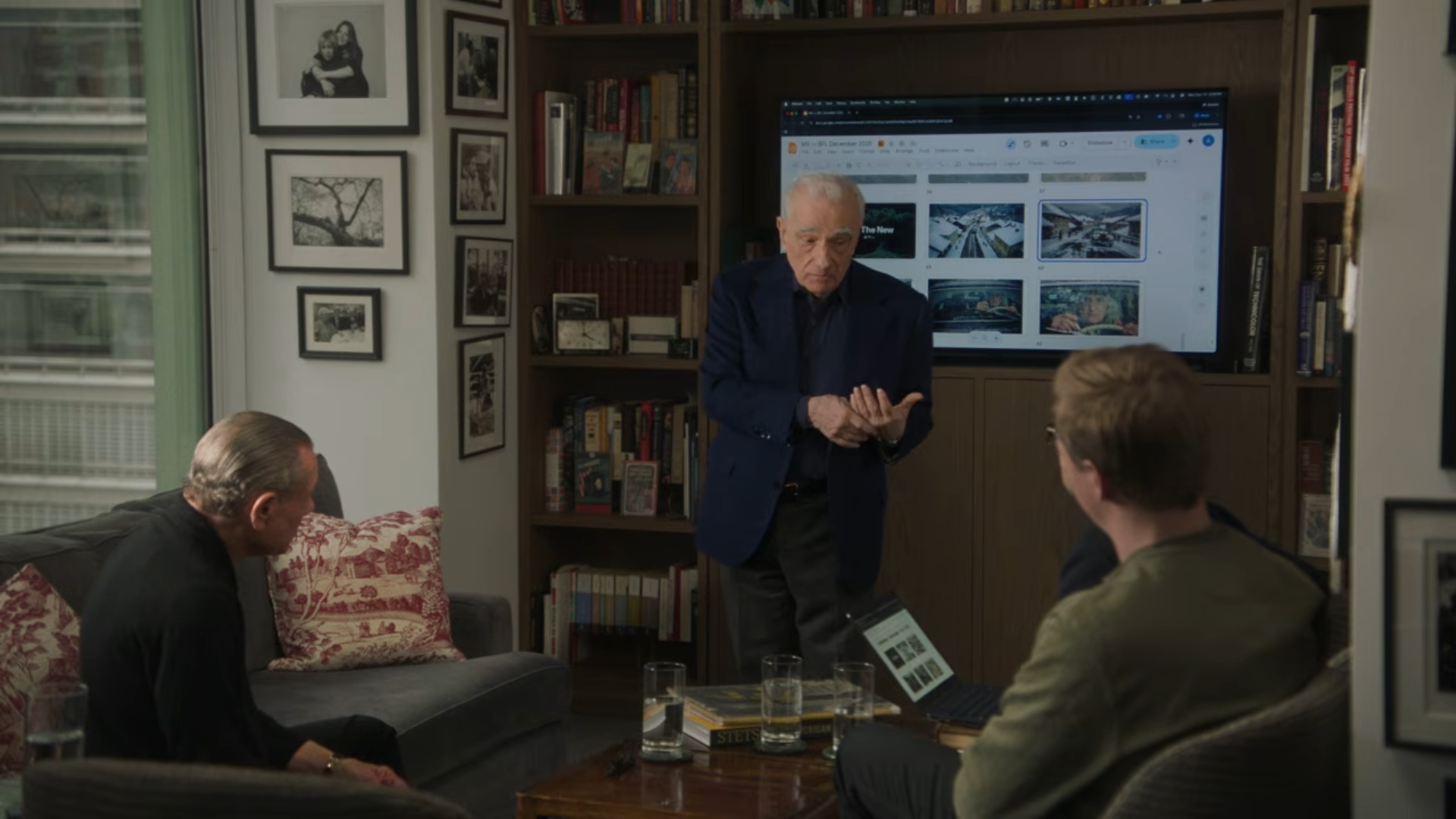
He has faced a barrage of criticism alleging that he is contributing to the loss of jobs for storyboard artists. But why is Scorsese morally obligated to preserve a technique that has become obsolete—and one that will inevitably be replaced in the rest of the industry?
In the world of music, the emergence of electronic music sparked a similar outcry. In 1982, a musicians’ union in the United Kingdom even passed a resolution calling for a ban on synthesizers, which were criticized for being used to replace musicians. Today, it would be absurd to oppose synthesizers on those grounds.
The entire history of art has been marked by evolutions and revolutions, partly driven by technological and technical advancements. In this process, AI is not fundamentally different from other technologies.
When photography first emerged, a similar debate took place over whether the use of this new technology could truly be considered art. The same happened with electronic music. Today, no one denies that photography or electronic music can be legitimate artistic tools.
The key factor is how and for what purpose this new technology is used. In the hands of an artist and for the purpose of creating art, there is no doubt that AI can be a legitimate, possibly even powerful, artistic tool.
It is precisely because, under capitalism today, this tool is widely used by the culture industry not to create art, but to get rid of artists and to produce pure entertainment products entirely devoid of artistic vision, that we find ourselves inundated with slop. The tool itself is not to blame, any more than a gun causes war.
For revolutionary art
The rapid and widespread uglification of our society under the influence of AI-generated slop is perhaps the most striking symptom of the civilizational decline caused by the historic crisis of capitalism. Refusing to leave the stage of history, the decaying capitalist class is made up of uncultured, tasteless morons who have found in AI slop an artform in their own image.
But we must underline that this decline of culture did not start with AI. Before generative AI, we had movies and songs created by focus groups in corporate boardrooms, as well as fine art serving as an investment vehicle. Held captive by the logic of profit, art and culture were already in a sorry state.
The ills of AI are the ills of capitalism. Ultimately, the solution to the precarious condition of artists under capitalism is not opposition to AI and a futile struggle to return to the past—when artists’ conditions were already precarious—but the struggle for socialist revolution.
This powerful technology, in the hands of capitalists, serves only to enrich a privileged few at the expense of the majority. By placing it under the democratic control of workers, we could collectively decide how best to use it and put it at the service of humanity. Taken out of the hands of capitalists, rather than enslaving humans, AI could be used to automate human labour—to free humans from work.
Humans, gradually freed from work in a socialist society, will be able to devote themselves to creation, research, education and art—with or without AI, as they choose. With humanity’s creative forces thus liberated, we would witness an artistic flourishing unlike anything humanity has ever seen before.
In this struggle, artists can play a powerful role. By exposing the horrors of capitalism and calling for its overthrow, they can inspire revolt against it. In an era of civilizational decline, of existential crisis for humanity, of wars, revolutions and counter-revolutions, revolutionary art like this is the only art that can truly be relevant. The rest is nothing but elevator music.
As the Palestinian poet Marwan Makhoul writes:
In order for me to write poetry that isn’t political
I must listen to the birds
and in order to hear the birds
the warplanes must be silent.

